Get Full Government Meeting Transcripts, Videos, & Alerts Forever!
Get email alerts on the Parental Rights Curriculum topic
No spam. Unsubscribe anytime.
Public commenters press Sumner School District to adopt parental "opt-in" policy for LGBTQ+ curriculum; speaker also questions district response to violent acts
Summary
Two registered speakers used the board's public-comment period to urge the district to adopt a parental "opt-in" policy for LGBTQ+ instructional materials and to question what the district is doing about radicalization and violent acts; both comments were taken under advisement.
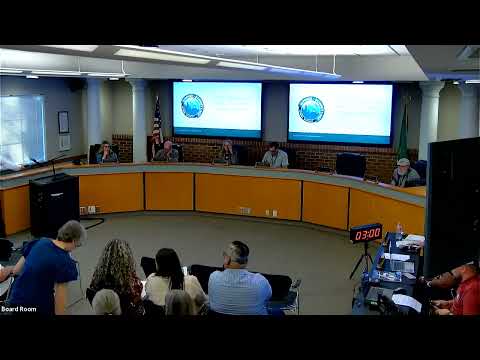
During the public-comment period at the Sept. 16 Sumner School District board meeting, two registered speakers urged the board to change how the district handles parental permission for LGBTQ+ curriculum and raised broader concerns about community values.
Terry McCoy, who identified himself as a registered speaker, told the board he had asked last month that the district adopt “a formal district policy that recognizes and upholds parents as primary stakeholders in the upbringing, education, and wellness of their children as stated in RCW 28A.605.005.” McCoy cited the Washington state constitution, Article IX, Section 4, saying an adopted policy should “affirm the school district’s commitment to honoring the rights, authority, and legal standing of parents” and specifically asked the board to consider a parental opt‑in policy for LGBTQ+ curricula and activities. He said his model policy would “acknowledge the authority of parents to opt in to LGBTQ plus educational curricula, instructional materials, and activities.”
McCoy also stated that ‘‘currently, in our state, opting out is not a choice for parents according to our OSPI,” and urged the board to consider his model policy.
Later in the public-comment period, Theresa (spelled Theresa in the record) McClements delivered a prepared statement that included religious reflections and expressed concern about what she described as “the enablement of radical groups who are so willing to assassinate free speech.” She read lyrics and asked, “what is the district doing to stop the enablement of radical groups who are so willing to assassinate free speech?” and asked the board to consider what beliefs are being presented to children in schools.
Board protocol and response: The board’s public-comment rules, read at the start of the comment period, state that comments are taken under advisement and the board will not respond during the meeting. The district also reminded speakers to avoid naming individual staff, board members or students during comments and to keep remarks courteous. The board did not take action on policy changes at the Sept. 16 meeting; public comments were recorded for board consideration.
What was not decided: No motion or formal board direction to draft an opt‑in policy was recorded in the meeting minutes or on the record. McCoy characterized his proposal as a model parental opt‑in policy for the board to consider; the board took the comments under advisement.