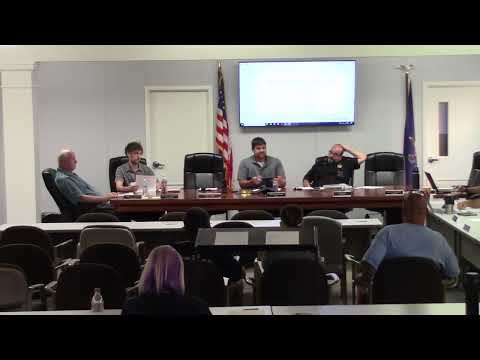
Sunbury officials say preliminary budget runs about $300,000 over; urge structural changes and revenue focus
Loading...
Summary
At a Sunbury City budget workshop, officials reported a roughly $300,000 preliminary shortfall, highlighted rising salary and benefit costs, and debated longer-term revenue strategies including investing in recreation, creating dedicated funds and pursuing grants.
At a budget workshop, Sunbury City officials said the city’s preliminary budget is about $300,000 over current estimates and discussed a mix of cost reductions and revenue strategies to close the gap.
The councilmember who opened the discussion said, “We're $300,000 over,” and framed the session as a heads-up on department estimates rather than a final submission. City staff and councilmembers discussed salary increases for the city administrator, clerk and administrative assistant, unspecified insurance cost increases, and contract-driven pay uplifts for police officers as major upward pressures on the preliminary totals.
Why it matters: officials said recurring personnel and benefit costs are the primary drivers of the shortfall, and several councilmembers pressed for a multi-year financial approach instead of repeating the same annual budgeting process. “We keep kicking the can down the road every year,” one councilmember said, urging a new approach that would prioritize mandatory costs first, then discretionary spending.
Discussion and details
- Personnel and insurance: The city identified salary increases and yet-to-be-determined insurance premiums as central uncertainties. Departments said they lack final insurance rates from brokers and have used rough salary estimates for the preliminary totals.
- Police contract and grants: Staff noted the police salary increases were a major line-item pressure. Officials discussed a federal/state COPS-style grant the city has pursued to offset police hiring costs; staff said the grant structure being discussed would provide $50,000 tied to three officers over five years (discussed as $150,000 total if fully awarded). Councilmembers emphasized the need to budget conservatively in case grant awards do not materialize.
- Revenue-side options: Participants suggested several revenue strategies to reduce reliance on general fund appropriations, including: investing in recreation to attract visitors and events; revisiting rental and lease charges on city-owned parcels; creating or capitalizing a dedicated fund for future capital needs; and exploring fee-based authorities (see public safety authority discussion in a related article). One councilmember proposed, as an example, a $5–$10 per property emergency services fee used in other municipalities; staff cautioned legal and structural questions remain.
- Grants dependency and contingency planning: Multiple speakers warned the city currently relies heavily on grants for capital projects and programming. They discussed the need to plan for scenarios in which federal or state grant funding declines, pointing to liquid fuels revenue volatility and a county reassessment that could change tax revenues.
- Parking meters and user-fee revenue: Staff reported parking meter revenue and related payment app receipts have improved compared with expectations; coin and pay-by-text collections were cited as revenue sources, though the full operating cost of the meter program was not specified during the discussion.
Next steps and constraints
Councilmembers agreed the city must move beyond annual ad hoc adjustments and develop a multi-year budgeting framework (5–10 years) that sequences mandatory costs and targets revenue generation where feasible. Several councilmembers asked department heads to return with line-item breakdowns and firm insurance figures after broker estimates arrive.
Ending
The group did not adopt changes at the workshop; attendees characterized the meeting as an early review to refine line-item submissions and to identify structurally different budgeting options for the upcoming formal budget process. Staff and councilmembers said they will follow up with more precise numbers and proposed revenue or expenditure scenarios in future budget meetings.