Get Full Government Meeting Transcripts, Videos, & Alerts Forever!
Get email alerts on the Youth Programs topic
No spam. Unsubscribe anytime.
Northampton County 4-H presents program reach, seeks help expanding school embryology amid staffing limits
Summary
Penn State Extension's Northampton County 4-H program told the county Energy, Environment and Land Use Committee on Aug. 21 that it serves thousands of youths through clubs, camps and school programs but cannot expand its popular embryology classroom visits without more staff, incubators and biosecurity planning.
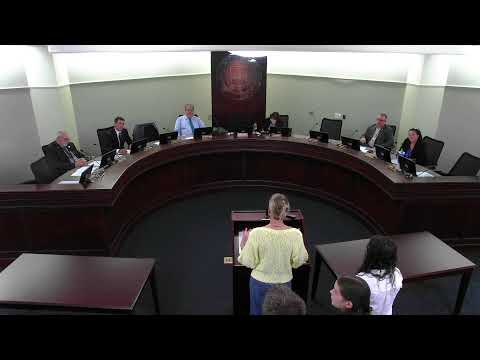
Amy Hoffman, the 4‑H educator for Northampton County, presented an overview of Northampton County 4‑H and asked the Energy, Environment and Land Use Committee on Aug. 21 to consider helping the program reach more classrooms while it addresses staffing and equipment limits.
The program, run through Penn State Extension, operates 12 traditional clubs (monthly meetings focused on projects such as livestock, horses, STEM, cooking and sewing); runs overnight and day camps; and delivers group-enrollment programming in schools, libraries and partner organizations. Hoffman said the program has about 1,400 group-enrolled youth reached through classroom and partner visits and 66 volunteers who run clubs and serve on volunteer committees.
Hoffman said embryology — a classroom incubator program in which students observe eggs develop and hatch over a roughly 21‑day cycle — is one of the program's most popular offerings. In the most recent program year the embryology project reached 22 classrooms across six schools, including Easton and Bethlehem area schools and several regional charter schools. The program runs two 21‑day sessions each year (generally February–April and April–May); students typically keep chicks in class for about seven days after hatching.
"We usually begin planning for this November, December, but it actually runs starting February," Hoffman said. "The logistics of when you get the eggs and then with the avian influenza, that adds a whole level of can we do it, can we not do it." She added that the program's limiting factors are staff time and the number of incubators, not school interest: "Staffing is our biggest" constraint, she said, explaining that the program typically can complete about three classroom presentations per day and would need more personnel and incubators to scale up.
Committee members and presenters described the program's other activities: a one‑week residential camp run in partnership with Carbon, Lehigh, Monroe and Schuylkill counties (15 campers attended this year, Hoffman said); two day camps (animal science and expressive arts); livestock and project roundups culminating at the Blue Valley Farm Show; and a potato judging team that competes statewide. Hoffman noted county‑level qualifying events for horse riders (31 riders at the county qualifier; 24 at the district event) and said members also participate in regional and state contests, including fashion review and livestock shows.
Pete Nevzodoski, identified as a 4‑H leader who serves on the program development committee and as a Northampton County employee for 17 years, described the long‑term benefits 4‑H provides youth. "I learned life skills in 4‑H — how to budget, how to do public speaking — and those skills translate into professional life," Nevzodoski said. He added that 4‑H leaders emphasize safety (for example, two‑adult supervision at camps) and teach practical topics such as first aid.
Two teen ambassadors, identified in the presentation as Maddie Pagets (summer assistant and teen ambassador) and Maddie Barra (member and teen ambassador), described how 4‑H improved their social and leadership skills and offered teaching and camp‑counseling experience. One teen said 4‑H helped her become a state‑level competitor in horse riding and improved her communication skills with trainers and coaches.
A county council member who serves as liaison to Penn State Ag Extension praised the program as a way to restore youth ties to agriculture and community. The liaison asked what the county could do to help the embryology program reach more classrooms; Hoffman asked that schools or teachers contact the program directly and said that the program does not refuse requests but cannot proactively contact every school because of staffing and equipment limits.
Hoffman provided contact pathways for families and volunteers: program brochures with contact details, a Facebook page titled "Northampton County 4 H," and a Penn State Extension web listing. She said 4‑H in the county serves youth ages 5 through 18 (age 5 as of Jan. 1 within the program year, which runs Oct. 1–Sept. 30) and noted that animals can sometimes be leased to members who do not own livestock.
The presentation also touched on broader trends affecting participation: Hoffman and Nevzodoski said fewer families now own animals, which reduces opportunities for some animal projects, and they linked continued agricultural education to county farmland preservation efforts. Committee members indicated they would discuss the matter further at upcoming Penn State Ag meetings and invited the program to follow up on staffing needs and school outreach.
The presentation concluded with the committee receiving brochures and the program's encouragement that interested parents, potential volunteers and schools contact Penn State Extension's Northampton County 4‑H office or the educator for details.