Get Full Government Meeting Transcripts, Videos, & Alerts Forever!
Get email alerts on the Operating Budget topic
No spam. Unsubscribe anytime.
Wake County budget update: interim budget holds as state enacts limited ‘mini‑bill’; federal grant terminations reduce revenue
Summary
Wake County Public Schools staff told the Budget & Finance Committee an interim district budget remains in place while state and federal funding shifts, including two federal grant terminations (about $30 million combined) and a limited state budget (House Bill 125) that authorizes modest step increases only for certified staff.
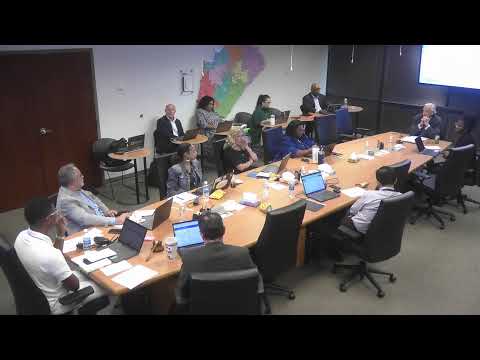
Wake County Public Schools finance staff told the district’s Budget & Finance Committee on Aug. 1 that the board is operating under an interim budget while it awaits final state actions and that recent federal grant terminations and a limited state “mini‑bill” will change next year’s revenue and compensation calculations.
The committee received two updates: an operating budget review and a deeper look at child nutrition finances. “We talked about what the state has done, because now the state has taken some steps since June 24 to put in place a budget,” said Mister Nieder, a district staff member, summarizing the committee briefing. He added: “We don't make recommendations to the board on finalizing its overall budget for a fiscal year until we know what the major implications will be.”
The interim budget: why it matters
The board adopted an interim budget earlier this summer after the county approved an increase in its appropriation but before a final state budget was in place. Mister Nieder said the interim budget allows the district to continue operating on prior‑year spending levels but “we can't really start doing anything new,” because the district cannot responsibly finalize appropriations while major state actions and compensation rules remain uncertain. He and other staff noted that about 80% of the operating budget pays salaries and benefits, making legislative compensation changes particularly consequential.
Federal grants and funding uncertainty
District staff told the committee that two federal grants were terminated earlier in the year: the teacher and school leaders grant (focused on recruiting teaching staff) and a school‑based mental health grant (for counselors and social workers). “Those 2 grants together were multi‑years and the value of them was approximately... $30,000,000 combined,” Mister Nieder said. Staff said the district had begun hiring with those dollars and that termination was disruptive, but they did not report any reduction in force.
Separately, staff described a nationwide freeze in certain federal formula funds in June that temporarily halted Title II, Title III and Title IV funding even after congressional approval; those funds were later released. Staff also said one magnet grant (the Nexus grant) remains unresolved and funding that was expected in spring has not yet been released; staff are using carryover funds but said they will not be sufficient to cover the full year if the grant is not restored.
State action: House Bill 125 and certified staff steps
Staff reviewed the limited state budget enacted this summer (referred to in the briefing as House Bill 125), which they called a “mini‑bill” that addresses a narrow set of items rather than a full biennial budget. Miss Kimsey, a district staff member, told the committee that the mini‑bill included technical corrections to average daily membership (ADM) allotments and adjustments for certain allotments (transportation, exceptional children and limited English proficiency), which corrected preliminary state allotments that had been lower than expected.
The mini‑bill also authorizes a step increase for certified employees (teachers and some instructional staff) but does not change the step schedule itself, staff said. “Compensation drives a large portion of the budget. We all know that about 80% of the operating budget goes towards staff, salaries, and benefits,” Mister Nieder said. Doctor Mattel (district staff) told the committee the district plans to implement the certified‑staff step increases with the September payroll and to make the increases retroactive to the start of the year where applicable.
Who is not included
Staff emphasized which employee groups the mini‑bill did not cover: principals, central office administrators on banded pay schedules, classified school‑based support staff (bus drivers, child nutrition workers, custodians, office staff, instructional assistants) and many central office categories. “There is no current legislation for any compensation increases for school principals, for central office administration, and our banded employees,” Mister Nieder said.
Budget next steps and board timing
Staff told the committee they will not recommend a finalized district budget until they can see the full implications of state actions and any further federal developments. Mister Nieder said it is possible the legislature will take no further action beyond the mini‑bill, that it could pass additional mini‑bills, or that it could reconvene to pass a comprehensive biennial budget. He suggested the district may have an updated picture soon after Labor Day but said that if the situation remains unclear by November, staff will return with recommendations to finalize the budget.
Questions from committee members focused on practical impacts: whether new programs already approved by the board can be started before final state funding arrives, how the county’s increased appropriation affects new‑school staffing, and what flexibility the district has to contract or scale back existing programs if expected federal dollars do not arrive. Mister Nieder said there is latitude to adjust contracts and reduce spending, but doing expansion before funding is certain carries financial risk.
Ending
Staff presented the operating budget update as informational and opened the meeting for committee questions. Committee members asked staff to provide additional clarifications on enrollment growth counts used by the state, the district’s carryover assumptions for unresolved grants, and the timeline for bringing a final budget recommendation to the board if state actions stall.