Get Full Government Meeting Transcripts, Videos, & Alerts Forever!
Get email alerts on the Redistricting topic
No spam. Unsubscribe anytime.
California Senate approves mid‑decade redistricting package; measure to go to voters in November
Summary
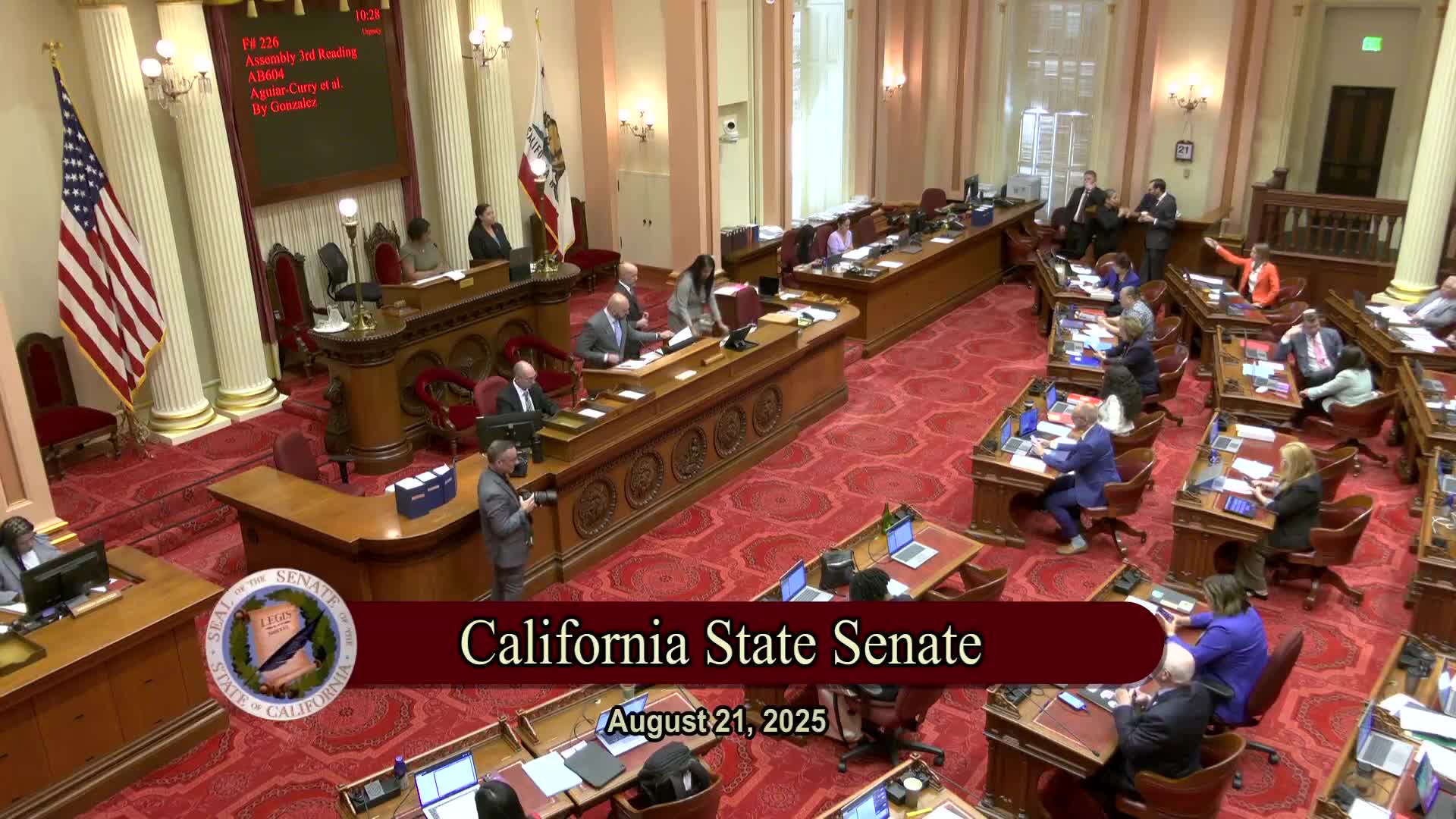
After hours of debate, the California State Senate approved a package of bills that would place new temporary congressional maps before voters and fund a November special election, setting up a statewide vote on whether to adopt mid‑decade maps in response to recent redistricting actions in Texas.
The California State Senate on Thursday approved a package of measures to place temporary congressional maps before voters and to fund a special election on Nov. 4, setting up a statewide decision about mid‑decade redistricting.
Senator María González, the sponsor who presented one of the measures, framed the package as a defensive response to actions by Texas lawmakers and the federal administration. "This bill gives voters a choice, a choice to keep the current districts or adopt maps to counter the actions of MAGA extremists in Texas," Senator González said on the floor.
The package includes three principal items considered by the Senate as a coordinated response: Assembly Bill 604 (the proposed temporary maps), Assembly Constitutional Amendment 8 (ACA 8), and Senate Bill 280 (SB 280), which appropriates funds and makes statutory changes to allow a special election concurrent with the Nov. 4 statewide ballot. The Senate voted to adopt the temporary maps and to send ACA 8 and SB 280 forward; all three measures received sufficient votes in the chamber.
Why it matters: supporters said the measures are intended to preserve California’s influence in Congress and to give voters a direct say before mid‑decade map changes in other states alter the national balance. Opponents said the measures undermine the voter‑established Citizens Redistricting Commission, risk a costly special election while the state faces budget shortfalls, and appear to be a partisan response to actions outside California.
Key outcomes and votes: the Senate recorded a 30–9 vote to advance the temporary maps (AB 604). ACA 8, the constitutional amendment to be placed on the November ballot, passed in the Senate by a 30–8 vote after debate and the tabling of a proposed amendment that would have barred legislators who voted yes from running for office for 10 years. SB 280, the appropriation and enabling statute for the special election, passed the Senate with the chamber concurring in assembly amendments by the same margin recorded for final action.
Supporters including Senator Pro Tempore Bill Maguire and Senator Richard Cabaldon argued the package returns the decision to Californians and described the action as a response to what they termed a partisan effort in Texas to redraw maps mid‑decade. "All we're asking is allow the voters to do their thing," Pro Tem Maguire said during his presentation of ACA 8.
Opponents, including Senator John Strickland and Senator Brian Jones, said the package threatens the integrity of the voter‑created redistricting system and would create "predetermined" elections. Strickland warned that voter materials could be misleading and that the measure amounts to an "authoritarian" effort to avoid electoral competition. Concern about cost surfaced repeatedly: several senators cited an estimate of roughly a quarter billion dollars to run a statewide special election.
Several senators raised process and transparency concerns during floor debate. Multiple members asked who drew the temporary maps and who paid for the technical work; proponents said the maps were posted publicly and that they were based largely on the Citizens Redistricting Commission's work. Senator González and other backers said more than three‑quarters of Californians would remain in their current district under the proposed maps and that voters would have more than 70 days to review maps and materials before the November vote.
What happens next: ACA 8 and SB 280 will go to the November 4 ballot if the legislative and constitutional procedures are completed. If voters approve ACA 8 and the temporary maps on the ballot, the maps would apply for the 2026 and 2028 congressional elections and remain in effect only until the citizen redistricting commission certifies new post‑2030 census maps.
Context and reaction: the debate followed dramatic action in other states, notably Texas, where legislators recently approved mid‑decade maps that supporters said complied with a court order and critics said were designed to favor one party. Senate debate Tuesday and Thursday was long and often heated, with senators across the aisle invoking national stakes — including federal funding, SNAP and Medicaid cuts, and immigration enforcement policies — as reasons to support or oppose the package.
The package's passage in the Senate does not by itself enact the constitutional amendment; ACA 8 must also clear the Assembly and, if approved by both houses in identical form, the measure will be placed on the statewide ballot. The Senate also adopted statutory changes and an appropriation to the Secretary of State and county registrars to run the special election if the ballot process proceeds.
A vote tally summary: AB 604 (temporary maps) — Senate vote recorded as Ayes 30, Nos 9. ACA 8 (constitutional amendment to go to ballot) — Senate recorded Ayes 30, Nos 8. SB 280 (special election funding/statutory changes) — Senate recorded concurrence with assembly amendments and passage; chamber tallies recorded were Ayes 30, Nos 8.
Senate leaders said the measures will give Californians the chance to decide in November whether to adopt the temporary maps. Opponents said they will consider legal and political steps if the measures move forward.