Get Full Government Meeting Transcripts, Videos, & Alerts Forever!
Get email alerts on the Transportation topic
No spam. Unsubscribe anytime.
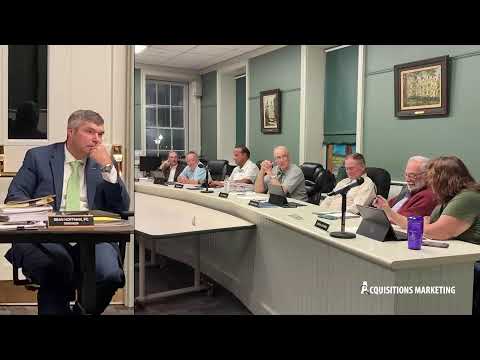
Goshen planning board presses developer on Route 17M traffic fixes, agrees to short SEQR extension
Summary
The board discussed traffic impacts from a proposed 17M Flex Building, debated a left-turn lane on Route 17M, and moved toward a developer-funded "fair share" arrangement while extending SEQR review by 60 days.
The Town of Goshen Planning Board spent its longest discussion of the evening on a proposed 17M Flex Building site plan, focusing on traffic impacts at the intersection of New York State Route 17M and Cannon Hill Drive and on how any required road improvements would be funded.
The board’s traffic consultant, John Canning, told members that a left-turn lane on Route 17M is warranted and described how a two-stage left-turn lane would operate. “When you provide a left turn lane, you can just do a simple left turn lane, but the issue with Cannon Hill Drive, in addition to the left turn, is getting out of there in the evening,” Canning said, explaining that a driver can turn into the left-turn lane and then merge into westbound traffic in two stages.
The consultant recommended the applicant pursue the DOT review and noted that the New York State Department of Transportation would set final design and permitting requirements. “Typically, the applicant does,” Canning said when asked who pays for DOT-required improvements, but he added that fair-share contributions and other funding arrangements are sometimes used when multiple future projects may share the cost.
Why it matters: the intersection already shows higher-than-average accident rates, and the board’s traffic model showed the project could materially increase delay at the intersection if a higher-intensity use takes occupancy. The board grappled with how to limit future traffic intensity and how to ensure any required DOT work is built and paid for if the state does not take immediate action.
Applicant representatives told the board the building is intended to be similar in operation to an existing nearby flex building and that they would consider a fair-share contribution or other developer agreement. The applicant’s counsel and the applicant indicated a willingness to negotiate contributions tied to a DOT concept plan and to limit the building’s design so it would be less likely to trigger higher-intensity industrial uses that generate many more trips.
Board members and consultants discussed enforcement mechanisms to keep future uses aligned with the traffic assumptions. The board talked about conditions that would require a return for review if the building were later modified (for example, removal of a firewall or installation of sprinklers that could enable a different, more intensive use).
The board also agreed to a schedule change for SEQR/decision timing. The board agreed to extend the review window 60 days to allow follow-up analysis and negotiation; the transcript records the board saying, "We'll extend it 60 days and then revisit it at that point." The board directed staff and the applicant to use the DOT concept plan as the basis for estimating a fair-share contribution and to prepare language for a developer's agreement that could be included in a resolution.
Discussion points recorded by the board included: - Traffic study modeled a conservative scenario (roughly 38 trips peak modeled for a general light industrial use) versus the applicant’s representation of about seven trips based on the existing, similar building. - The board discussed whether to require the applicant to apply to NYSDOT for a permit to build a left-turn lane or instead to require a developer's agreement and fair-share contribution toward the improvement. - Possible conditions tying future changes in building configuration or uses (for example, removal of firewalls or addition of sprinklers) to a return to the planning board for re-review.
No final permit was issued that night. The record shows the board moved to extend its decision timeline to October 16, 2025, to allow the applicant and town consultants to refine traffic figures and draft fair-share/developer agreement language. The board also agreed to allow technical staff and consultants to communicate directly with the applicant’s traffic consultant to speed technical review.