Get Full Government Meeting Transcripts, Videos, & Alerts Forever!
Get email alerts on the Economic Development topic
No spam. Unsubscribe anytime.
EDA seeks modest budget increase to expand outreach, still weighing staff vs. consultant
Summary
City economic development staff told the council the EDA budget request for 2026 is modestly larger to support outreach, small-area planning and professional services; staff emphasized using fund reserves to limit levy impact while discussing whether to hire dedicated staff or continue with consultants.
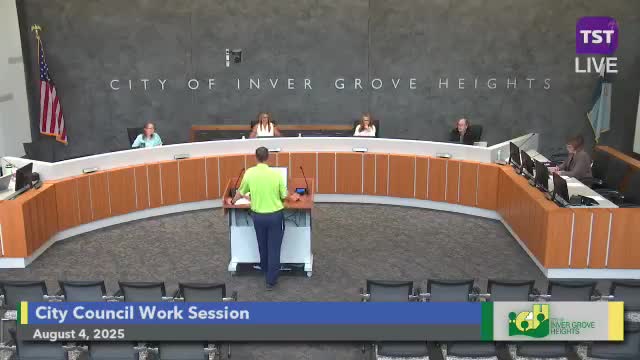
Economic Development Authority Director Jason Zemer presented the EDA’s proposed 2026 budget to the Inver Grove Heights City Council, saying the request represents a modest increase focused on activating the EDA’s work and expanding outreach to business prospects.
Zemer said the 2026 request does not propose new permanent staffing but includes funding for legal and professional services, small-area planning (for sites such as the Republic Concord area), financial consulting and additional event participation and printed materials to increase the city’s business-facing presence. He told the council the EDA is currently funded by a transfer from the city’s general levy and that staff propose using some EDA reserves to limit any levy increase for 2026.
“The benefit of that is it’s very transparent,” Zemer said of a potential distinct EDA or HRA levy, describing the difference between embedding costs in the general levy and levying for a specific purpose. Zemer said a future, distinct levy would make the EDA’s funding and outcomes clearer to the public if council chooses that path.
Zemer said the EDA would like to develop a strategic work plan in 2026 to guide priorities such as business recruitment, retention and expansion (BRE) and potential redevelopment activities. He described a day‑to‑day, single point of contact for businesses as the most helpful capability the EDA lacks now and said that role could be staffed internally or funded via a consultant.
Councilmembers discussed tradeoffs between hiring an in‑house staff person (with associated benefits and ongoing cost) and using focused consultants for time‑limited tasks. Councilmember Scales said he initially favors focused consultants; Mayor Dietrich and others pressed not to lose momentum on retail and commercial recruitment while the council decides. Zemer said the current retail consultant contract had expired July 31 and recommended prioritizing a follow‑up discussion at the council’s next meeting to avoid a lapse.
No formal action was taken on the EDA budget at the meeting; Zemer said staff would bring additional details, including options for staffing, the EDA strategic plan and potential use of reserves, to future work sessions.