Get Full Government Meeting Transcripts, Videos, & Alerts Forever!
Get email alerts on the Expert Disclosure And Sanctions topic
No spam. Unsubscribe anytime.
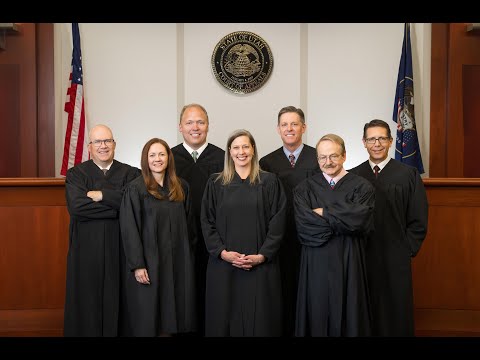
Utah Court of Appeals hears dispute over expert disclosure, exclusion in Alomari v. UDOT
Summary
At oral argument the parties disputed whether a plaintiff's expert designation met Utah Rule of Civil Procedure 26 and whether the district court abused its discretion in excluding the expert and effectively granting summary judgment.
At an oral argument before the Utah Court of Appeals, attorneys for the parties in Alomari v. Utah Department of Transportation disputed whether the district court properly excluded a plaintiff expert after finding the expert designation insufficient under Utah Rule of Civil Procedure 26.
The question framed for the panel was whether the designation’s description of topics — signage, road conditions, standards for contractors and contributing factors — satisfied the rule’s requirement for a “brief summary of the opinions” and whether exclusion under Rule 26(d)(4) was mandatory or whether the district court should have imposed a lesser sanction.
Attorney Waymond Stoddard, representing the appellants, told the court that the designation identified narrow subjects for testimony and argued those subjects, together with a later-served report, should have been sufficient. Stoddard summarized the appellant’s issues as: "1, did the Alomari's disclosure of the expert . . . satisfy the requirements of Utah rule of civil procedure 26? 2, . . . Was there a lesser sanction that was appropriate . . .? 3, is this case the type that would require expert testimony . . .? and 4, was summary judgment appropriate even if that is the case?" Stoddard urged the panel to read the advisory committee notes and precedent as allowing subject-focused disclosures rather than pre-filed testimony.
Opposing counsel Kevin Tanner, who said he represented Staker Parsons and UDOT, argued the designation was missing an actual statement of opinion and that the defendants were forced early into expensive expert elections because the designation did not make clear what opinions the expert would offer. Tanner described the practical harms he said flowed from the designation: being forced to elect a report, lacking facts the expert relied on for effective deposition preparation, and attendant timing constraints. "The report followed within the time period," Tanner said, but he emphasized the timing and discovery-trigger consequences tied to designations and elections that, in his view, were not cured simply by later service of a report.
Both sides pointed the panel to published decisions. Stoddard repeatedly cited RJW Media and advisory committee notes, urging that the rule requires only a summary of subjects. Tanner relied on cases the district court cited and other authorities to argue that broad topic listings are not the same as a meaningful summary of opinions and that a finding of prejudice can require exclusion under Rule 26.
During extended questioning, panel judges pressed each side on the practical line-drawing between a permissible summary and a required statement of opinion, and on whether the district court should have considered intermediate remedies such as supplementation, depositions, cost-shifting or postponement rather than excluding the expert. The panel also asked whether a report served in December (counsel referred to December 12 and December 16 service dates during argument) cured any prejudice the appellees claimed.
Counsel debated whether Corrales, Dela Cruz, Hansen, United Fire Group and the Utah appellate decision in Paget v. Utah Department of Transportation apply and how they instruct trial courts on balancing prejudice with available remedial steps before imposing the “ultimate sanction” of exclusion and dismissal. Stoddard argued that where a trial date had not been scheduled and the report later was provided, harms identified by appellees were not manifest and could have been obviated; Tanner emphasized that discovery timelines and election mechanics can create real prejudice even where a report later appears.
The court heard argument on whether the district court’s exclusion of the expert under Rule 26 was mandatory absent a harmlessness finding and whether the district court abused its discretion by not considering intermediate remedies. Both sides acknowledged the factual record bears on whether, even without the expert, the moving party showed entitlement to judgment as a matter of law.
At the close of argument the court took the case under advisement and said it would issue a written decision in due course.
The issues on appeal focus narrowly on discovery procedure and sanctions, but the panel’s ruling could affect how trial courts apply Rule 26’s disclosure requirements and how litigants draft expert designations in Utah practice.