
Board discusses revision to stakeholder grievance policy; administration clarifies scope and protections
Get AI-powered insights, summaries, and transcripts
Sign Up Free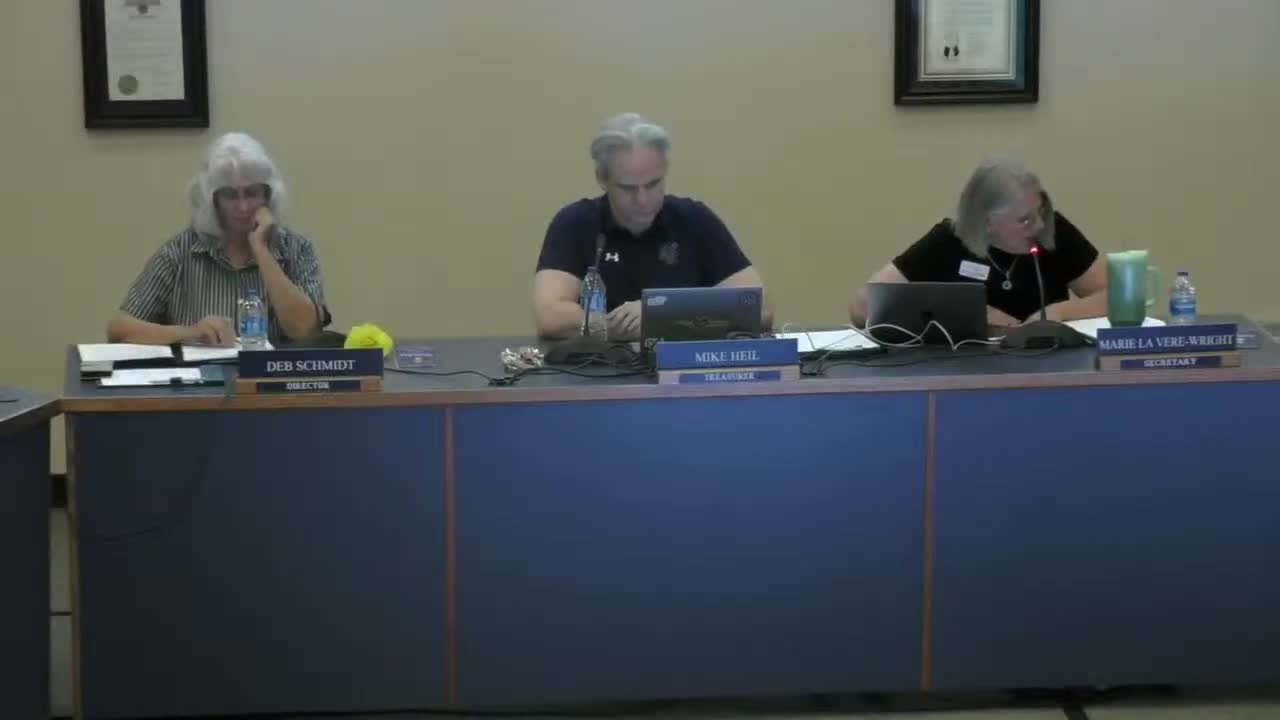
Summary
The board reviewed a rewritten stakeholder grievance policy (KEA) that clarifies it applies to district-operated schools, strengthens neutrality protections and tightens timelines.
The Board of Education reviewed proposed revisions to the district's stakeholder grievance policy (KEA) at the Aug. 14 meeting. Administration said the update is intended to clarify who may file a grievance, what matters are grievable and how the process proceeds.
Paul Anderson, executive director for People and Culture, and Sonia Marroquin Smith, human resources manager, presented the rewrite. Anderson said Sonia led the revision work and that the overhaul organizes the policy into clearer sections: purpose, applicability, grievable matters, process and timelines. Marroquin Smith summarized the substantive changes: the policy applies only to district-operated schools (charter schools maintain their own local governance and grievance procedures), it adds clearer definitions of stakeholders and it tightens language around timelines and objectivity.
"In summary, the proposed revisions enhance the clarity of the policy. It's basically not altering the policy's intent whatsoever," Marroquin Smith said. Administration told the board the grievance office recorded about 114 grievances over the past five years; roughly 18 of those came from charter schools and were therefore not appropriate for district grievance handling.
Director Schmidt said the board had not been given a pre-review opportunity and suggested wording changes. Schmidt raised points including preferring the term "fairness and respect" instead of phrasing that could be read as tied to external executive orders, and asked that nonresidents be explicitly considered in the applicability language. School legal counsel advised that the board's internal grievance process is for stakeholders and does not create a parallel external right for nonresidents to use internal protocols.
Board members also pressed for protections for staff named in grievances. Administration pointed to a strengthened paragraph in the procedures: "Individuals directly named in the grievance or those with a close association to the matter shall not participate in the review or decision-making process. Where appropriate, the district may engage an external investigator to ensure objectivity." The revised text also allows appointing a neutral process facilitator.
Several board members praised the policy's organization and role in reducing repetitive public comment at meetings. Director Lavere Wright, a member of the original policy team, said the grievance process has significantly reduced direct appeals to the board and allowed concerns to be addressed at the appropriate administrative level. The board reached consensus to move the revised KEA policy forward as an action item at a future meeting, and staff said they will return the redlined language with the small wording change requested by one director.
No final policy vote was held at the Aug. 14 meeting; the board's consensus sends the revision to a future action agenda.