Get Full Government Meeting Transcripts, Videos, & Alerts Forever!
Get email alerts on the Gaza Humanitarian Crisis topic
No spam. Unsubscribe anytime.
UN condemns killing of six journalists in Gaza, urges independent probe and scaled aid
Summary
The United Nations condemned the killing of six Palestinian journalists in an August 10 airstrike in Gaza City, called for an independent, impartial investigation and for unfettered humanitarian access as child malnutrition and fuel shortages surge across Gaza.
The United Nations on Monday condemned the killing of six Palestinian journalists in an Israeli airstrike in Gaza City on Aug. 10 and called for an independent, impartial investigation, while warning that humanitarian needs in Gaza have reached catastrophic levels.
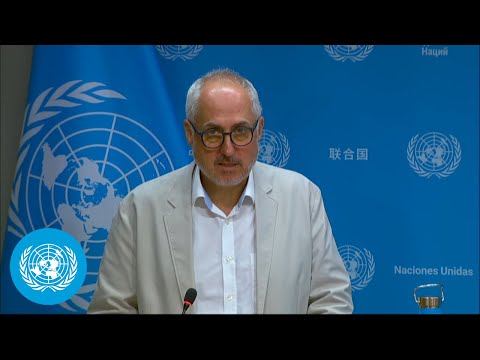
"The secretary general condemns the killing of the 6 Palestinian journalists in an Israeli airstrike in Gaza City on August 10," UN spokesperson Stephane Dujarric said at a briefing, repeating the secretary-general's call that journalists "must be protected, and they must be allowed to carry out their work freely, free from fear, and free from harassment."
The UN described rapidly worsening humanitarian indicators. The Palestinian Ministry of Health in Gaza has confirmed that more than 100 children have died from malnutrition since October 2023, the spokesperson said; the World Food Programme (WFP) reported that more than a third of the population is "not eating for days at a time," and that acute malnutrition is spiking with over 300,000 children at severe risk. The Food and Agriculture Organization warned that just 1.5% of Gaza's cropland is both accessible and undamaged.
"People need a predictable lifeline, not a trickle of aid," Dujarric said, describing deliveries and bottlenecks at crossings. United Nations and partner convoys collected food and hygiene kits at the Karim Shalom/Karim Abu Salim crossing, but the spokesperson said trucks were offloaded before reaching destinations because of the "extreme desperation pervasive in Gaza today." The WFP estimates that more than 62,000 metric tons of food need to enter Gaza each month to meet basic humanitarian needs.
On fuel, Dujarric said Israeli authorities have been allowing on average about 150,000 liters of fuel into Gaza daily, which the UN said is well below what is required to sustain life-saving operations. He cited the Palestinian civil defense warning that more than half of ambulances across Gaza have stopped operating because of fuel shortages and lack of spare parts "which are not allowed to come in."
The spokesperson reiterated the UN secretary-general's call for a full, immediate and permanent ceasefire and the unconditional release of remaining hostages, saying a ceasefire would "allow us to speed up delivery of food for the hungry, health services for the sick and wounded, and shelter materials for displaced people."
Dujarric said the secretary-general has asked for accountability and acknowledged that establishing independent investigations in the middle of active conflict can be difficult, but that options exist and "there will need to be accountability for what happened." He also noted briefings to the Security Council by the UN's Miroslav Yencha and others expressing extreme concern about plans to expand military operations in Gaza.
Several journalists at the briefing pressed the UN to clarify who would carry out an independent probe and how it could be enforced; Dujarric said only that accountability "will need to happen" and that investigations in conflict settings can be time-consuming. He reiterated that labels such as genocide are legal determinations for courts and conventions, and that the secretary-general's advocacy has been focused on ending the fighting, increasing humanitarian access and securing the release of hostages.
The UN said humanitarian partners have collected fuel from the Karim Shalom crossing and continue to press for authorization for spare parts and medical supplies. The spokesperson warned that without a scale-up of aid flows and sustained access, humanitarian operations and services in Gaza will continue to deteriorate.
The secretary-general also welcomed diplomatic steps aimed at de-escalation in other regions, and the briefing included updates on UN peacekeeping and humanitarian operations elsewhere, but the Gaza remarks were the focus of the day's questions and answers.
The UN called for unfettered, predictable humanitarian access, an independent and impartial investigation into the killings of journalists, and immediate steps to address acute malnutrition and fuel shortages in Gaza.