Get Full Government Meeting Transcripts, Videos, & Alerts Forever!
Get email alerts on the Budget Special Education topic
No spam. Unsubscribe anytime.
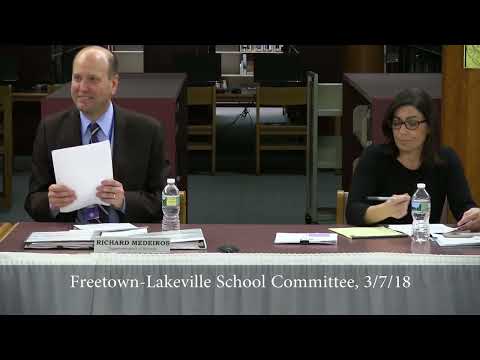
Committee debates special-education stabilization fund, school-choice offset as budget talks continue
Summary
School committee members spent the bulk of the meeting debating whether to roll prior withdrawals into a special-education stabilization fund, reduce the school-choice offset and restore E&D (excess and deficiency) balances; no final change to the assessment was adopted at the meeting.
Derek (committee member) and other school committee members debated whether to roll previously used E&D funds into a special-education stabilization account, reduce the school-choice offset and how to present those choices to the two towns that fund the district.
Why it matters: Committee members and administrators said special-education costs remain volatile and that how the towns choose to fund the district—through operating revenues, free cash or a stabilization account—will affect the district’s flexibility to respond to unanticipated placements and expenses.
The discussion began when district business staff presented an updated budget and assessment sheet showing a reduced request for the stabilization fund. The presentation noted the request for the stabilization fund was reduced to $250,000 and that administrators had rolled that $250,000 into the operational assessment to cover projected special-education costs; earlier drafts had proposed a $500,000 request and, at one point in planning, a $648,000 figure was discussed. Business staff also noted the district may need to use remaining E&D funds (the transcript referenced about $84,000) to close out the current year.
Committee members offered competing approaches. Derek said the district should seek to restore E&D balances rather than move money into a stabilization account and criticized the towns’ past approach to school funding, saying, “I believe that we've been strangled financially by the towns over the last few years.” Several other members said they would prefer asking the towns to fund a larger stabilization account (one committee member explicitly supported the full $648,000 figure) if the towns are willing to provide that money from sources outside the towns’ operating budgets.
Administrators and the committee flagged implementation issues and constraints. The business manager (referred to in the meeting as Rick and as Mr. Baker) and others said school-choice receipts are restricted in how they may be used and cannot simply be moved to cover capital repairs (a point raised during the FinCom discussion). Committee members requested additional detail about whether and how the towns could fund a stabilization account from free cash or town stabilization funds without changing the assessed amount the towns pay.
Formal action recorded: the committee voted to approve the closing entries on the E&D report as presented by Mr. Baker. The motion was moved and seconded and carried (motion text: “to approve the closing entries on the attached as presented by Mr. Baker”; mover/second not specified in the transcript; outcome: approved). The committee did not adopt a final change to the assessment or stabilization amount during this meeting; members directed staff and the finance subcommittee (FinCom) to return with additional calculations and recommended dollar figures ahead of the public hearing scheduled for April 4.
Committee members emphasized that the special-education account is intended to address unpredictable tuition and placement costs but voiced concern that using a one-time stabilization account without replenishing E&D leaves the district financially vulnerable. Multiple members asked staff for clear scenarios showing the assessment impact of different stabilization amounts and the mechanics by which towns could fund the account from non-operating sources.
The committee set an expectation that the topic remain a priority in upcoming meetings and that administration and FinCom supply the requested breakdowns and recommended dollar amounts before the April public hearing.