Get Full Government Meeting Transcripts, Videos, & Alerts Forever!
Get email alerts on the Homelessness Shelters topic
No spam. Unsubscribe anytime.
Council approves $1.22 million for Faith Chapel micro‑shelters after added one‑year extension option
Summary
The Birmingham City Council approved construction funding for a pilot micro‑shelter site operated by Faith Chapel Cares LLC as part of the Home for All program. Council added a one‑year extension option and retained city ownership of the shelters; several members sought stronger long‑term assurances before final adoption.
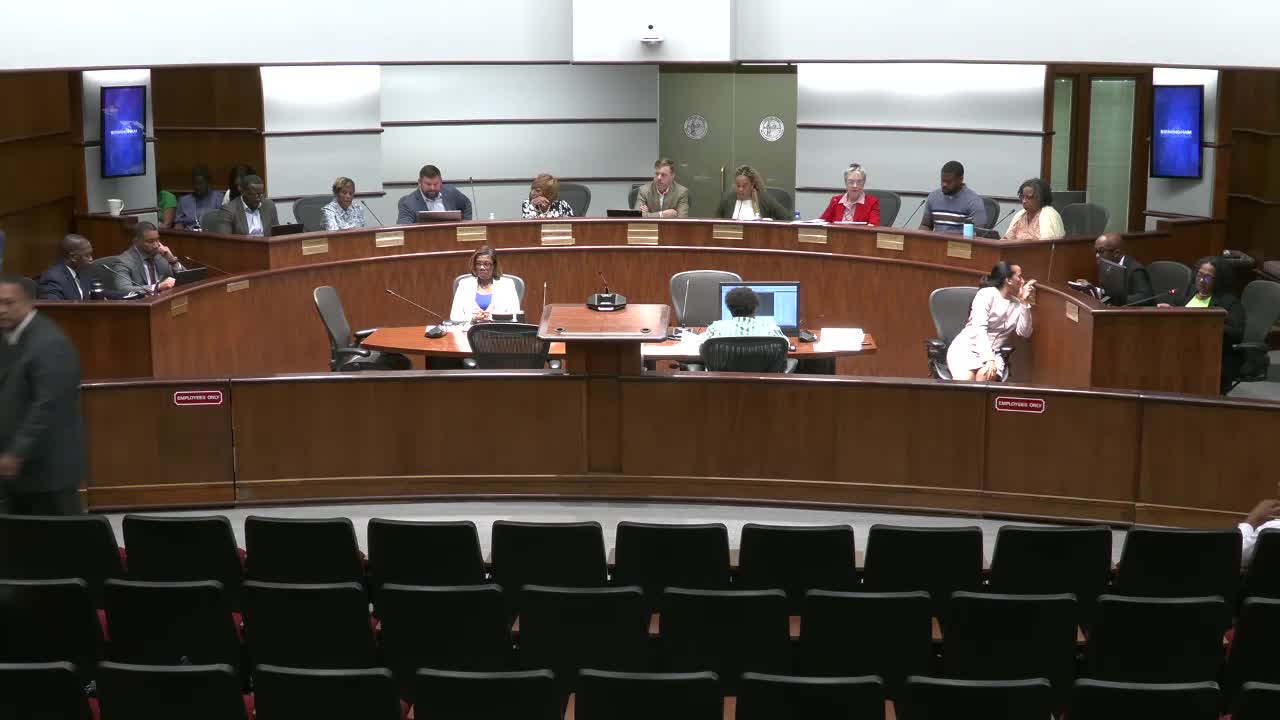
The Birmingham City Council on Aug. 12 approved a $1,224,125.77 city construction allocation to support Faith Chapel Cares LLC’s development of up to 15 micro‑shelters as part of the city’s Home for All pilot program.
The funding covers site grading, infrastructure, delivery and installation of prefabricated units, footings, utility connections and related construction services. Megan Venable Thomas, director of community development, said the city previously funded operational services and that the current request covers the physical construction and site work needed to put prefabricated shelters already purchased onto the site.
The vote followed extended council discussion about program length, property access and neighborhood safety. Council members raised concerns about the pilot’s initial term—an 18‑month operations period—and the city attorney’s assurances that the shelters remain city property during the pilot. Beverly Scruggs, with the city attorney’s office, said the contract contains “clawbacks” requiring Faith Chapel to return funding if it fails to meet performance obligations and that safeguards exist so another provider can operate the site if necessary.
Pastor Deborah Blaylock, representing Faith Chapel, described operational procedures the site will use to limit weapons and drugs on the premises, saying the project would use metal detectors and bag checks and that “they will know that we will take weapons and drugs and alcohol seriously and those infractions could cause them to lose their home.” She also said unannounced facility checks are planned.
Council debate focused on durability of the city’s investment in site improvements. Council member Woods asked for a commitment that would protect the city’s capital investment if Faith Chapel decided not to continue operating the site after the pilot. City attorneys agreed companion language could be added; the council ultimately amended the resolution on the floor to include an option permitting a one‑year extension at agreement of both parties. Council also directed staff to provide the final, completed development documents (the packet the council had earlier received in partial form).
Council members emphasized operational details discussed earlier in Budget & Finance: the pilot will be staffed with a full‑time social worker and other support; residents will be screened by a core team; wraparound services are funded by previously approved operational allocations (CDBG/ARPA funds). City staff said the prefabricated sleeping units do not include running water and that showers and bathrooms purchased separately will be connected to water lines on site.
The council briefly considered, then rejected, a two‑week delay motion meant to secure additional assurances and neighborhood coordination. After adding amendment language for a one‑year extension option and confirming the incentive amount in the packet, the council voted to approve the amended item. City staff said the shelters will remain city property during the pilot and could be removed or reassigned if Faith Chapel fails to meet contract obligations.
Urban Alchemy remains the second identified implementer for other Home for All sites; city staff said 50 prefabricated shelters remain in city storage and those units are earmarked for additional sites under the program. Community development staff said no general fund dollars are being requested for construction: the project uses funds already designated in the city’s CDBG/ARPA allocations for Home for All work.
The council approved the resolution as amended. The packet will be completed and distributed to council offices to show the $1,224,125.77 city assistance amount and the exhibits referenced in the agreement.
A timeline: the construction/installation phase is expected to proceed first, followed by the 18‑month pilot operations term; at six months staff will check on interest in extending the program. The city attorney’s office and community development staff said they will prepare clearer language showing the city’s rights regarding site access and ownership during and after the pilot.
Councilors urged continued coordination with nearby businesses and neighborhood stakeholders, noting recent violent incidents in the general vicinity and warning that adjacent activity could affect the pilot’s success.
The measure passed after amendment and voice vote.