Get Full Government Meeting Transcripts, Videos, & Alerts Forever!
Get email alerts on the Code Enforcement topic
No spam. Unsubscribe anytime.
Council approves weed‑abatement assessment list, will meet individually with 14 residents who contested fines
Summary
Council adopted the 2025 special assessment list for weed abatement after staff reported inspections of more than 22,000 parcels and unresolved fees on 246 properties totaling $61,180; council members offered to meet with 14 residents who attended to review documentation and consider adjustments.
The Upland City Council on Aug. 11 approved the 2025 weed abatement special assessment list and authorized staff to submit unresolved charges to the San Bernardino County Tax Assessor's Office, while offering to meet with 14 residents who contested fines or requested waivers.
Planning staff told the council that the city inspected more than 22,000 parcels as part of this year's abatement program and that most owners complied voluntarily. Development services staff reported 246 properties with unresolved fees totaling $61,180; staff broke that total into components during the presentation: $32,660 in unpaid notices to comply, $4,370 in unpaid second notices, $16,720 in fees for notices/abatement and warrants, $4,400 in unresolved warrant‑related costs, and $7,400 in city‑performed abatements for two properties.
Diane Carter, who presented the item for staff, said the program's objective is public‑safety prevention of fire hazards and that the list is exempt from CEQA (Staff cited CEQA Section 15378 as the non‑project exemption). She recommended approval so the unpaid fees could be placed on property tax bills to recover program administration costs.
Public comment: Fourteen residents appeared and described a range of complaints including delayed or missing mailed notices, disagreement about which parcel contained the overgrowth, and requests that administrative fees be waived where residents said they had since abated the vegetation. Several speakers said they had been told by city staff there would be follow‑up inspections but then received certified notices carrying fees. Examples from the record:
- Brian Lesher (1217 North Ukiah Way) said he fixed the problem but asked the council to waive the fees because he had earlier, unrelated sewer repairs that delayed cleanup. - Rudy Tobar (879 West Astor Street) requested a refund after paying to avoid tax assessments, saying he received the first certified notice only on July 10 and had cleared weeds in May. - Doug Malane (1163 Winston Court) produced before/after photos and said a city inspection dated May 18 concluded “little to no progress” despite his landscapers working on May 7; he asked that a second administrative charge be reimbursed.
Julie Hernandez, the city's weed abatement coordinator, summarized the notice process: an initial insert sent with water bills announcing the program, a second “courtesy notice” with photos after field inspections (no fee), and a third “notice to comply” that carries an $115 administrative fee and is mailed certified when a property is still out of compliance after the courtesy notice. Staff said they had added two temporary staff to help with outreach and that field inspections can span weeks because inspectors must review more than 22,000 parcels.
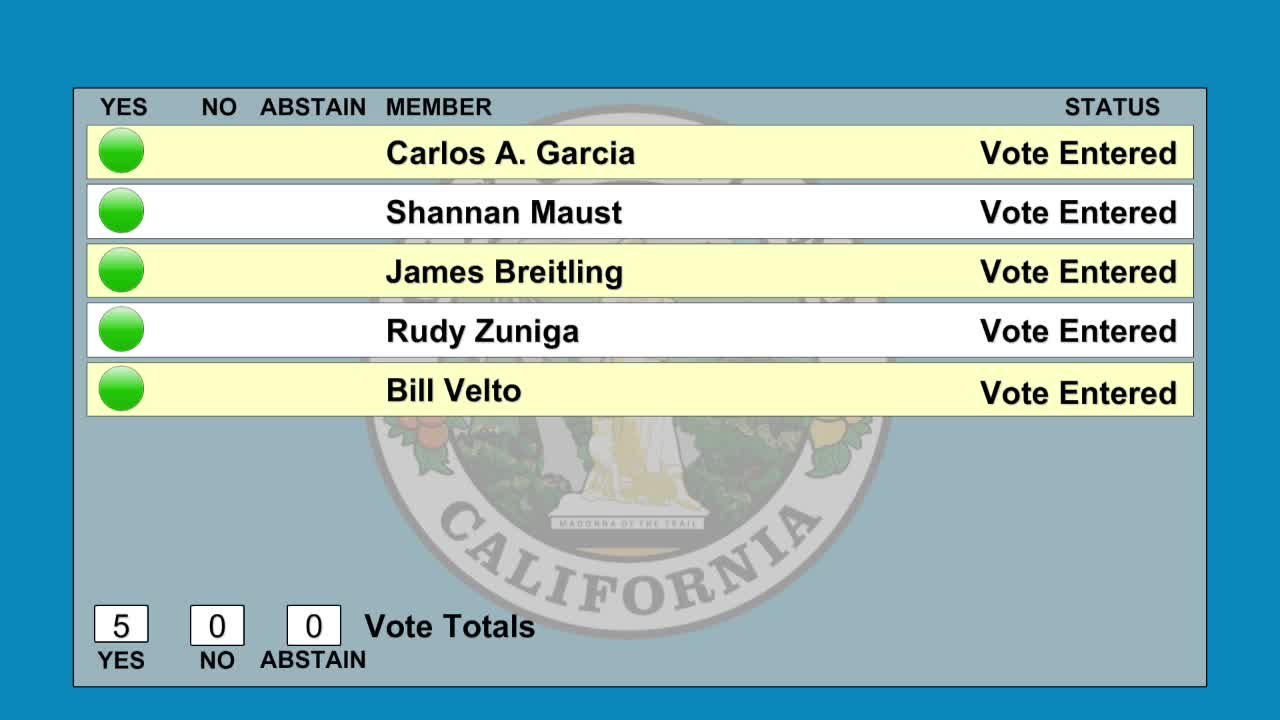
Council action and follow up: Mayor and council members said they heard consistent communication problems from multiple speakers and asked staff to resolve contested cases before assessments go to the tax roll. The council approved the remainder of the assessment list by unanimous vote and directed staff and the development services director to meet immediately with the 14 attendees (and to follow up with others who could not be present) to review documentation and consider refunds or adjustments where warranted.
Ending: Staff told the council that Diane Carter and Julie Hernandez would be available after the meeting to meet with residents; the council approved the balance of the list and asked staff to return with results of any adjustments or recommended procedural improvements.