Get Full Government Meeting Transcripts, Videos, & Alerts Forever!
Get email alerts on the Budget Tax Rate topic
No spam. Unsubscribe anytime.
Kaysville adopts certified tax rate after heated public hearing on FY2026 budget
Summary
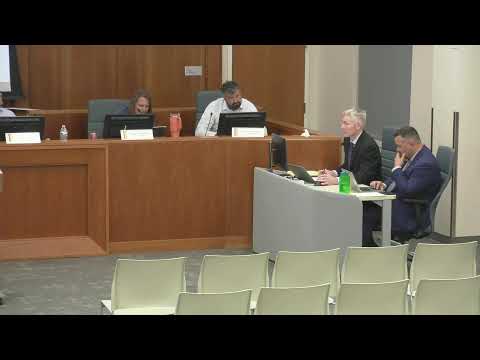
Kaysville — The Kaysville City Council on Aug. 7 voted to adopt the 2025 certified tax rate and approve the fiscal year 2026 budget after a public hearing in which residents raised concerns about rising costs for seniors, roads and a proposed recreation/fitness center.
Kaysville — The Kaysville City Council on Aug. 7 voted to adopt the 2025 certified tax rate and approve the fiscal year 2026 budget after a public hearing in which residents raised concerns about rising costs for seniors, roads and a proposed recreation/fitness center. City Manager Jason Christiansen told residents the package represents $1,795,000 in additional tax revenue and would raise the city’s tax rate to 0.001917 if approved.
The city manager said the tax increase would amount to about $12.80 per month for the average homeowner in Kaysville. He also said that when combined with changes in utility and service charges — including trash pickup, sewer rates administered by Central Davis Sewer District, and electric rates — an average household would see roughly $35 more per month across those charges.
Why it matters: Council members said the increases are intended to keep pace with rising costs for materials and core services, fund two new positions — an assistant city attorney and a police sergeant — and support a planned partnership with Davis School District to build a fitness center at Caswell Junior High that the city would also use as a recreation facility.
Public comment focused on affordability and priorities. Resident Wade Vigg said he was opposed to any new taxes and urged the council to prioritize roads and local maintenance over new facilities: “I would rather see money go to roads,” Vigg said, adding that his Webb Lane street floods and remains unrepaired. Several other speakers who identified themselves as senior or fixed‑income residents said the combined increases strain limited budgets. Scott Godfrey said the proposed increases are hard to bear on Social Security income and questioned the long‑term cost of a $10 million, 30‑year commitment to the proposed fitness center.
Jerry Schmidt, speaking during public comment, urged eligible residents to apply for property tax relief programs administered by the Davis County Comptroller and cited the senior homeowners credit as an important, if partial, subsidy for low‑income seniors. He also noted recent state legislative activity: he referenced Senate Bill 197 (a 2024 state bill discussed at the meeting), and said the governor vetoed the measure after local treasurers and county officials opposed changes that would have cut the senior program.
Council debate reflected competing priorities. Council member Adams emphasized demand for youth recreation and said the proposed fitness center is intended to relieve long waiting lists for youth sports and provide an affordable option for families who cannot pay high private‑facility fees: "If I can't sacrifice one drink at Maverick so that all these kids can utilize this facility, I just — I mean, I see shaking heads. I get it. But for me... I feel like it's our responsibility as a city to do that," Adams said. Council member Blackham said he supported the gym but voted against the overall tax package because he felt the combined increases were too large for many households.
City staff and several council members stressed that long‑term operating costs and rising construction and materials prices drove much of the increase. Jason Christiansen and council members cited multi‑year inflation for asphalt, curb, sidewalk and water service work, and the council described attempts to find efficiencies and defer capital purchases. Council members also said the city had delayed hiring and capital projects in prior years, creating a backlog of needs. Council discussion noted the city has historically kept its tax rate low compared with other Davis County cities and said the council preferred smaller, more frequent adjustments rather than large increases after long delays.
Formal action and next steps: The council closed the public hearing and immediately opened a special council meeting to consider the certified tax rate. A motion to adopt the 2025 certified tax rate and the fiscal year 2026 budget passed. Council members and staff said they will continue to monitor operations and seek grant and development revenue opportunities to reduce future pressure on the property tax rate.
Votes at a glance
• Motion: “Adopt the 2025 certified tax rate for Casel City and fiscal year 2026 budgets.” — Motion passed. (Mover: council member who made the motion during the meeting; second: a second was recorded.)
(See Actions array for the motion text and recorded votes.)
Ending note: City staff said additional materials, including a detailed budget breakout and timing for shared use of the proposed fitness facility with Davis School District, will be presented in follow‑up agenda items and posted online. Council members encouraged residents with specific property‑tax eligibility questions to contact the Davis County Comptroller’s office.