Get Full Government Meeting Transcripts, Videos, & Alerts Forever!
Get email alerts on the State Legislation Briefing topic
No spam. Unsubscribe anytime.
State Sen. Tina Polsky briefs Coconut Creek commission on 2025 session: fentanyl testing, awareness day, vetoed local appropriations, citizen‑initiative changes
Summary
State Sen. Tina Polsky briefed the commission Aug. 7 on multiple bills and budget outcomes from the 2025 legislative session, including fentanyl‑related measures and two vetoed local appropriations.
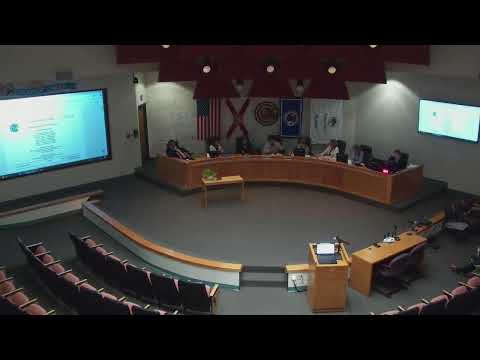
State Sen. Tina Polsky visited the Coconut Creek City Commission Aug. 7 and reviewed highlights from the 2025 Florida legislative session, focusing on public‑safety and consumer‑protection measures and on two local appropriations that she said were later vetoed.
Polsky (State Senator Tina Polsky) summarized legislation she sponsored that she said requires hospitals to perform fentanyl testing when conducting a drug‑overdose panel and creates an annual Fentanyl Awareness Day on Aug. 21. “This is named after a young man who lost his life, Gage Taylor,” Polsky said, describing the testing bill as intended to ensure clinicians and families know when fentanyl is present and that appropriate treatment is available. Polsky said office materials (graphics and video) will be available to municipalities for the new awareness day and asked commissioners to share them with residents.
Polsky also described a consumer‑protection bill passed after a special session aimed at reducing fraud by individuals who misrepresent notary public services as legal advice — commonly mistaken in some Spanish‑speaking communities for an attorney’s services. “This bill prevents the fraud and makes advertising for these services and more punishment available,” she said.
Polsky told the commission a bill requiring the Florida Attorney General’s office to publish public information about the state’s legal contracts with outside private law firms was inserted in the budget; she described this as a transparency step that will require the AG’s office to disclose spending and contractors. She also said some election‑law changes moved this year and that she opposed components that she said created difficulties for citizen initiative petitions; she cited senate bill 7016 as a comprehensive change that will increase signature requirements, formality, and potential liability for petition circulators and described it as a disappointing restriction on the citizen initiative process.
On local appropriations, Polsky said she had secured two project amounts for Coconut Creek in the enacted budget — $200,000 for fleet building rehabilitation and $800,000 for advanced metering infrastructure — but that both line items were vetoed by the governor during the final budget reconciliation. She told commissioners she and Representative Hanchevsky had worked to secure the appropriations and thanked the city’s lobby team for their advocacy.
Polsky touched on other 2025 session outcomes relevant to local governments: she flagged an agriculture bill (Senate Bill 180) that included a statewide ban on fluoride in municipal water, and she advised cities to watch for potential unintended consequences from that bill’s look‑back provisions as litigation and challenges arise. She also described condo‑reform legislation that extended certain compliance deadlines to assist associations completing safety inspections.
Polsky closed by reminding residents to re‑register for vote‑by‑mail every two years if they wish to continue receiving ballots by mail and offering her office’s constituent services for cities and residents.
Why it matters: many of the items Polsky described affect municipal operations and local policy choices — hospital testing practices, public‑health awareness, consumer‑protection enforcement, local appropriations and water‑fluoridation rules are all areas that can involve city governments in outreach, enforcement, or mitigation. Commissioners asked follow‑up questions about committee weeks and how cities might engage earlier in the legislative cycle.