Get Full Government Meeting Transcripts, Videos, & Alerts Forever!
Get email alerts on the Main Street Development topic
No spam. Unsubscribe anytime.
Commission approves first-reading agreements to advance Main Street development; property exchanges and infrastructure plan set second readings for Aug. 28
Summary
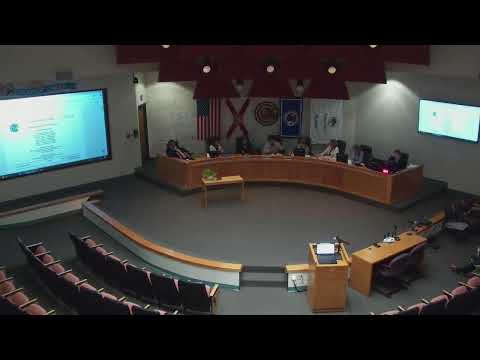
The Coconut Creek City Commission on Aug. 7 approved on first reading a package of agreements with developer GSRRE Partners LLC that lay out a phased plan for the 200-acre Main Street at Coconut Creek project, plus companion real‑property exchanges and FDOT parcel conveyances. The measures passed unanimously and return for second reading Aug. 28.
Coconut Creek Mayor Joshua Railey and the City Commission voted unanimously Aug. 7 to approve, on first reading, a set of legal agreements designed to move the long‑planned Main Street at Coconut Creek project into construction and to clarify who will build and maintain the infrastructure.
The measures include a development agreement with GSRRE Partners LLC that would govern roughly 200 acres between Lyons Road and State Road 7 (U.S. 441) from Wiles Road to Sample Road; a companion exchange of real property between the city and GSR to create the city’s Village Green and civic node; and an ordinance accepting conveyance of drainage easements and right‑of‑way parcels from the Florida Department of Transportation related to the Main Street work. All three items passed on first reading and were advanced to second readings scheduled for Aug. 28.
The development agreement (ordinance 2025‑036) is structured under Florida’s Local Government Development Agreement Act (chapter 163, F.S.) and would vest the developer to the city’s land‑development regulations in effect at the time of the agreement, with limited exceptions for changes in Florida Building Code, fire code, or retroactive state preemption. City attorney Terrell Pieburn said the agreement also clarifies responsibilities for capital and maintenance work and includes performance bonds and remedies for default.
City staff described the principal city investments and the developer commitments. City manager Sheila Rose and project staff said the city’s direct capital commitments tied to the agreement total $16 million in various forms: approximately $1.7 million earmarked for the Village Green and Lakeside Plaza (the city’s immediate contribution is $2.4 million, the rest through partnership mechanisms), plus up to $11 million structured as a multi‑year payment plan tied to construction of a parking garage that the city will operate and maintain. Staff said those payments will be subject to a separate agreement with the Community Development District (CDD) and the developer.
The developer and city presentations explained housing and affordability components. The development agreement and attachments anticipate mixed‑use development with a maximum entitlements cap in the PMDD of up to 2,360 residential units and up to 225,000 square feet of commercial space, though multiple commissioners and staff emphasized the developer’s current plan is substantially lower than the maximum entitlement. The developer will provide workforce rental units and down‑payment assistance programs: staff noted the agreement calls for roughly 60 workforce rental units on each of two blocks (blocks 4 and 10) and a proposed down‑payment assistance program that the city described as an approximately $80,000 forgivable loan over 10 years for eligible buyers (program income would return to the city if a buyer sells before the forgiveness period).
Developer representatives described rental affordability protections that would cap certain units at 140% of area median income (AMI) in order to stabilize monthly costs for essential workers. The developer’s consultant presented a slide citing example monthly savings for renters: the presentation listed a $737 monthly savings for a one‑bedroom unit; the slide’s numeric entries for two‑ and three‑bedroom savings were not legible on the public audio/video record and are therefore not reported here.
City staff said responsibilities will be split: the developer and the CDD will maintain private roadways, medians, landscape, irrigation, streetscape elements and private stormwater on private property, while the city will maintain water, wastewater and reclaimed water systems only to the point of connection on city property, the Village Green and the parking garage built under the agreement. Staff said the developer must post performance bonds for public improvements (100% of construction cost on bid documents) and the agreement includes periodic (annual) reviews of progress.
The companion exchange of real property (ordinance 2025‑034) would transfer roughly 6.1355 acres from the city to the developer and about 5.732 acres from the developer to the city for the civic node, parking garage and Lakeside Plaza. The city and developer agreed the documents will include warranty deeds with mineral rights retained and that title and appraisals will be finalized and attached before second reading. Pieburn said the city equalized value for economic development purposes under section 166.0218, Florida Statutes, and that, to protect access, the agreement survives closing for seven years so the city can call performance bonds if minimum public‑access infrastructure (first lift of asphalt on specified access roads and alleys) is not completed within seven years.
A related ordinance (2025‑035) accepting conveyance of FDOT parcels and easements for drainage and right‑of‑way in the Main Street area also passed first reading. Justin Proffitt, director of sustainable development, said these are parcels the city has long maintained and that conveyance will regularize ownership before streetscape and roadway construction moves forward.
Commissioners praised staff and the developer team for lengthy negotiations and emphasized the project’s long‑term financial and civic implications. Commissioner Sandy Riedell described the agreement as “a revenue and infrastructure investment that changes the city’s trajectory,” noting staff projections of roughly $12 million in future impact‑fee revenue and $1.8–$2.6 million annually in property taxes over time. Multiple commissioners and the developer noted second readings and recordation remain required before final approvals.
The city will present the development agreement, the exchange agreement and the FDOT conveyance for final action at the Aug. 28 commission meeting. City staff said the developer expects to close on needed parcels in mid‑September (staff stated an anticipated closing date of Sept. 18) and the agreements include a December 31 backstop if closings are delayed.
Votes at a glance (items taken Aug. 7): - Ordinance 2025‑036 (development agreement with GSRRE Partners LLC) — first reading; motion carried unanimously (Riedell, Welch, Bridal, Brody, Vice Mayor Wasserman, Mayor Railey present). Outcome: advanced to second reading (Aug. 28). - Ordinance 2025‑034 (exchange of real property between city and GSR for Village Green and civic node) — first reading; motion carried unanimously. Outcome: advanced to second reading (Aug. 28). - Ordinance 2025‑035 (conveyance of FDOT parcels/easements to the city for Main Street) — first reading; motion carried unanimously. Outcome: advanced to second reading (Aug. 28).
Why it matters: the package packages city capital and developer commitments to build public amenities, public access and multimodal streetscapes that staff say will accelerate infrastructure delivery and create a civic gathering place while capturing future revenue. Several safeguards are included in the agreements — performance bonds, periodic reviews, deed language and a seven‑year survival window — but the documents still require final approval at second readings.
Implementation notes and next steps: staff said the city will finalize appraisals and exhibits before Aug. 28, record the development agreement and related instruments on approval, and execute a separate financing/lease arrangement for the parking garage with the CDD/developer to spread payments over time. Commissioners asked staff to keep the public informed on phasing and the timing of the first infrastructure work.