Get Full Government Meeting Transcripts, Videos, & Alerts Forever!
Get email alerts on the Health Insurance topic
No spam. Unsubscribe anytime.
Carroll County Delegation weighs $164,000 assessment after NHIT trust insolvency
Summary
Delegation members and county officials discussed a requested $164,000 assessment from the collapsed NHIT interlocal trust to cover outstanding employee medical claims, debating whether to pay from the county's health insurance fund or the general fund and noting an imminent demand from the receiver.
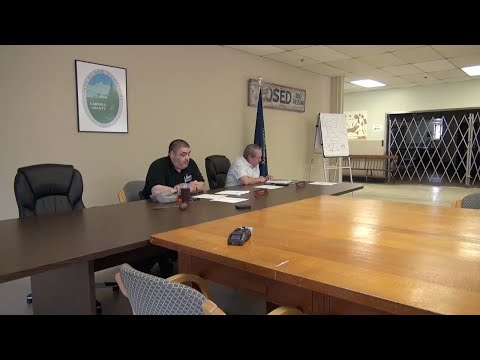
Carroll County delegation members on an August meeting discussed a request from county commissioners to pay roughly $164,000 to cover outstanding employee medical claims tied to the insolvency of the NHIT interlocal health trust.
The request, described during the meeting as an assessment from the trust's receiver to cover unpaid claims, prompted debate over where the county should take the money. Linda Mattchet, Carroll County's director of human resources, told the delegation, "We signed an agreement with NHIT back in 2012. It's a member services agreement. Mhmm. We joined a risk pool." Mattchet said NHIT had been the county's prior health plan administrator and that outstanding claims remain to be settled after NHIT wound up operations June 30.
Why this matters: delegation members and county staff said unpaid claims could result in providers seeking direct reimbursement from employees if the county does not pay the assessment. One county official reported the receiver had indicated that if Carroll County did not pay the assessment, the receiver "will not pay our outstanding claims," which could leave employees liable for medical bills.
County staff and representatives described the assessment inconsistently during the meeting. Commissioners stated the assessment request totaled about $164,000; a printed sheet cited the figure rounded to $165,000. A county staff member noted 68 open claims already identified, totaling about $141,000. Delegation members acknowledged claims can continue to be submitted for up to a year, so the final liability may change.
Delegation members pressed staff on the original 2012 member services agreement that placed the county in NHIT's pooled arrangement. Mattchet said she had not recently reviewed the 2012 contract and could not state whether the county retained contractual recourse against NHIT or the trust for reimbursed assessments.
Finance staff said the county has fund balance capacity but had not yet made a formal recommendation. A finance representative said the expense appeared "extraordinary" and was suitable for bringing to the delegation's attention; the office planned to review options including drawing on the county's health insurance fund or fund balance.
Several delegation members and at least one commissioner favored paying the assessment from the county's self-insurance/health insurance reserve rather than from the general undesignated fund balance. "We have plenty of money in our health insurance funds to pay this bill because it's related to health insurance," one commissioner said. Another representative said, "If the health insurance falls below 165,000, I'm happy to approve transfers to cover that cost."
Questions remained about process and authority. Delegates asked whether paying the assessment required formal delegation approval or whether commissioners could approve an emergency transfer from an existing appropriation for medical insurance. The delegation heard differing views: some members said commissioners could make transfers for emergency or unanticipated expenses; others said an appropriation or delegation action could be required. Delegates requested legal and audit review to clarify the correct procedure before finalizing the payment approach.
Public commenters raised concern for employees and for oversight of the receiver. Ed Como of GovernmentOversight.com asked, "Who is safeguarding the insurance issue? The AG is involved, but who's protecting the employee?" County staff replied that the secretary of state and the attorney general's offices were involved in oversight of the dissolution and receiver process, as reported in the meeting.
Delegation members repeatedly emphasized urgency. One delegate said the receiver had set a deadline for a payment commitment (discussed in the meeting as July 28), and warned the receiver would issue demand letters and could pursue legal action if the county did not provide a payment plan.
No formal appropriation or delegation vote was taken on the NHIT assessment during the meeting. County staff and delegates agreed to continue reviewing: staff will examine whether the payment can be processed from the county's existing medical-insurance appropriation, finance will reexamine fund sources, and the delegation asked legal and audit staff to confirm whether delegation action is required before payment.
Ending: Delegates said they would not approve further projects tied to funds under review until outstanding questions about a separate ARPA funds transfer were answered in writing; meanwhile county staff and commissioners said they would pursue immediate options to prevent employees from receiving collection attempts while legal and audit clarifications are obtained.