Get Full Government Meeting Transcripts, Videos, & Alerts Forever!
Get email alerts on the State Legislature Budget And Transportation topic
No spam. Unsubscribe anytime.
City lobbyist warns of state moves to cut property-tax revenue, warns local governments to prepare
Summary
Oakland Park city lobbyist Russell Clannett briefed commissioners on legislative trends including a proposal to eliminate property taxes, reduced support for regional rail and a state audit program affecting counties. He urged local preparation and public education.
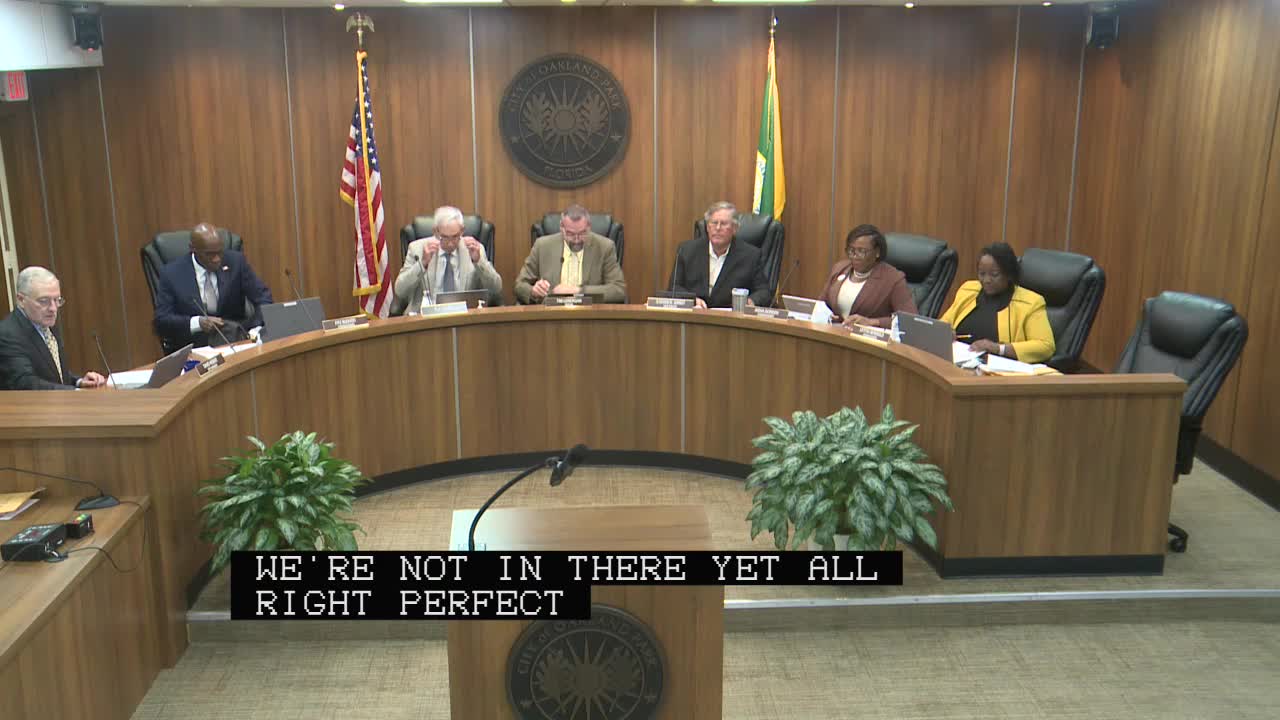
Russell Clannett, the city’s contract lobbyist, told the Oakland Park City Commission on Aug. 6 that recent developments in Tallahassee and other state actions could substantially affect local services if state leaders pursue proposals that would replace property-tax revenue with higher sales or consumption taxes.
Clannett said a governor-backed idea to reduce or eliminate property taxes would have to be made up with other revenue — likely sales taxes — and observed that “the single most regressive tax that there is is sales tax” because it takes a larger share of income from lower earners. He urged the city and its residents to “prepare, to examine what it might mean, and educate our people.”
Why it matters: Property taxes fund most local government services, Clannett said, and public safety is typically the largest local expenditure. “You cut that much out of the budget. Who’s first?” he asked, urging city leaders to plan now for possible state policy shifts.
Clannett also reviewed several transportation and regional items tied to state funding and private-sector changes: he described reductions in a longstanding Florida Department of Transportation allocation that historically subsidized Tri-Rail, saying the annual allocation could fall from roughly $46 million to about $12–15 million and then phase out. He said the Florida East Coast Railroad’s (FEC) new private ownership and business focus on freight contributed to tensions with Brightline over use of shared tracks and that adding passenger service will likely require track additions and “hundreds of millions of dollars” for new track and safety upgrades.
He warned the commission to expect accelerated legislative timelines next year (session moved earlier in the calendar) and noted changes that affect local contracting and diversity efforts, including newly tightened restrictions on citizen initiatives and limits or removals of diversity-related contract language in some counties.
Clannett also described the state’s “Doge” audit team — a state-directed review now operating in large counties — that obtained terabytes of county records in at least one instance. He said the state-appointed leader is Eric Soskin, and that the effort has raised concerns about the scope of documents delivered for review.
Commission response: Commissioners thanked Clannett for the briefing and reaffirmed the need for city-level outreach and education if the state pursues major tax or regulatory changes. Vice Mayor Arns asked for clarity on the scope of the state audits; Clannett said the state law empowered the audit team but that outcomes were unclear.
What’s next: Clannett said he will send materials to the commission as bills are filed and encouraged Oakland Park to prepare resident-facing information explaining likely effects on public safety, transportation and local services.
Speakers quoted or who spoke on this topic are listed in the article’s speakers array. No formal city action or vote occurred on these policy items at the Aug. 6 meeting; the briefing was informational.