Get Full Government Meeting Transcripts, Videos, & Alerts Forever!
Get email alerts on the Airport Infrastructure topic
No spam. Unsubscribe anytime.
Caldwell reviews airport strategic plan; staff to seek federal tower funding and plan infrastructure upgrades
Summary
City staff presented a strategic plan for Caldwell Executive Airport outlining economic impact, infrastructure needs, and next steps including an application for federal control-tower funding and proposed city contributions for electrical and other improvements.
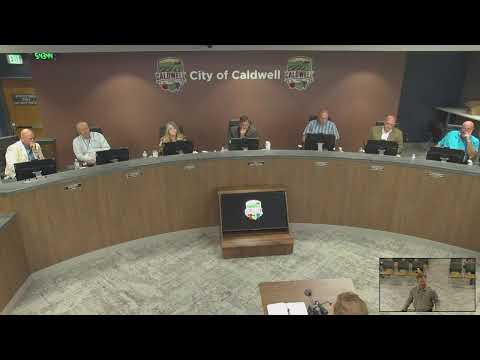
Scott, the city’s director of aviation, presented a high-level overview of a strategic plan for Caldwell Executive Airport during a workshop of the Caldwell City Council, describing the plan’s goals, recent stakeholder outreach and proposed infrastructure requests.
The plan, Scott said, summarized work from four stakeholder meetings and included input from pilots, hangar owners, businesses and local residents. He told the council the full 30-page strategic plan will be returned as a formal agenda item at a later meeting for the council to accept. “Once this is done, I will depart after this workshop … and then either the next council meeting later in a month or the first one in September, I will come back with the full 30 page strategic plan as an agenda item for acceptance by the council,” Scott said.
Why it matters: Caldwell Executive Airport is designated by the Federal Aviation Administration as a reliever airport for the Boise area; officials said the airfield supports private and corporate aviation, on‑airport businesses and secondary local spending. The plan outlines near-term infrastructure needs — electrical service to hangar rows, possible control‑tower funding, and other investments — and includes a multi‑year city funding request to support build‑out.
Most important points
- Economic and employment data: Scott said the airport supported “just over 341” non‑city jobs on site and that the 2020 economic‑impact study attributed roughly $56 million in economic output to the airport; taxable employee earnings tied to the airport were cited as about $15 million in the 2020 assessment. He also said property taxes on privately owned hangars returned roughly $250,000 to the city in fiscal year 2023–24.
- Infrastructure needs and costs: Scott listed the top near‑term needs as a control tower (federal funding sought), electrical upgrades to the 200‑series hangar rows, and communication/outreach work. He said the plan’s “bottom target” for a three‑year, one‑time city funding request would be $2.5 million; for fiscal 2026 he said an infrastructure ask would ideally be $845,000. On electrical work, Scott described an option under discussion with Idaho Power and city staff that would bring buried infrastructure and meter banks to hangar rows; he said the high end of that estimate was about $80,000 for the described scope of work.
- Control tower funding: Scott said the city is preparing to apply for funding under the Infrastructure Investment and Jobs Act for a control tower and has JUB Engineering preparing application materials. He told the council the federal program historically pays up to 90% of control‑tower construction costs and that, if funded, construction could be picked up in 2026 but is more likely to be constructed in 2027 depending on federal allocations: "There is a potential that it could get picked up and approved for construction in 2026. What I expect to happen is probably it gets carried forward another year, and then we'd be looking at construction in 2027," Scott said.
- Reliever‑airport role and limits: Scott clarified the FAA reliever designation means Caldwell is expected to absorb general‑aviation and corporate traffic to relieve Boise’s GA load; it does not make Caldwell a commercial or emergency diversion airport for large airliners. "This does not mean that we're going to have commercial 737s coming to Caldwell Executive Airport. That is just not going to happen," he said.
- Land and development: Scott said all hangars on the field are privately owned and pay property tax; he estimated about 14–15 hangars were currently under construction. He said roughly 82 acres on the north side of the airport are available for build‑out but currently lack water, sewer and other utilities, and that developers regularly inquire about space.
Council questions and concerns
Councilors pressed Scott on hangar standards, electrical‑safety responsibilities, timing for potential closure of a segment of Linden Avenue adjacent to the airport, and public outreach. Scott said hangar condition ranges widely and that the city intends to produce a hangar‑development packet to standardize permit steps for builders. On electrical responsibility he said existing lease language often leaves responsibility with hangar owners but the city is evaluating a public‑infrastructure approach to lessen the owners’ upfront costs. On Linden, Scott said plans for any closure are in preliminary discussion and that, if a closure were to occur, the earliest preliminary discussion would likely be about five years out.
Public engagement and next steps
Scott said the strategic‑planning outreach included non‑pilots and neighborhood residents and that the full plan will include a scoring sheet showing how issues were ranked. He recommended further town halls and community meetings as the project advances. Scott also said the airport board member John Cardell helped facilitate the in‑house planning pro bono, and that the city attorney (Oscar) and Idaho Power have been involved in technical discussions.
Workshop status and formal action
The presentation was given in a workshop setting; no formal votes or council decisions were made during the session. Scott said he will return with the full strategic plan for formal consideration and that staff intends to submit an application for federal control‑tower funding once the grant notice is released.
Ending: The workshop closed without action; the council scheduled its regular meeting to begin at 6 p.m.