Get Full Government Meeting Transcripts, Videos, & Alerts Forever!
Get email alerts on the County Budget And Operations topic
No spam. Unsubscribe anytime.
Sedgwick County manager Tom Stolz cites budget pressure, consolidation and public-safety demands
Summary
Sedgwick County manager Tom Stolz said the county faces pressure to sustain services across about 45 departments while keeping property taxes in check, noting more than half of the county's roughly $600 million budget is pass-through state or federal money.
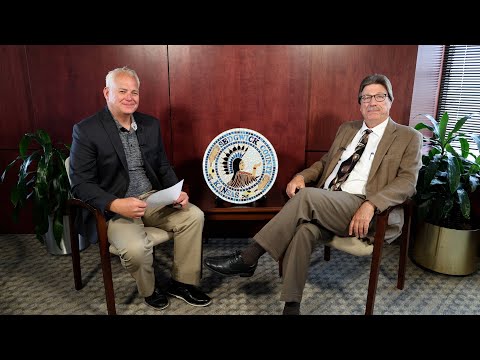
Tom Stolz, Sedgwick County manager, said the county is juggling a wide range of services and budget pressures while trying to maintain public safety during an interview recorded in the meeting transcript.
Stolz said Sedgwick County manages roughly 45–47 departments that together serve the county and its cities and that the county’s budget this year is “over a $600,000,000” with “better than half of that” coming from state or federal pass-through funds. “A big part of our of the county budget is other types of, rather than local tax money comes from state and federal,” he said.
The county manager emphasized differences between city and county government functions, saying counties act in part as a conduit for state services. “Cities within the state have good autonomy. They have good home rule power, and a county government basically is a conduit to state government,” Stolz said. He listed functions the county manages for all 538,000 residents of Sedgwick County, including a sheriff’s jail, the 911 system, district court support, Comcare (mental health) and the public-health department.
Stolz described prior consolidation work he helped lead. He said he applied to direct a merger of city and county code departments and took part in implementing that consolidation around 2012. He also cited the county’s joint exploited-missing-children unit as an example of a merged city–county entity.
On operational scale and staffing, Stolz said the county’s overall manpower is “around 3,000 employees” and noted the county operates many services that also support the city of Wichita. He said that while services “offer good services, but they're not overdone,” cutting them would likely be felt quickly because many are public-safety related.
Stolz identified property-tax pressure and sustaining essential services as the county’s primary long-term challenge. “We have a finite resource there that we have to be very judicious with, and yet we're extended into all these different areas trying to provide good service for people,” he said. He also warned that decisions about prioritizing services — particularly public safety, roads and public health — will be a “constant juggle” during budgeting.
The interview included personal background: Stolz said he grew up on a farm between Kalwich and Mayes, married someone from Andale and spent 31 years with the Wichita Police Department before moving into county management. He also said he holds a science degree and initially intended to work in forensic science: “I joined the police department so I could work in forensic science.”
No formal votes or policy decisions were recorded in the transcript. Stolz described past and ongoing managerial work and flagged budget prioritization and intergovernmental coordination as areas for continued attention going into future budget retreats and hearings.