Get Full Government Meeting Transcripts, Videos, & Alerts Forever!
Get email alerts on the Parks Turf topic
No spam. Unsubscribe anytime.
East Ridge council approves $3 million synthetic turf project at Camp Jordan amid health and runoff concerns
Summary
On July 24 the East Ridge City Council approved a resolution to install synthetic turf on four baseball fields and the soccer stadium at Camp Jordan Park at a cost not to exceed $3 million, after extended public comment about heat, chemicals and drainage. The vote was 4-1.
The East Ridge City Council on July 24 approved a resolution to install synthetic turf on Baseball and Softball Fields 5 through 8 and the soccer stadium at Camp Jordan Park, authorizing up to $3,000,000 for the project.
The item drew the meeting's longest public discussion, with residents raising concerns about recycled crumb-rubber infill, potential "forever" chemicals (PFAS), lead, elevated surface temperatures, disposal after the turf's 8-to-10-year life and runoff into the park's pond and Chickamauga Creek. Parks and Recreation staff and vendor representatives said the product specified uses a sand-and-rubber blend infill made from recycled tires, cited an April 2024 federal study on crumb rubber, and described measures for drainage and end-of-life recycling.
Parks and Recreation presented the project and the vendors in attendance included Baseline Sports Construction, ASA Engineering & Consulting and a representative from Shaw Sports Turf. Jill Higdon of Connect Sports, a local tournament organizer, said turf increases field availability and helps attract events. A city resident questioned the safety of crumb-rubber infill and its runoff: "So it's going to end up being our pond out there," the resident said, adding concerns about lead and other contaminants entering local waterways.
Parks staff and the Shaw representative answered that the proposed turf uses a sand-and-rubber blend and that Shaw does not use PFAS in its fiber or backing manufacturing. The Shaw representative cited an EPA-centered analysis, saying, "the study found no significant difference in exposure from certain chemicals found between players who played on synthetic turf that used crumb rubber infill and those who played on grass fields." Shaw staff also said the company can reclaim and repurpose removed turf (for example into shock pad material) at a facility in Dalton, Georgia, though no written contract for end-of-life reclamation was included in the packet.
Engineers described the stormwater design under the turf: the backing is permeable, runoff is collected into a stone profile (approximately a 6-inch stone layer on specification drawings) with filter fabric and then discharged via collector piping to the site's conveyance system, which will route to either an onsite pond or the nearby creek. ASA Engineering said the design follows typical specifications for infiltration and conveyance; the firm agreed to provide the design documents referenced in the presentation.
Council members pressed vendors and staff on several details: whether PFAS are used in the product (Shaw said no for the proposed system), whether crumb rubber contains lead (vendors referenced the EPA study and other analyses and said lead exposure differences are not significant per that study), whether the fields will reach very high surface temperatures (vendors acknowledged turf can get hotter than grass and said cooling/mitigation options are available), and how demolished turf would be disposed of (Shaw said they offer a take-back/recycling program but the contract does not currently commit to that). Staff also committed to additional field subsurface checks at Field 8 and adjacent fields to test for rock or other obstructions and to report back to council before construction proceeds.
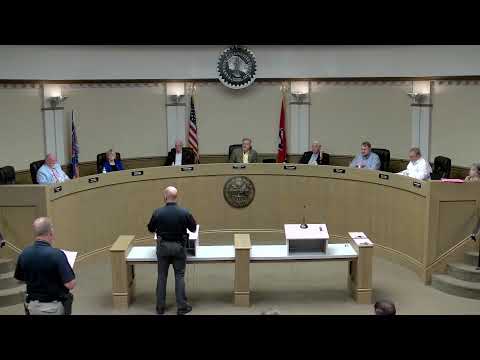
Councilmember Witt made the motion to approve the resolution; Vice Mayor Tyler seconded. The roll-call vote was: Vice Mayor Tyler yes; Councilmember Cagle no; Councilmember Ezell yes; Councilmember Witt yes; Mayor Williams yes. Resolution number 3711 was approved 4-1.
The council packet notes this authorization is consistent with a prior November action (resolution 3628) that set the budgetary authorization for turf at Camp Jordan. With the approval, staff said they will finalize contractor scheduling and pre-construction site investigations, and return with any required contract documents and any additional submittals required by the city.
Proponents say new turf will increase event reliability and tournament bookings; opponents and at least one council member expressed environmental and health concerns that staff said they will continue to address in final contract documents.