Get Full Government Meeting Transcripts, Videos, & Alerts Forever!
Get email alerts on the Accessibility Audit Tooling topic
No spam. Unsubscribe anytime.
Danvers accessibility panel proposes interactive project-tracking tool to manage ADA self-evaluation
Summary
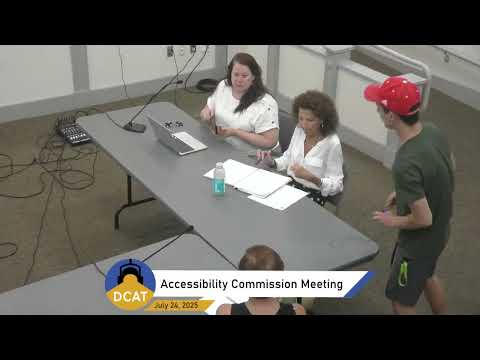
The Danvers Accessibility Commission on Thursday, July 24 proposed converting the town’s ADA self-evaluation audit into an interactive, web-based project-management tool to track accessibility issues across parks, public buildings and sidewalks and to funnel requests to the Department of Public Works (DPW).
The Danvers Accessibility Commission on Thursday, July 24 proposed converting the town’s ADA self-evaluation audit into an interactive, web-based project-management tool to track accessibility issues across parks, public buildings and sidewalks and to funnel requests to the Department of Public Works (DPW).
Commission member JD, who demonstrated the prototype, said the existing PDF self-evaluation is “incredibly inaccessible” and proposed using an online tool such as Asana or Trello so the commission, town staff and the public can view priorities, comment and track progress. “That document was trash. I'm just gonna be honest,” JD said during the presentation.
Why it matters: Commissioners said an interactive tracker could centralize incident reports and surveys, make project priorities and budgets transparent, and create a clearer pipeline for small repairs and larger capital projects. That last point matters because accessibility work can be expensive and requires coordination with town procurement and budgeting processes.
Key details and discussion
- Tool demonstration and structure: JD showed a sample Asana board organized by open spaces, public buildings, sidewalks and the rail trail. Each item would include a description, authority (who manages the site), amenities, an accessibility rating and recommendations. Items could be dragged from “to do” to “in progress” to “done.” JD said the commission could maintain a public view (editable only by invited users) and asked the town for at least view access for the general public.
- DPW integration and workflow: Steve King, town engineer and the commission’s town liaison, explained how DPW would interface with a tracker. “If you've got these listed to do items and specifics, you can kinda clip that out and put it right to our work order system,” King said. He described a workflow in which commission-collected details generate a town work order; DPW would then decide whether a request is a short repair or a larger capital project requiring scopes, bidding and budget approval.
- Grievance reports and ADA coordinator access: Commissioners stressed the value of giving the commission access to the town’s grievance spreadsheet so the commission can monitor complaint response times and aggregate issues into the tracker. JD said the commission should have access to grievance reports and set due dates for follow-up in the tool.
- Prioritization and budget context: King and commission members discussed funding and timelines. King said the town tries to set aside roughly $200,000 annually for accessibility improvements in its evaluation plan but cautioned that actual costs vary with materials and labor. He gave recent examples: a curb-cut project that cost about $85,000 and a previous year in which the town improved 76 ramps at a cost just over $150,000. King also noted that larger projects may need to move through the select board, FinCom and town meeting for capital funding and may be affected by state bidding laws.
- Public input and outreach: Commissioners suggested pairing the tracker with periodic town surveys (open spaces, public buildings, sidewalks) to gather residents’ priorities and contact information, rather than relying solely on complaint filings.
Decisions and next steps
- The commission agreed JD will share test access to the prototype tool with commission members for hands‑on review and will consult town staff (Jill and Jen) about legal/open‑meeting requirements and whether the town will adopt the platform. JD said she will invite commission members to trial the tool and will contact town staff about public view/edit permissions.
- The commission discussed but did not take a formal vote to have the town adopt the tool; members agreed to test the platform and to follow up with the town manager’s office about integration and open‑meeting compliance.
Quotes
“This would be a big step in transparency,” JD said of publishing prioritized items and project status from the tracker. Steve King said the tool could streamline DPW intake: “It generates a work order for us to go and make a repair or create a project.”
Ending
The commission asked JD to talk with town staff about procedures and permissions, circulate invites so members can test the prototype, and return with a recommended workflow showing how items would move from the public view to DPW work orders and, if required, into capital‑project scoping and budgeting.