Get Full Government Meeting Transcripts, Videos, & Alerts Forever!
Get email alerts on the Education Policy Technology topic
No spam. Unsubscribe anytime.
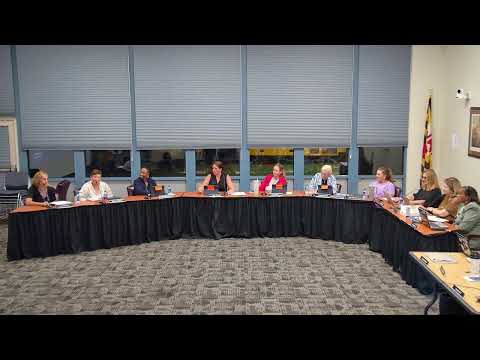
Talbot County board pulls personnel ARs from consent; debates student acceptable-use, staff-technology rules
Summary
At its Aug. 20 meeting, the Talbot County Board of Education removed proposed personnel administrative regulations from the consent agenda after public comment and board discussion. Members also discussed first‑reader updates to staff and student technology-use policies, including device return rules, AI guidance and Internet filtering.
The Talbot County Board of Education on Aug. 20 tabled proposed administrative regulations on personnel after public comment and board members’ concerns, and debated first‑reader updates to staff and student technology‑use policies that the board may act on later.
A resident, Wes Haygood, told the board he was surprised to see the personnel AR (AR 7.1) placed on the consent agenda and asked whether the board considered “these important policies as routine non controversial items.” He raised a series of questions about nondiscrimination language and whether the board has a plan for resolving conflicts between state and federal law: “I would like to know if the board has determined what they will do when federal and state legislation are in conflict.”
Board members responded by asking that the personnel administrative regulations and the employee code of conduct AR (7.2) be removed from the consent agenda for further review. After discussion, the board voted to pull the items so staff and the policy committee could revise language; the board chair said the AR language should align with nondiscrimination and equity language and avoid wording that could be read as requiring personnel moves to achieve a “balanced staff.” The board indicated the items will return for further consideration at a future meeting.
Separately, staff presented first‑reader revisions to two technology policies and their accompanying administrative regulations. Technology director Michael Wilson (listed in board materials as Mr. Wilson) described edits to the staff use policy AR that clarified device ownership, servicing and surrender requirements and removed some dated wording. Wilson said the AR now specifies that devices are TCPS property, “are issued to TCPS personnel, and is subject to annual updates and [are] to be surrendered at the, at the end of the, the term of the employment separation from employment, and to be serviced by TCPS staff exclusively or their designated contractor.” He said the word “password” was replaced with the broader term “security.”
Wilson also reviewed first‑reader updates to the acceptable‑use and Internet‑safety policy for students (Policy 10.32 and AR). The draft adds explicit language that “TCPS will provide filtering in compliance with the Children’s Internet Protection Act,” expands examples of covered devices to include tablets and peripherals (for example, 2D/3D printers, CNC equipment, cameras and scanners), and requires that “Students will comply with all TCPS guidelines regarding the use of artificial intelligence.” The draft also clarifies that student devices must be surrendered when requested and returned if a student withdraws or graduates.
Board members and public speakers asked numerous questions about practical implementation. Discussion topics included whether shopping sites should be blocked (the district uses category filters), how YouTube access is managed for instructional content versus blocked channels, whether student agreements should be signed or only reviewed and accepted, and which grades should require parental acknowledgment. One board member urged clearer, simpler language rather than retaining nearly 20‑year‑old phrasing.
The board did not take final votes on the technology policies; both items were in first reader and will return for further consideration. The chair and policy committee members said they will consult teachers and other staff as part of the revision process and will bring clarified language back to the policy committee.
Votes and formal actions at the meeting included pulling AR 7.1 and AR 7.2 from the consent agenda for further revision and scheduling them to return to the board. The board approved other consent items that had been separated from that motion (see Actions at a glance). The personnel report discussed in closed session was later presented in open session and approved.
Why it matters: The contested AR language and the acceptable‑use revisions touch on employee nondiscrimination guarantees, student privacy and safety, artificial‑intelligence guidance, and day‑to‑day technology access in classrooms — issues that affect teachers, students and families across the district. The board’s choice to pull the personnel ARs means those matters will receive more public scrutiny and committee review before any final action.
What’s next: The policy committee will revise the pulled AR language and take input from teachers, administrators and the public; the student acceptable‑use and staff technology policies remain first‑reader items and may return for a vote at a later meeting.