Get Full Government Meeting Transcripts, Videos, & Alerts Forever!
Get email alerts on the Land Use topic
No spam. Unsubscribe anytime.
Santa Rosa council overturns Planning Commission, approves Elm Tree Station gas station project
Summary
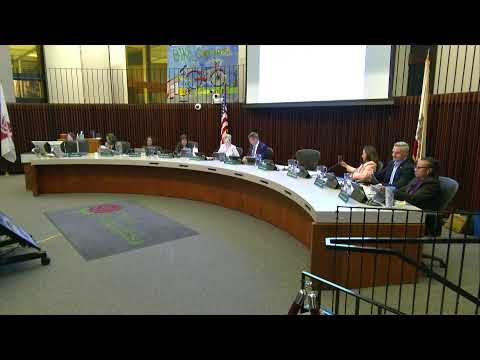
After hours of public testimony and a split Planning Commission recommendation, the City Council voted 5–2 to accept an appeal and approve a conditional use permit and CEQA addendum for the Elm Tree Station mixed-use project at 874 North Wright Road.
The Santa Rosa City Council voted 5–2 on Aug. 26 to accept an appeal of the Planning Commission’s denial and approve a conditional use permit and CEQA addendum for the Elm Tree Station project at 874 North Wright Road, a mixed-use proposal that includes a fueling facility, two small retail spaces and one residential unit.
Council members who voted to approve the appeal said they were honoring the city’s earlier decision to allow applications that were deemed complete before the city’s 2022 ban on new gas stations to continue through the review process. Opponents — including nearby residents, health professionals and environmental groups — told council that locating a fuel-dispensing facility adjacent to the Joe Rodota Trail and near residences and a school posed health, safety and climate risks.
The project site is near the western Santa Rosa boundary, adjacent to the Joe Rodota Trail and close to Highway 12. Planning staff told the commission and council that the application had been deemed complete on Dec. 17, 2021 and that, under the city ordinance adopted in Sept. 2022, applications that were complete before the ordinance’s effective date could continue to be processed. Staff also presented an addendum to an earlier Initial Study/Mitigated Negative Declaration and technical studies on air quality, greenhouse gases, stormwater, and groundwater for council review.
In the public hearing more than 70 people spoke. Supporters, including the applicant’s attorney and agent, argued the project revived a previously approved scheme (first permitted in 2013), will provide a neighborhood market, EV chargers and a small amount of housing and that modern double‑walled storage tanks and regulatory programs limit groundwater risk. Opponents — residents, physicians, climate advocates, bicycle and walking groups and the Planning Commission chair — raised groundwater contamination, the proximity to multi‑family housing and the trail, traffic and safety for people walking and cycling, and the project’s inconsistency with the city’s climate goals. The Planning Commission had unanimously denied the project in April, citing incompatibility with multiple zoning and general plan findings and concerns about health and safety.
City staff and the applicant answered technical questions during council’s review. The Santa Rosa Fire Division chief (Division Chief Paul Ontell) explained the current permitting and inspection regime for underground storage tanks and said single‑walled metal tanks are no longer allowed and that double‑walled systems with monitoring are required. Staff also noted the project would not include retail sales of alcohol or tobacco under the current application and that any such future proposal would require a separate discretionary approval.
After extended deliberations about the scope of the city’s 2022 gas‑station ordinance, the meaning of the exemption for applications already in the process, and the sufficiency of the CEQA addendum, Councilmember Rogers moved to accept the appeal and approve the project. Councilmember McDonald seconded the motion. The roll call vote was: Rogers — yes; O’Krepski — yes; McDonald — yes; Fleming — no; Ben Welles — no; Vice Mayor Alvarez — yes (stated she had read the materials and voted aye); Mayor Stapp — yes. The motion passed, 5–2.
The council’s approval allows the applicant to proceed toward final entitlements and building permits subject to the conditions of approval and required building, environmental and public‑works permits. City staff said any future proposals that would change uses (for example adding on‑sale alcohol) or propose extended hours would require additional discretionary review.
The decision divides neighborhood opinion and drew repeated calls from speakers on both sides for the council to prioritize either economic opportunity and honoring prior review commitments or neighborhood health, safety and climate commitments. Mayor Stapp and several council members encouraged continued neighborhood engagement during the project's next permit and design stages.
The applicant and opponents should expect follow‑up on technical compliance items during permit review. Any party considering legal challenge would most likely rely on arguments about whether the project met the specific zoning and environmental thresholds; council deliberations referenced both the 2022 ordinance exemption language and the city’s obligations under CEQA.
Council staff will post the final council resolution and the adopted addendum to the city’s project webpage; conditions of approval and the final resolution will set the process for permit submittal and inspection.