Get Full Government Meeting Transcripts, Videos, & Alerts Forever!
Get email alerts on the Land Use Development topic
No spam. Unsubscribe anytime.
Lakeway council denies PUD amendment to convert Coalmeier development to condominium regime after resident opposition
Summary
Lakeway City Council voted 6-1 to deny an amendment that would have changed the approved Lakeway Heights Planned Unit Development at 15115 Coalmeier Drive to a condominium regime, after residents raised concerns about deed restrictions, short‑term rentals and lack of design detail.
The Lakeway City Council voted 6-1 on Aug. 18 to deny a requested amendment to the Lakeway Heights Planned Unit Development that would have converted an approved subdivision at 15115 Coalmeier Drive into a condominium regime.
The PUD amendment was proposed after the original developer withdrew; the new owner requested the change so the project could be sold and managed as condominium lots rather than individual lots. Director Kavi Carr presented the amendment as carrying the same layout, density and unit square-footage approved in January, with the primary change being condominium ownership and a private-drive easement connecting Coalmeier Drive and Cavalier Canyon.
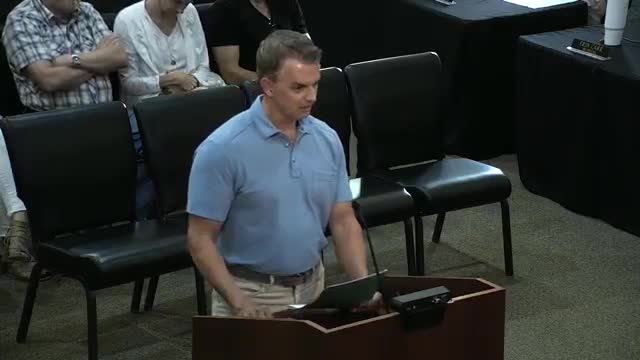
The change prompted extensive public comment and questions from council members about deed restrictions, building materials and whether the conversion would allow short‑term rentals. Multiple nearby residents said they learned about the condo plan only after a new owner purchased the property and urged the council to deny the amendment. Alan Goldsmith, John Miller and Amy Miller, among others, said the developer did not perform due diligence on deed restrictions and that converting to a condominium regime could enable investor‑owned short‑term rentals and harm neighborhood character.
Applicant Bruce Rainey told council the company plans to build detached, titled condominiums and that the site plan, unit count and unit sizes would remain the same; he said exterior designs were not finalized but that the project would meet PUD and city code requirements. Rainey said the condominium regime would allow the HOA to maintain exterior landscaping and common areas.
Council debate focused on three points: whether the city should consider deed restrictions (council repeatedly noted Texas law bars municipal enforcement of private covenants), whether the amendment materially changed the product residents had previously approved, and whether the applicant had brought adequate plans for council and public review. Councilmember Sherman moved to deny the amendment; after discussion the motion passed 6-1.
Mayor Kilgore noted that if the applicant wished to proceed under the previously approved PUD terms the original approval would remain in effect. The council did not take up any alternate approvals or further amendments at the meeting.
Residents and council members repeatedly requested that the city and applicant provide clearer, earlier information in future PUD reviews to avoid similar community conflict.
The denial preserves the PUD as approved in January; any future changes will require new applications and public hearings.
Ending — The council’s decision means the property owner may either proceed under the existing PUD approval or return with a different, fully detailed application. No new development permits will be issued under the requested condominium amendment.