Get Full Government Meeting Transcripts, Videos, & Alerts Forever!
Get email alerts on the Land Use topic
No spam. Unsubscribe anytime.
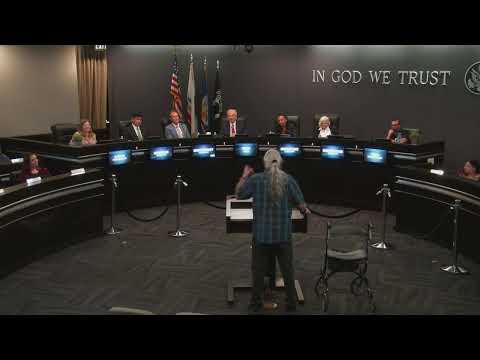
Lancaster planning commission backs Westside annexation and 1,860-acre North Lancaster industrial specific plan
Summary
The Lancaster Planning Commission voted 7-0 to recommend the Westside annexation of roughly 7,153 acres and adoption of the North Lancaster Industrial Specific Plan covering 1,860 acres, while acknowledging the final EIR identified significant and unavoidable impacts for air quality, greenhouse gases and operational noise.
The Lancaster Planning Commission voted unanimously to recommend city council approval of the Westside annexation, a General Plan amendment and pre-zoning, the North Lancaster Industrial Specific Plan (covering a 1,860-acre portion of the annexation area), and a related development agreement. The annexation would add approximately 7,153 acres from unincorporated Los Angeles County to the city.
Jocelyn Swain, senior planner for the city, said the proposal is intended to facilitate job-producing industrial and commercial development on largely vacant and fragmented land north of the current city limits. "This project represents the first time in 35 years that the city of Lancaster has proposed to modify its jurisdictional boundaries," Swain told the commission, describing the annexation area as roughly bound by Avenue B, Avenue G, Thirtieth Street West and Sierra Highway.
Staff said the specific plan would not entitle any single development but would set zoning and development standards for up to 38,500,000 square feet of industrial and commercial development within the specific-plan area, divided into eight planning areas. A development agreement with MPAV Logistics LLC was proposed to facilitate build-out in several planning areas and would run 15 years with a potential 15-year extension; the agreement would obligate infrastructure contributions from the developer, including trails, public art, and other public benefits.
The city prepared a programmatic/project-level environmental impact report (EIR) for the annexation and specific plan. Swain told commissioners that most impacts could be mitigated to less-than-significant levels, but three categoriesair quality, greenhouse gas emissions and operational noisewould remain significant and unavoidable under currently feasible mitigation. "We did look at potential mitigation measures, but there were no feasible ones" for operational roadway noise, Swain said, noting that measures such as rubberized asphalt (the city standard) and continuous 12-foot sound walls would not be feasible or sufficient.
Speakers at the hearing included landowners and business representatives who supported the annexation, citing job creation, infrastructure investments and enhanced public safety. Peter J. Gutierrez, attorney for a Leisure Lakes mobile home park owner, told the commission the owner supports annexation and expects improved services such as police protection if incorporated into Lancaster.
After public testimony, the commission adopted Resolution 25-17 recommending the city council certify the final EIR, adopt findings and statements of overriding considerations, approve the annexation, General Plan amendment, pre-zoning, specific plan, and the development agreement. The vote was 7-0.
Staff outlined the remaining procedural steps: city council hearings expected in September and October and the LAFCO process later in the fall. If the approvals proceed as scheduled, the annexation would be filed with the state Board of Equalization on Dec. 1, according to staff.