
Fire department proposes higher EMS fees, new resident write‑off policy and prompt‑pay discounts
Get AI-powered insights, summaries, and transcripts
Subscribe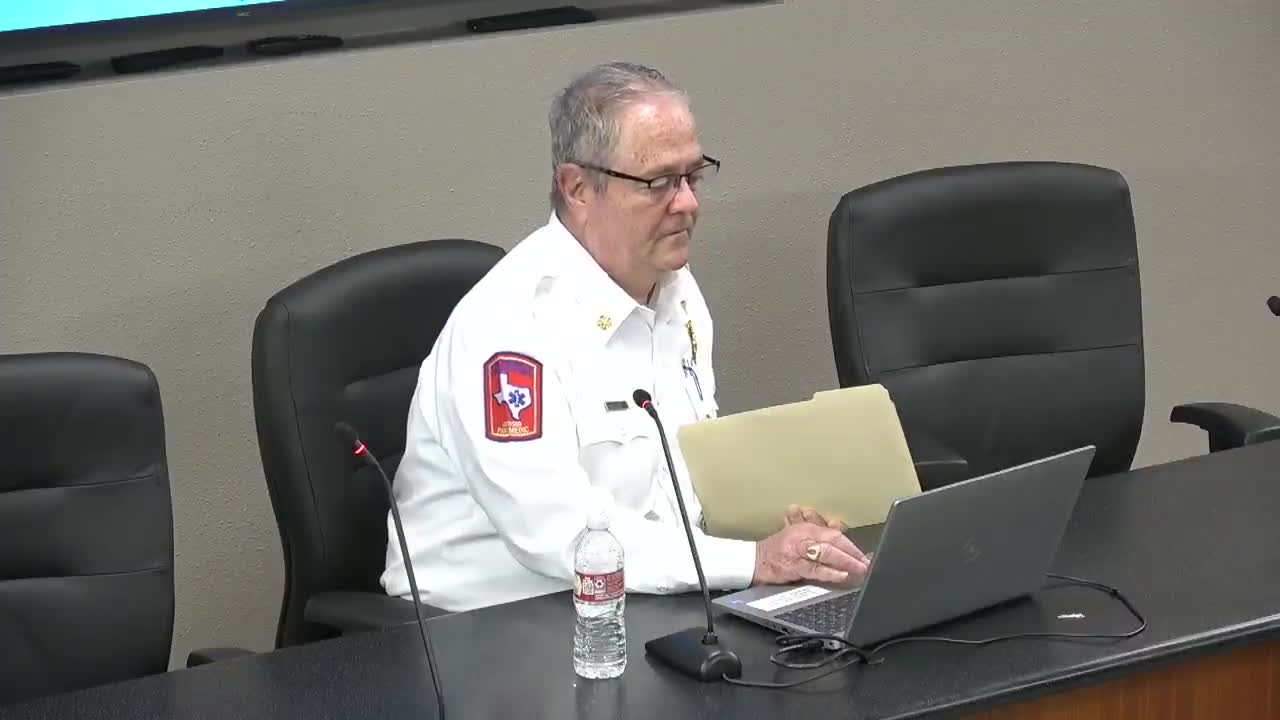
Summary
Garland Fire Department proposed raising ambulance (EMS) fees to better recover commercial insurance reimbursements, and suggested a resident write‑off policy so uninsured Garland residents would not receive a bill; staff said the change would reduce reliance on state ambulance supplemental payments.
The Garland Fire Department proposed raising emergency medical service (EMS) fees at the Aug. 16 budget workshop and recommended a new approach to resident unpaid balances to improve collections while protecting Garland residents.
Chief Lee said current Garland EMS fees are below Medicare allowable levels and below many regional peers. “Currently, Garland discharging $675 [for an ALS2 call] … Medicare allows $759.79,” he said, and noted commercial payers often reimburse based on a percentage of Medicare allowable amounts (up to 325% for some contracts). Chief Lee and his fiscal staff proposed an ALS2 charge of $1,750 and a higher schedule for other service types; staff said the change is intended to “optimize the commercial insurance revenue” that already exists for many patients.
Resident protections and charity care Chief Lee proposed a “resident write‑off” policy: if an invoice shows a Garland resident has no insurance, the city would write off the patient balance rather than send repeated bills. For insured patients, staff would bill the insurer as usual. Chief Lee said shifting to resident write‑offs would likely reduce the ambulance supplemental payments the city receives from the state (a program that provided roughly $300,000 annually in recent years), because those payments depend on charity‑care claims filing and other program rules.
Collections and community impact Chief Lee and council discussed the difficulty of publicly promoting ambulance fees because of a concern that some residents might hesitate to call 911. Judd and staff said they will make fee schedules available but will be careful in public messaging so as not to discourage 911 use. The chief noted that private insurers and Medicare sets reimbursement amounts and that the change would primarily capture revenue from commercial insurers rather than shift more costs to residents.
Legal context and policy tradeoffs Chief Lee referenced recent state law on balance billing (Senate Bill 2476, as discussed in the presentation) and said the department would not pursue balance billing. Council members asked about outreach and how the changes would be communicated; staff said they would provide details if the council adopts a revised fee schedule.
Ending No vote occurred during the workshop; council members generally probed the details of resident protections and collection practices and asked staff to provide follow‑up information, including expected revenue and collection impacts.