
Garland managers pitch ‘tax-rate shift’ plan, calling FY26 a ‘bridge year’ ahead of Nov. 2026 election
Get AI-powered insights, summaries, and transcripts
Subscribe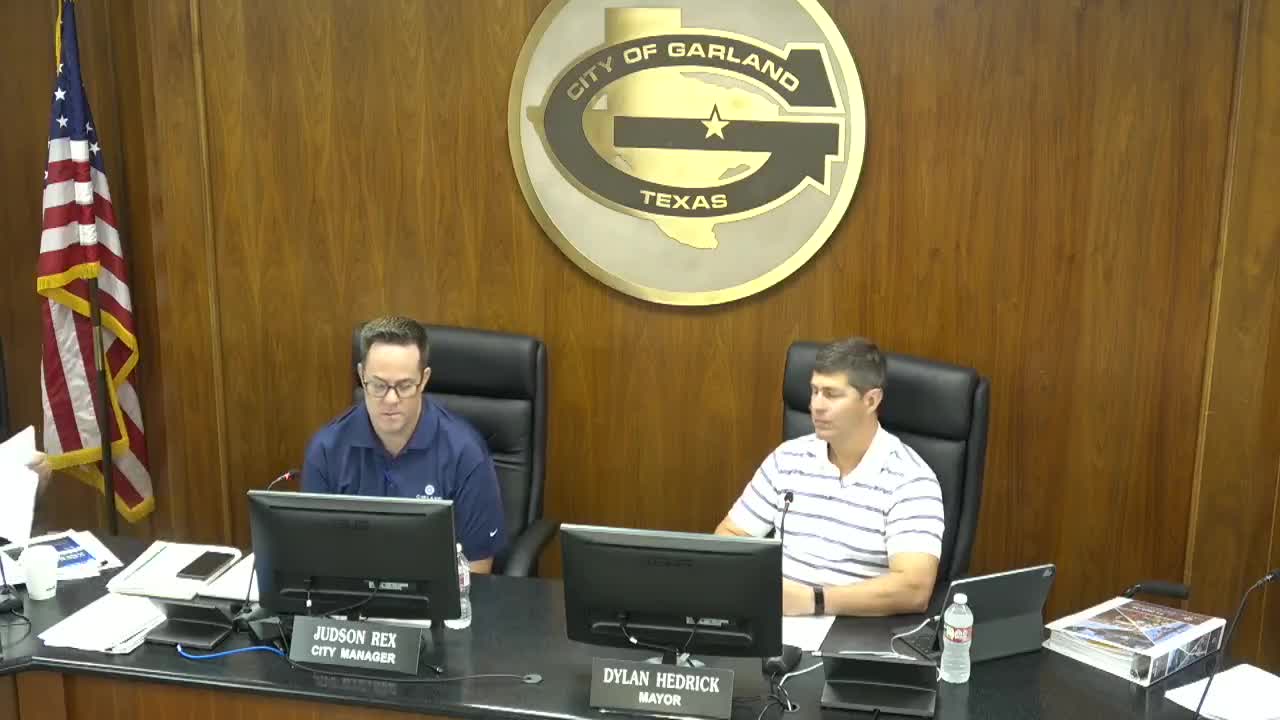
Summary
City staff presented a FY2026 budget they described as a “bridge year,” proposing one‑time spending to hold the tax rate steady now while planning a November 2026 ballot measure to shift revenue from debt service to operations without raising the overall tax rate.
City Manager Jed Judd and budget staff told the Garland City Council on Aug. 16 that the proposed FY2026 budget is a “bridge year” intended to hold services steady while the city prepares a November 2026 election to move revenue between tax-rate “buckets” rather than raise the overall rate.
“This is a bridge year, particularly for the general fund,” Judd said during the work session. He and budget staff described limited new ongoing spending and several one‑time uses of cash intended to smooth operations into the tax‑rate action planned for next year.
Budget Director Allison (last name not specified in the transcript) presented certified 2025 taxable values and the staff computation of the proposed tax rates: “Our proposed M and O rate for, 25.26 is 0.2886, with a proposed debt service tax rate of 0.4011 for a total combined proposed rate of 0.6897,” she said. Staff emphasized the proposal would keep the total rate level while using a future November election to move revenue from the uncapped debt service bucket to the operations and maintenance (M&O) bucket.
Why it matters: Garland officials said the city’s long-term revenue picture remains constrained by Texas’ SB2 property-tax limit, which caps increases in general‑fund (M&O) revenue at 3.5% a year. Judd said the city has used prior revenue gains to catch up from the Great Recession and again to restore staff and services, but that continued stagnation in sales and residential values makes sustaining services difficult without structural change. Staff estimated that a successful tax‑rate shift next November could move roughly $8 million to the general fund to cover ongoing services and to help operate new bond‑funded facilities.
Key budget figures and choices - Total consolidated budget (all funds): about $1.1 billion; proposed general fund resources: $257.2 million. - Proposed FY26 general fund increase: $10.3 million. - Staff proposed a one‑time 2.5% lump‑sum pay recognition for employees (general fund cost, about $3.5 million) rather than an ongoing pay raise. Judd said the one‑time approach avoids committing funds that may not be available if the Nov. 2026 measure does not produce the intended structural shift. - Public safety is the largest general‑fund category at roughly $171.4 million (about 67% of general‑fund spending).
Group health costs and retiree coverage Judd and staff highlighted a doubling in the group health fund over the last decade and said continued medical cost growth is a major budget pressure. Staff included a 6% increase to employer and employee premiums for active employees and proposed a 10% increase to retiree premiums, while noting the city currently caps retiree contribution increases at 3% per year. Councilmembers pressed staff for dollar examples; Judd said the most common employee plan would see about a $4 monthly increase for single coverage and about $27 for family coverage under the proposed adjustment.
Revenue details and one‑time offsets Allison summarized FY26 revenue proposals that rely partly on one‑time transfers and ARPA reimbursements to reduce general‑fund pressure. Staff proposed changes to interfund transfers (including an adjusted GP&L transfer and landfill/disposal methodology), a larger transfer from a firewall fund, and limited short‑term debt as part of a plan to smooth costs into FY27 and the debt/O&M shift.
Process and next steps Judd and staff said they will return to council for additional work sessions, to post supplemental answers to council questions and to present a public engagement plan ahead of a November 2026 ballot measure. Staff advised council that the technical mechanics require preparation of outreach materials, legal notices and a voter information campaign before any ballot action.
Discussion highlights Council and staff discussed: - The tradeoffs between one‑time and ongoing compensation increases; Judd said one‑time recognition is intended to avoid committing revenue that may not exist in FY27. - The group health fund’s long‑term sustainability and retiree supplement costs; staff said OPEB actuarial pressures and longer retiree lifespans are major drivers. - Options to merge operating and capital budget processes in future years (targeted for FY2028) so tax‑rate and CIP decisions are more directly linked.
What the council directed No final action or vote was taken Aug. 16; staff said they will provide written follow‑up answers to council questions, present additional material in subsequent sessions (including a Monday follow‑up meeting) and prepare public outreach before any November 2026 ballot question. The council has a schedule of public hearings and adoption steps planned for the fall budget cycle.
Ending note Staff framed the FY26 proposal as a holding plan that preserves service levels while preparing residents to consider a technical tax‑rate transfer (not an increase in the total rate) in November 2026. The proposal and staff analyses will be the subject of additional council workshops and public outreach before any ballot placement.