Get Full Government Meeting Transcripts, Videos, & Alerts Forever!
Get email alerts on the Property Taxation Cell Towers topic
No spam. Unsubscribe anytime.
Harrison County supervisors deny T‑Mobile appeal after company fails to provide parcel‑level equipment records
Summary
Harrison County supervisors voted to deny T‑Mobile’s appeal of cell‑site valuations and broadband‑exemption claims after hearing that the company did not supply parcel‑specific asset records or allow site inspections, leaving the county to rely on its assessor and outside consultant valuations.
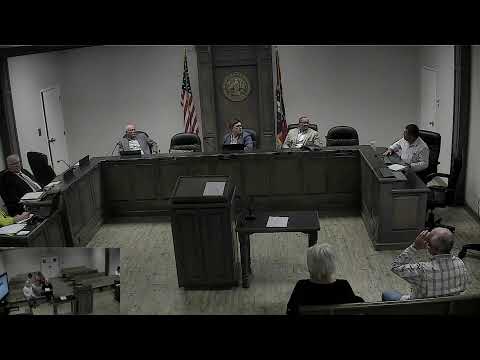
Harrison County supervisors voted at a county hearing to deny T‑Mobile’s appeal of property valuations and broadband‑exemption claims for multiple cell‑site parcels after hearing that T‑Mobile had not provided parcel‑level equipment descriptions or allowed site inspections.
The decision followed testimony from Harrison County Tax Assessor Paula Wagner and technical experts from Cell Tower Solutions (CTS), who told the board that T‑Mobile’s annual renditions list only generic categories such as “cellular equipment” and lack the detailed, site‑specific inventories the assessor said state law requires.
Wagner said the renditions the county has received “state just cellular equipment. And that is not telling us a whole lot.” She told the board the assessor’s office had repeatedly requested detailed listings and that T‑Mobile’s filings did not identify equipment by parcel, year placed in service, or the categories the state requires for depreciation and assessment.
T‑Mobile legal counsel on the record acknowledged the company filed a single affidavit and supplemental filings after a statutory change but said the corporate fixed‑asset records that would list manufacturer, model and cost are held at the parent company and are not routinely included in the South filing entity’s submissions. Attorney Olive Reitken, who identified herself as counsel to T‑Mobile, said parts of the records have been withheld from contractor access under a court protective order related to parallel litigation.
Walt Woodard, president of CTS, described the consultant’s method of on‑site inspection, inventory and “reverse engineering” of equipment to establish a more detailed valuation, saying T‑Mobile’s corporate records typically have the manufacturer and cost data that local filing entities do not include in their county renditions. CTS staff reported a large valuation gap: the amounts T‑Mobile reported as taxable were in the low millions while CTS’s compiled estimate of the same sites’ value — depending on assumptions and whether labor is included — was reported to be in the high single‑digit millions to low‑tens of millions range (transcript figures cited roughly $5.1 million by T‑Mobile’s filing versus about $17–22 million in CTS figures).
Board members repeatedly pressed whether T‑Mobile submitted a separate affidavit for each parcel. The county read a statutory warning into the record — Section 27‑35‑97 of the Mississippi Code was cited during the hearing — that failure to comply with statutory demands can bar objections to an assessment. The T‑Mobile representative said a single affidavit was submitted and that the company interpreted the post‑rendition statutory changes as ambiguous; the assessor’s office argued the affidavit lacked parcel numbers and therefore could not be used to determine which parcels and assets it covered.
The board then debated next steps. One member said the county had not received the requested documentation and moved to deny the appeal because the required records had not been produced; another member seconded. The board chair called the question and the motion carried. The transcript records “All in favor? Motion carries,” but does not record a roll‑call tally.
The board and witnesses also noted a pending related court case addressing the 2024 tax year and that recent legislative changes affecting what equipment qualifies for a broadband exemption took effect in 2025; witnesses disagreed over how those changes apply to the parcels at issue. CTS’s testimony emphasized that modern mobile wireless fixed‑broadband technology (FWA) and antenna radios that can deliver broadband service complicate interpretations of statutes written before those technologies were in widespread use.
The board’s action denies the appeal at the hearing; the record shows the county relied on the assessor’s current valuations and CTS’s technical testimony rather than T‑Mobile’s filings. The transcript indicates the county may pursue court enforcement or further discovery to obtain corporate fixed‑asset records. The hearing concluded with the board adjourning after the motion carried.