Get Full Government Meeting Transcripts, Videos, & Alerts Forever!
Get email alerts on the Comprehensive Plan And Growth Projections topic
No spam. Unsubscribe anytime.
Woodland Planning Commission reviews draft comprehensive plan, pipeline counts and growth assumptions
Summary
Staff presented the draft comprehensive plan and consultants’ housing capacity analysis; commissioners discussed differing growth projections from Clark and Cowlitz counties, a large pipeline of proposed units, infrastructure constraints and next steps for adoption and implementing code changes.
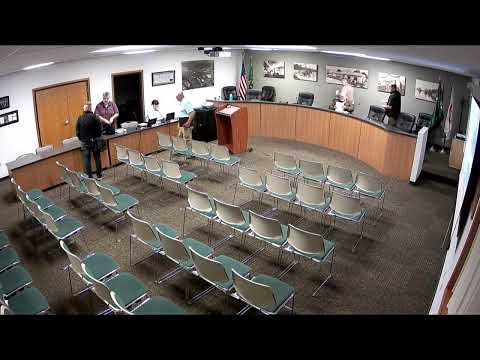
The City of Woodland Planning Commission held a workshop on the draft comprehensive plan, focusing on housing capacity, growth projections and how the city should count units in its land‑use inventory.
Travis, a city planner, told the commission the version posted on the city website is essentially the draft that staff considers final and that the planning commission’s next meeting will include a public hearing on the document. “The version that's on the website now and that is attached to the agenda today is essentially the final draft of the comprehensive plan that needs to be discussed,” Travis said.
Staff and commissioners spent substantial time reconciling competing forecasts and the “pipeline” of approved or proposed housing projects. Staff explained that existing utility plans (water and sewer) were built on higher growth rates — about 2.3% in earlier plans — but the comprehensive‑plan land‑supply analysis used lower assumptions (about 1.5%) to reflect the finite amount of developable land within the city and its urban growth boundary. “When I do that math, I can come up with a number of about 650 housing units,” a city planner said, describing a reverse‑engineering exercise based on vacant land and typical lot yields.
Commissioners and staff debated which projects to include in the inventory. Staff said the city’s pipeline lists roughly 697 units currently pending but that a closer review of confirmed building permits and approvals yields about 378 units the staff judges likely to be built soon. “Our pipeline actually has about… more than 700 units in the pipeline. But the 122 is only the stuff that's in construction,” Travis said, explaining the difference between approvals, permits and units in construction.
The commission also discussed interjurisdictional complications: Woodland sits near Clark County and Cowlitz County planning processes, and staff said Cowlitz County’s population allocation process could require Woodland to accommodate additional urban growth boundary (UGB) expansions decided at the county level. Staff warned that expanding the UGB would create major water and sewer infrastructure requirements and that developers would likely be responsible for much of that cost if annexation occurred.
Several policy choices were identified as levers that could increase capacity without annexation, including allowing more units per lot (planned unit residential developments, PURDs), changing minimum lot sizes and counting accessory dwelling units (ADUs) in the housing inventory. Staff reminded commissioners the city must implement some changes to conform with state law, including provisions tied to ADUs and minimum density options in state RCWs; those implementing code updates will follow the comprehensive plan adoption.
Procedural items: the commission approved the agenda and the minutes of its May 15 meeting (one member abstained), nominated and elected David Simpson as chair and Brian Matson as co‑chair by roll call, and then recessed. The meeting included a short reading of RCW 35.63.040 about commission rules and meeting frequency.
Staff said it will prepare a staff report identifying the specific numeric edits and errata the commission recommends before the draft goes to the city council, and commissioners indicated willingness to move forward on a near‑term recommendation while noting the option to request additional review if new substantive concerns arise.