Get Full Government Meeting Transcripts, Videos, & Alerts Forever!
Get email alerts on the Onsite Wastewater Treatment topic
No spam. Unsubscribe anytime.
Vendor pitches on-site wastewater systems as Marshall County board weighs sewer options
Summary
A vendor presented certified on-site wastewater technology as an alternative to a costly sewer project for lake-area homeowners; county and board members raised regulatory and qualifying-site limits and the board approved routine minutes and claims and agreed to attend a joint county meeting.
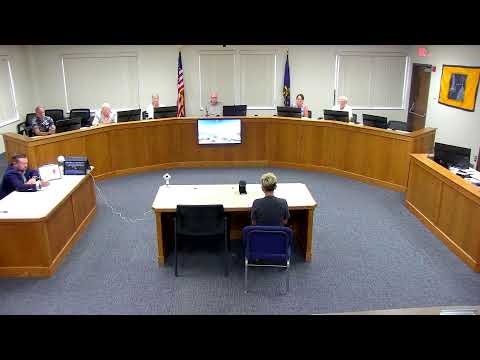
A vendor from Sledgehammer described an on-site wastewater treatment system to the Marshall County PSA 1 sewer board and residents, saying the modular units can be retrofitted into many existing septic tanks and billed as a lower-cost alternative to community sewer connections.
“My name is William Satter. I’m president of Global. We are an innovative and alternative technology for on-site water and wastewater filtration,” Satter said in his opening remarks, describing a biologically based aerobic unit his company manufacturers and a new local partnership with AK Industries.
The proposal drew questions from board members and county staff about which properties would qualify, local permitting limits and whether state rules allow local health departments to grant setback variances that would be needed on many lakefront lots.
Why it matters
The board is working through a proposed, multi‑million-dollar sewer project for PSA 1. Board members and residents said a conventional sewer would be expensive, disruptive and take years to build; the vendor argued on-site treatment could reduce capital and landscaping impacts and keep treated effluent on property for reuse.
Details from the meeting
Satter said the Sledgehammer system has regulatory approvals and third‑party testing he said include NSF 40 (new design residential applications), UPC/IAPMO listings and maritime (MARPOL) certifications for certain uses. He described the on‑site unit as a small aerobic bacterial generator that uses minimal electricity and, he said, typically costs “less than $10,000 a home” to install on qualifying sites and roughly “$250 or less per year” for annual maintenance.
Satter framed the technology as a way to avoid the property destruction and cost of sewer construction. “Construction and excavation, barely noticeable,” he said of retrofit installs, contrasting that with the “50 to $75,000 per home” capital costs and about “$1,000 per year” operating estimate he cited for sewer connections.
Board and regulatory questions
Board members and local officials pressed for limits and qualifications. Tom McFadden, a board member, said he was concerned about a state rule and asked whether local health officials could approve setback variances for advanced treatment units (ATUs) proposed as repairs; a county environmental staff member identified in the meeting as Faith confirmed the state’s current position: local health departments cannot grant variances on setbacks for repairs using ATUs in the county’s interpretation of state rules.
Kenny, the board’s engineering consultant, and others emphasized that many lots in the PSA 1 service area are small, have undocumented or aged systems (including some steel drums or pump‑and‑haul systems) and that roughly a substantial share of properties would fail a site‑qualification checklist used for retrofit approvals. Satter estimated as many as 80% of properties might qualify in his experience in some areas, but both the engineer and board members said local records show many lots have constraints (high water tables, setback noncompliance and unknown underground conditions) that would disqualify some properties from retrofit eligibility.
Legal and policy context
Legal counsel for the district reiterated the regulatory sequence the district must follow under state environmental law: sewer‑elimination districts are formed to extend sewer and remove septic systems, and the district’s mandate and formation order emphasize sewer construction as the primary solution. Counsel noted that any formal change to allow district‑wide use of alternative systems as a substitute for sewer would require changes to the district’s formation order and likely broader legal and funding work.
Board actions and administrative items
The board transacted routine business during the meeting. Members voted to accept meeting minutes as amended (roll call recorded as: Brenda Myers — aye; Jay Stone — aye; Ryan Parsons — aye; Don Ecker — aye; Tom McFadden — aye; motion carried). The board also approved monthly claims and disbursements in a recorded roll call (names recorded in the transcript included Christopher Stewart — aye; Dean Coleman — aye; Brenda Myers — aye; Jay Stone — aye; Diane Parsons — aye; Don Ecker — aye; Tom McFadden — aye; motion carried). Separately, the board voted to authorize a delegation to attend a joint meeting the county scheduled with county council and the health department; the motion passed by voice vote and recorded ayes.
Public comment
Residents at the meeting urged caution. Julie Manns, a resident and healthcare worker, told the board: “This project is becoming a financial burden for many,” and said continued borrowing and consultant fees were unsustainable for some households. Another resident, Bill Woodward, expressed concern about oversight and governance of the board and said the board should be accountable to the public.
What’s next
Board staff and consultants said they will continue site visits and easement outreach and that the consultant team is preparing alternate cost scenarios for the board to consider, including a “pipe‑only” approach (public mains with privately owned grinder pumps) and other regionalization or treatment options that might change project phasing and cost. The board asked staff to draft and circulate a second easement‑deadline notice tied to the project’s next funding cycle and agreed to attend the county’s scheduled joint session to address questions raised publicly and by commissioners.
The meeting also included routine finance and legal updates; no final funding decision or formal shift away from the district’s sewer plan was made at the meeting.