Get Full Government Meeting Transcripts, Videos, & Alerts Forever!
Get email alerts on the Planning Masterplan Energy topic
No spam. Unsubscribe anytime.
Planning commission hears water‑sewer amendments and warns of new state rules for battery storage
Summary
Staff updated the commission on spring 2025 water‑and‑sewer amendments and master‑plan work groups; staff also warned that a new state Renewable Energy Act and related guidance could require battery energy storage systems be permitted across zoning districts.
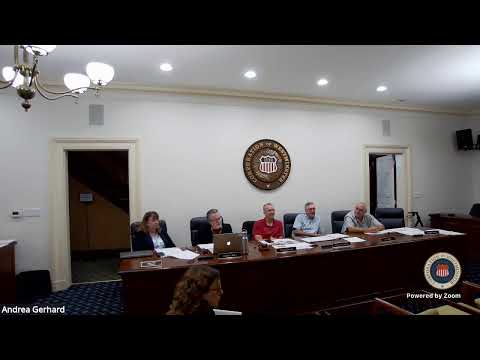
Staff briefed the Westminster Planning and Zoning Commission on several ongoing planning items at the Aug. 21 meeting, including spring 2025 amendments to the county water and sewer plan, status of master plan work groups, and proposed code changes related to solar and energy storage.
The county adopted the spring 2025 water and sewer amendment at its meeting earlier the same day; staff said the amendment will be forwarded to the Maryland Department of the Environment for final review. The amendment includes specific service area updates (staff listed communities in the record) and a fall 2025 amendment that will cover additional towns.
Planning staff reported progress on the county master‑plan work groups for housing, economy and agriculture. The agriculture group has completed meetings; housing and economy work groups were in their final sessions. Staff said work‑group findings will be reported to the planning commission in November and that commission members had representatives participating in each work group.
Staff also warned commissioners about a recent state law that requires certain renewable energy and storage facilities to be treated as principal permitted uses in many zoning districts. A staff presentation summarized battery energy storage systems (BESS) as containerized lithium‑ion battery arrays that store and release power to the grid. Planning staff said the state law went into effect July 1 and that some elements — setbacks, landscape buffering and design controls — remain the county’s focus while the state may preempt local rules in coming sessions.
Staff advised commissioners that the county has already received inquiries from property owners and companies seeking to site battery systems and that the department is drafting local code language to address setbacks, screening and other development conditions while monitoring state preemption activity.
Commissioners asked for continued updates. Staff said they intend to circulate the work‑group reports and follow up on solar‑code amendments and adequate‑public‑facilities revisions in coming months.