Get Full Government Meeting Transcripts, Videos, & Alerts Forever!
Get email alerts on the Technology Ai Policy topic
No spam. Unsubscribe anytime.
Bexar County adopts Administrative Policy 5.3 to govern AI usage across departments
Summary
The Commissioners Court approved a countywide artificial intelligence policy requiring BCIT vetting, ticketed requests for tools, and a training and awareness rollout. Commissioners pressed for stronger enforcement, HIPAA protections and vendor background checks.
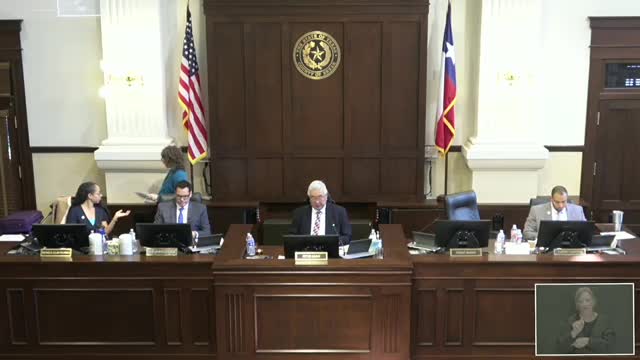
Bexar County Commissioners Court approved Administrative Policy 5.3 on Aug. 19 to establish countywide rules for using artificial intelligence tools, including generative AI and predictive analytics. Mark Gager, the county chief information officer, presented the policy and told the court it requires all county employees to route AI tool requests through Bexar County Information Technology (BCIT) for vetting, mandates paid/commercial versions for approved uses where necessary, and establishes training and procurement guidance.
Gager told the court his security team had detected roughly 134 uses of AI tied to bear.org accounts and warned that free AI services may expose county data because some free providers use submitted text to train models. He said the policy defines acceptable and prohibited uses, requires BCIT vetting and a ticket process for new tools, and gives BCIT the authority to block unapproved domains and to recommend enterprise purchases for countywide needs.
Commissioners pressed staff on enforcement and privacy. Commissioner Tommy Calvert asked specifically about HIPAA and University Health—he said entities connected to the county that handle protected health information need stronger protections and asked staff to include affiliated entities in rollout and vetting. Gager and Crystal Martinez of BCIT said enforcement tools include network/domain blocking, monitoring of accounts tied to county credentials, and an outreach/training campaign to inform departments and elected offices about approved tools and restrictions. Commissioners Clay Flores and Justin Rodriguez asked whether staff had already seen misuse; BCIT said no confirmed data breaches had been reported but that staff suspected some employees had used unapproved free tools.
Commissioner Clay Flores moved to approve the policy; Commissioner Tommy Calvert seconded. The court voted unanimously to adopt Administrative Policy 5.3 and directed BCIT to proceed with vendor vetting, an employee awareness campaign, and coordination with county partners that handle sensitive data. Commissioners also asked BCIT to propose vendor‑background checks and a protocol for reviewing third‑party AI vendors’ provenance and hosting locations.
The policy will be implemented by BCIT, which will maintain a published list of approved tools and a help/ticketing path for departments and elected offices that want to trial or procure AI solutions.