Get Full Government Meeting Transcripts, Videos, & Alerts Forever!
Get email alerts on the Community Land Trust topic
No spam. Unsubscribe anytime.
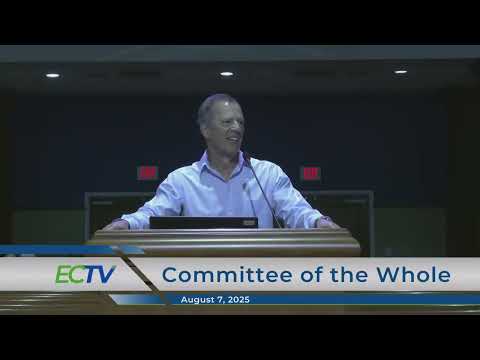
Pensacola Habitat presents community land trust as permanent affordable-housing tool; commissioners pledge support
Summary
At a committee of the whole workshop Aug. 7, Sam Young of Pensacola Habitat for Humanity presented a community land trust model and asked the Board of County Commissioners to allocate SHIP funds and surplus county land; commissioners endorsed the approach and requested follow-up materials and potential allocations.
Sam Young, a representative of Pensacola Habitat for Humanity, told the Board of County Commissioners at a committee of the whole workshop on Aug. 7 that a community land trust would create a permanent stock of affordable homes for Escambia County residents.
"A community land trust separates ownership of the land from the house itself," Young said, describing the model as a way to reduce purchase prices while keeping homes affordable for future buyers. He told commissioners Habitat is stewarding the Northwest Florida Community Land Trust and has both homeownership and rental programs in development, and that Habitat can marshal third-party lenders and HUD-certified counseling to support buyers.
Young walked the board through a resale formula the land trust uses to share appreciation while keeping resale prices affordable. He acknowledged the resale example in his slide deck contained arithmetic that drew questions from commissioners; he said the key principle is that a homeowner retains principal paid on the mortgage plus a fixed share of appreciation, and the remainder of appreciation stays with the home to preserve affordability for the next buyer.
Commissioners asked about program eligibility and costs. Young said Habitat's homeowner-education and counseling programs and a requirement for "sweat equity" are part of qualification. He said in Santa Rosa County, SHIP and other commitments have allowed new land-trust buyers with household incomes as low as about $35,000 to qualify; in Escambia County the threshold he cited was higher, near $40,000, and more resources would allow the program to serve more households.
Several commissioners asked how the county could help. Young urged inclusion of language in the county's Low Income Housing Assistance Plan (LHAP) to allow SHIP dollars to be directed to land-trust projects. Commissioners confirmed the draft LHAP includes such language and discussed making SHIP allocations and surplus county lots available to Habitat for new homes. One commissioner said the board had already committed 14 lots to Habitat and cited about $1.4 million in county support tied to those houses.
Board members also brought up related issues: septic-to-sewer conversion costs that can raise total development expense, the need for heat/hot-spot maps showing where Habitat is building, and concern about gentrification and preserving access to redeveloped neighborhoods for long-standing residents. Commissioners said they want land-trust homes distributed across districts rather than concentrated in a single area.
Young said Habitat had recently dedicated a dozen homes and has multiple buyers and lenders in the pipeline. Commissioners praised Habitat's role in triaging housing applicants and said the land trust complements existing county and Habitat programs rather than replaces them.
Ending: Commissioners directed staff to continue coordinating with Habitat on SHIP allocations, surplus land conveyances and any administrative steps needed to implement land-trust purchases; no formal county appropriation was passed during the workshop.