Get Full Government Meeting Transcripts, Videos, & Alerts Forever!
Get email alerts on the Social Workers Workload Safety topic
No spam. Unsubscribe anytime.
Union urges pay differential, defends workload board for social workers serving walk‑in homes
Summary
United Public Employees told supervisors that social workers in 'walk‑in' homes face hazardous conditions and should receive a pay differential; the union also opposed removing a joint workload policy board.
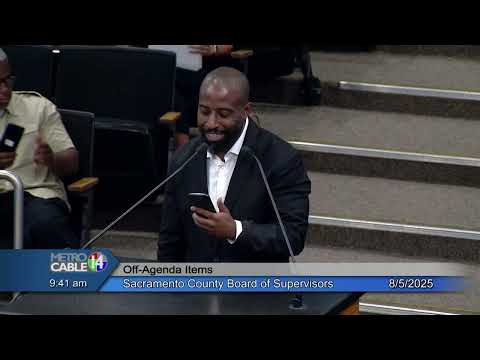
Ted Samara, executive director of United Public Employees, urged the Sacramento County Board of Supervisors on Aug. 5 to provide a pay differential and preserve a workload policy board for a bargaining unit of social workers.
Samara said his union represents roughly 3,500 county employees and noted recent progress on some contracts, including a tentative agreement on an office technical unit. He said unit 008 (the welfare non‑supervised bargaining unit) still has unsettled negotiations. Samara described staff who work in so‑called “walk‑in homes” as facing substantially different hazards than field social workers who have law enforcement backup when taking children into custody.
He recounted workplace safety incidents he says members have experienced, including severe injuries, exposure to fentanyl smoke, and other violent or hazardous behavior by residents. Samara said the union supports a pay differential for staff who continue to work in those settings and asked the board not to eliminate the county’s workload policy board — a forum where workers and management collaboratively address workload and procedure issues.
Samara said the county’s chief negotiator told the union the board of supervisors supported removing the workload policy board; he called that unacceptable and argued the board offers a meaningful voice for staff that can aid recruitment and retention.
Samara also noted Karen Parker, a social worker being honored later on the agenda, and praised efforts to improve safety and de‑escalation training. He asked supervisors to preserve mechanisms that allow front‑line staff and management to work together on workload and safety.
The remarks were delivered during the public comment period; no formal board action on the specific demands was recorded in the meeting transcript.
Samara’s full statements were limited to public comment; the board did not take immediate action or direct staff during the meeting transcript. The union indicated it remains at the table for negotiations, while urging the board to retain collaborative workplace forums and to consider a pay differential for those assigned to higher‑risk residential settings.