Get Full Government Meeting Transcripts, Videos, & Alerts Forever!
Get email alerts on the Critical Areas Ordinance topic
No spam. Unsubscribe anytime.
Skagit County holds public hearing on 2025 Critical Areas Ordinance update; decision set for Aug. 4
Summary
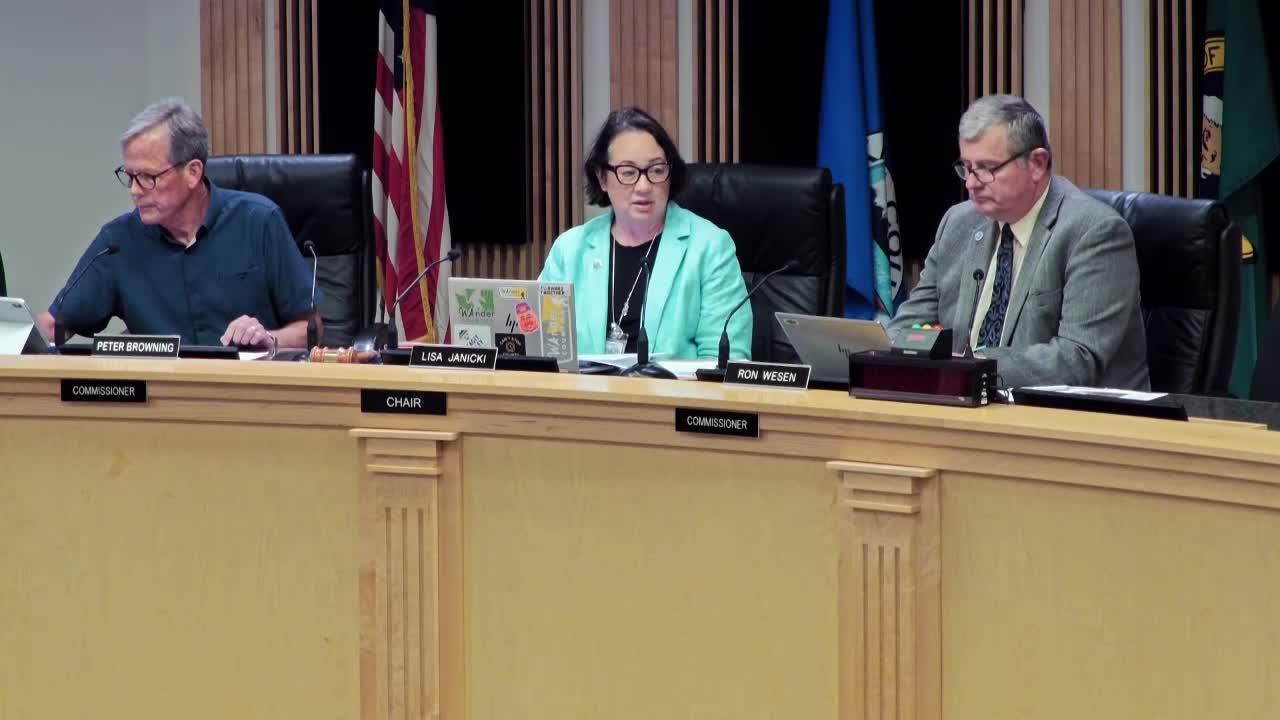
Skagit County Planning and Development Services held a public hearing July 28 on proposed updates to the county’s 2025 Critical Areas Ordinance, with the board of county commissioners taking public testimony and setting a decision for Aug. 4 at 10 a.m.
Skagit County Planning and Development Services held a public hearing July 28 on proposed updates to the county’s 2025 Critical Areas Ordinance, with the board of county commissioners taking public testimony and setting a decision for Aug. 4 at 10 a.m.
The hearing drew conservation groups, farmers, Big Lake residents and tribal representatives who urged the county to strengthen protections for wetlands, riparian areas and other critical resources and to address off-site stormwater impacts that commenters said bypass the county’s 200-foot review limit.
Robbie Eckroth, senior planner for Skagit County Planning and Development Services, summarized the process leading to the draft. He told the commissioners the Growth Management Act requires counties to update comprehensive plans and related development regulations every 10 years and to evaluate critical areas under state rules. Eckroth said the planning commission recommended approval with amendments on June 17 and that the board discussed the draft at a July 7 work session.
Why it matters: commenters said the draft would leave gaps that could allow cumulative loss of ecological function — a concern for fisheries, drinking-water recharge and shallow lakes such as Big Lake. Several speakers asked the board to reject proposed exemptions for small wetlands and to eliminate new rules that would allow timber harvest in riparian buffers.
Key public concerns - Skagit Land Trust: Kirk Johnson, board president of Skagit Land Trust, asked the county to make clear that protecting intact ecological functions cannot be achieved by substituting mitigation for on-the-ground protection. He recommended removing a requirement that conservation organizations routinely notify planning staff of routine restoration activities, calling the proposed notice requirement “more burdensome than current code.” - Notification for restoration: Rick Haley, a board member of Skagit Fisheries Enhancement Group, said the draft’s requirement to notify the planning director about routine riparian restoration (mulching, nonnative-vegetation control) is unnecessary and “a waste of everybody’s time.” He asked the county to remove that notification requirement and to address rare enforcement cases individually. - Wetlands and timber harvest: Multiple commenters urged the county to decline proposed exemptions for category-4 wetlands smaller than 4,000 square feet and for wetlands under 1,000 square feet. Several speakers and written comment summaries cited a May 2025 Washington Department of Fish and Wildlife letter opposing timber harvest within riparian buffers; one commentator read that letter’s line that allowing timber harvest “compromises the critical ecological functions and values these areas are intended to protect.” - Big Lake watershed and the 200-foot limit: Numerous Big Lake residents and neighborhood groups described what they said are measurable stormwater impacts beyond 200 feet. Jake Hoopmans, a resident speaking on behalf of family members at Big Lake, described an approved development that he said routed sediment-laden stormwater through ponds, ditches and pipes into Big Lake. He told the board: “Phosphorus gets to the lake from stormwater; current county code and the proposed changes are not protecting Big Lake from polluted stormwater runoff.” Other residents pressed the board to require off-site impact analyses when stormwater leaves a project site and flows toward a receiving water. - Tribal and government commenters: Heather Spore, tribal staff for the Swinomish Indian Community, said the tribe had submitted multiple comment letters and requested more time for review; she said the tribe has asked the state Department of Commerce to open tribal mediation with the county to resolve remaining treaty-resource concerns.
Process and next steps Planning staff and the consultant team will continue to accept written comments through 4:30 p.m. the day of the hearing; staff said written comments will be reviewed, forwarded to commissioners and posted to the project website. No formal action was taken during the hearing; the board set a potential decision date of Aug. 4 at 10 a.m.
What the record shows: testimony emphasized three repeating themes — (1) that stormwater impacts can travel beyond a 200-foot radius and may require off-site analysis, (2) that small wetlands and category-4 wetlands should not be broadly exempted, and (3) that allowing timber harvest within riparian buffers undermines protections. Tribal representatives asked for more time and mediation under state processes.
The county’s second draft of the Critical Areas Ordinance and associated documents, including comments on the first draft, are posted on the 2025 Comprehensive Plan Update Project website; the board may act on the draft at its Aug. 4 meeting.