Get Full Government Meeting Transcripts, Videos, & Alerts Forever!
Get email alerts on the Syringe Service Programs topic
No spam. Unsubscribe anytime.
Lewiston council continues public hearing on proposed syringe service program rules to Sept. 16
Summary
After more than two hours of public testimony and council discussion, Lewiston City Council voted unanimously to continue a public hearing on proposed amendments to the city's business license ordinance covering syringe service programs to Sept. 16 so staff can be present and the council can review additional materials.
The Lewiston City Council voted 7-0 to continue the public hearing on proposed amendments to Chapter 22, Article 18 of the city code addressing syringe service programs to Sept. 16, citing the need for additional staff participation and time for council review.
The public hearing drew a wide range of testimony from harm-reduction providers, people with lived experience of substance use, and local residents. Speakers warned that retroactive zoning changes or restrictions could risk public health outcomes and expose the city to legal challenges while business owners and some councilors pressed for stronger measures to reduce improperly discarded syringes in public spaces.
Why it matters: Councilors said the topic affects public safety, downtown businesses and countywide public health, and that changes could have legal and fiscal consequences. Administrator Kanraf told the council staff availability would be limited on the council's originally scheduled continuation date, and recommended moving the hearing to Sept. 16 so all involved city staff could attend.
Public testimony focused on health outcomes and legal risk. Courtney Gary Allen, executive director of MEWRAP and an at-large city councilor, warned that retroactive rezoning or restrictions could trigger legal exposure under the Maine Human Rights Act and the federal Americans with Disabilities Act, and described syringe service programs as evidence-based public health interventions endorsed by state and federal health agencies. “Retroactive removal of an existing health service is distinct from prospective zoning changes,” Allen said, adding that such action could invite “costly, high-profile litigation.”
Multiple speakers described harm-reduction programs as more than syringe access. Kari Taylor, a woman in recovery who runs a nonprofit serving Oxford, Franklin and Androscoggin counties, said syringe service programs build trust and connect participants to treatment, housing and medical care. “If we make syringes harder to get, we will not stop people from injecting. We will only increase the risk of disease, injury, and death,” Taylor said.
Rosie Boyce, interim president of the board for the Church of Safe Injection — one of two local syringe service providers referenced in testimony — told councilors that data show fatal overdoses in Lewiston fell 22 percent from 2022 to 2023 and fell another 27 percent from 2023 to 2024, and argued that cutting off services would make litter and other problems worse. “Harm reduction is not about enabling drug use. It's about keeping people alive long enough to choose recovery,” she said.
Public-health and harm-reduction providers described alternatives and programs that work elsewhere. Martin Chartrand, a behavioral health professional who has worked as an SSP provider in Bangor, cited a Portland, Maine, incentive program and a pending state bill that would support syringe return programs. Chartrand also said state working groups had recommended that overdose prevention centers be considered as a local policy option.
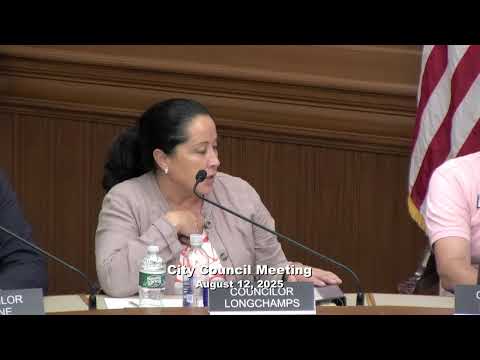
Council discussion reflected a balance of concerns. Councilor Roy said restricting access or moving programs away from areas where people are concentrated would likely increase reuse of syringes and urged the council to keep services close to users. Councilor Longchamps said he has found dozens of syringes in single locations and expressed concern about safety for nonusers and businesses; he urged the council to find a balance between harm reduction and public safety. Administrator Kanraf said the council’s motion before it was to continue the hearing and proposed moving the continuation to Sept. 16 so full staff could attend.
Action and next steps: The council amended the continuation date from Sept. 2 to Sept. 16 and approved the continuation by a 7-0 recorded vote. The council did not adopt substantive changes at this meeting; members said they expect additional briefing materials and staff input before taking any final action. Councilors and members of the public recommended exploring use of opioid-settlement funds and modeled programs (for example, Portland’s program) to reduce syringe litter.
The public hearing will resume Sept. 16 with city staff present to respond to technical and legal questions. The council indicated it will consider program placement, disposal access, enforcement and possible spending of settlement funds during subsequent deliberations.