Get Full Government Meeting Transcripts, Videos, & Alerts Forever!
Get email alerts on the Ethics Commission Meeting topic
No spam. Unsubscribe anytime.
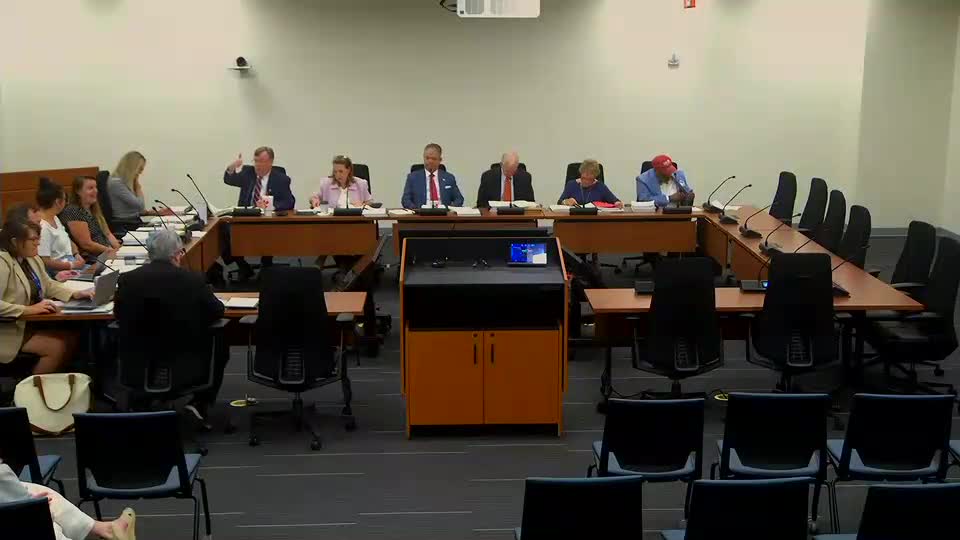
Tennessee Ethics Commission accepts audits, orders outreach on campaign-services reporting and waives many late-filing penalties
Summary
At a public meeting, the Tennessee Ethics Commission approved lobbyist audits, accepted a settlement offer, directed staff to seek legislative clarification about campaign-services reporting, and waived or postponed civil penalties tied to late statements of interest.
Nashville — The Tennessee Ethics Commission at a public meeting approved multiple staff recommendations on audits and enforcement and directed staff to pursue further work with the General Assembly to clarify reporting rules for campaign-related services.
The commission voted to accept the office’s lobbyist audits and to post the audit reports on the bureau’s website. Director Bill Young said the audits covered the statutorily required sample — roughly 4% of registered lobbyists — and showed only “minor discrepancies” that staff had corrected. Young and the commission also described continuing outreach and training for lobbyists, including a recurring training session offered jointly with the Nashville Bar Association that can satisfy both lobbying training and continuing legal education requirements for attorney-lobbyists.
The commission moved, by procedural vote, to authorize staff to consult with leaders of the General Assembly about uncertainties in a recently enacted reporting requirement for “campaign services.” The consultation was prompted by a formal advisory-opinion request from Ted Boyett seeking clarity on when members or staff who provide campaign services must disclose fees and related reporting deadlines. General Counsel Lauren Topping told the commission that the office had not been consulted during the bill’s drafting and that little legislative history exists to explain specific phrasing changes in the statute. Commissioners voted to empower Director Young and Topping to discuss the statute with legislative leadership and then return to the commission so it can decide whether to adopt a formal advisory opinion.
The commission accepted a settlement offer in case 2023042 concerning Robert Owens. Staff had assessed a $1,000 civil penalty; the settlement proposal was $384.50 (staff explained that amount included $100 toward collection and roughly $2.84 in court costs). The commission voted to accept the settlement as a practical resolution, noting litigation costs would likely exceed recovery.
On reconsiderations of past civil penalties (a packet of cases presented in the meeting materials), staff recommended — and the commission approved — reconsideration and waiver of assessed penalties for multiple respondents who had cured the deficiency by filing the required statements or paying fees. One matter involving Aubrey Foreman was continued because the required statement of interest had not been filed.
The commission reviewed dozens of late-filed statements of interest by local officials. Young told the commission that overall compliance remains high: about 95% of required filings are up to date. The staff reported 296 outstanding filings when the materials were compiled, with the largest groups among planning commissioners (61 names) and constables (15). The commission approved a batch waiver (no action) for a long list of late filers who had since filed. For a remaining set of delinquent local officials, the commission voted to assess the standard $1,000 civil penalty but gave Director Young authority to waive that assessment if the person files their statement of interest by Dec. 31, 2025, or if staff later determines the person was not required to file.
Other meeting items included a motion to continue a matter involving CCC Distribution (an employer-of-lobbyist failure-to-file case) to the next meeting, and the commission’s formal acceptance of staff’s lobbyist-audit work product for publication.
Why it matters: The items approved at the meeting affect how lobbyists and elected and appointed local officials are monitored for disclosure and compliance in Tennessee. The commission’s direction to consult the General Assembly is likely to shape any future formal guidance on how the new campaign-services reporting rules will be enforced and will affect members and staff who perform campaign work.
What’s next: The commission asked staff to report back after legislative outreach and to publish the accepted audits and advisory materials on the bureau website. The office said the new training requirement for executive-branch cabinet-level officials (as enacted by the legislature) goes into effect Jan. 1, 2026; staff said it will implement that training in coordination with the governor’s office.
Ending note: Several new and reassigned bureau staff were introduced at the meeting — Mackenzie Austin (lobbyist filings) and Morgan Tigert (statements-of-interest support) — and the commission welcomed Dewey Branstetter, the governor’s recent appointee to the panel. Young noted Branstetter has not completed the statutory training required to vote and therefore is participating but not yet voting.