Get Full Government Meeting Transcripts, Videos, & Alerts Forever!
Get email alerts on the Capital Plan topic
No spam. Unsubscribe anytime.
Office of Resilience and Capital Planning presents $52 billion 10-year capital plan; deferred maintenance estimated near $1 billion
Summary
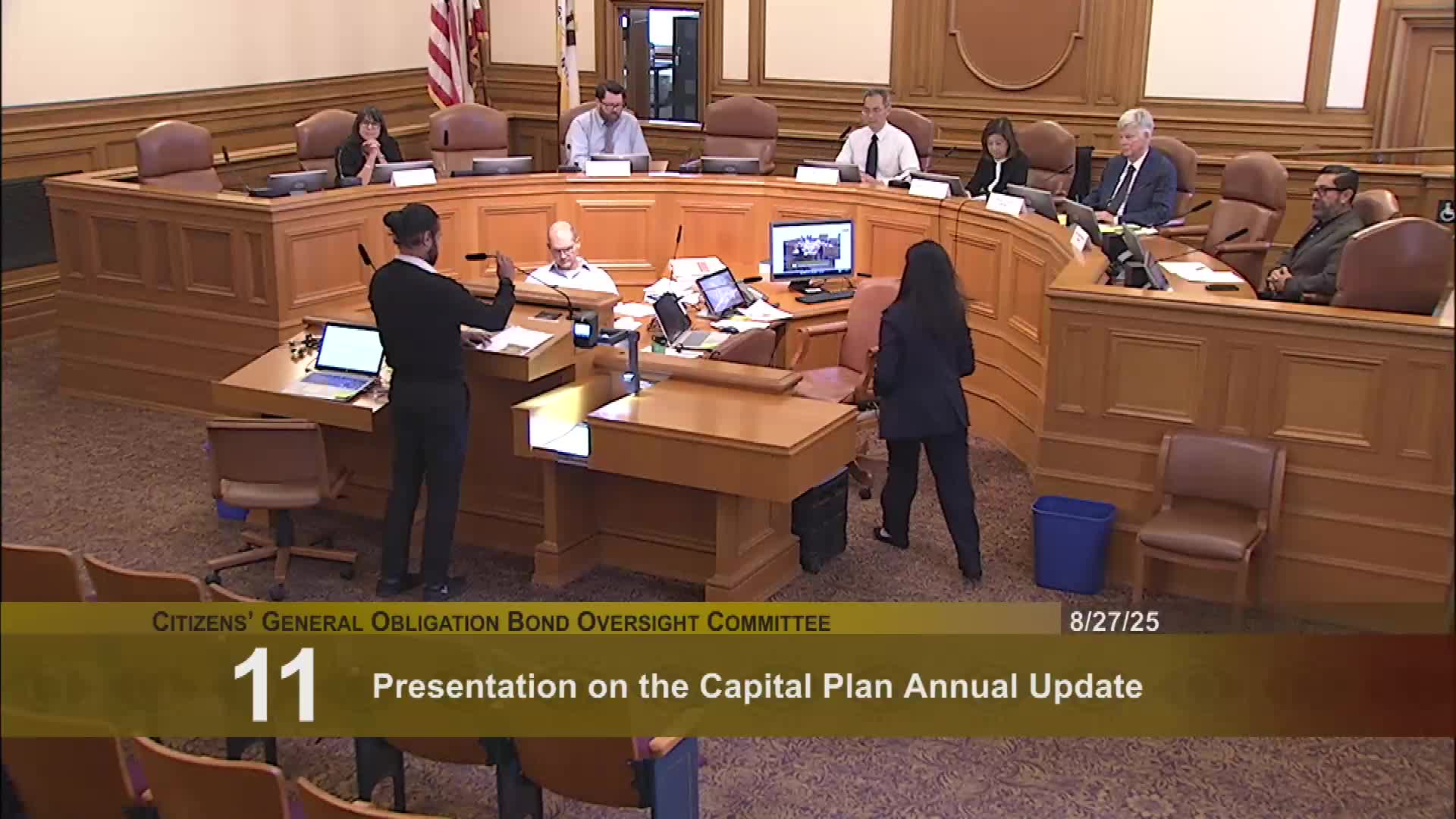
Staff presented the adopted FY26–35 10-year capital plan covering $52 billion in investments, noted growth driven by enterprise and external agency projects, and highlighted a rising deferred-maintenance backlog and constraints on bond capacity.
The Office of Resilience and Capital Planning briefed the committee on the city’s adopted 10-year capital plan (FY2026–2035), describing funding priorities, the plan’s growth since the prior cycle and a deferred-maintenance backlog the office estimates in the hundreds of millions to about $1 billion.
Nishad Joshi summarized the plan’s scope and size: the 10-year plan totals approximately $52 billion and covers general-fund departments, enterprise agencies (for example, the PUC and the airport) and external agencies (city college and school district projects). Joshi said the increase from earlier capital-plan cycles is largely driven by enterprise and external agency investments while general-fund-program growth has been more modest.
Joshi and Capital Planning Manager Kate Faust highlighted funding sources used across the plan: federal, state and other sources account for more than half of planned investment citywide, while general-fund cash and general-obligation bonds are a larger share for general-fund departments. The presenters described the city’s use of certificates of participation (COPs) since the pandemic to maintain critical maintenance programs where pay-as-you-go cash has been constrained.
The office reported a deferred-maintenance backlog that rose since 2018 and estimated the current backlog at roughly $1 billion; the presenters said meeting the capital-plan funding recommendations would begin to reduce that backlog while continuing the current cash-funding status quo would allow the backlog to grow.
On debt and bond capacity, Kate Faust reviewed the updated GO-bond schedule in the plan (about $1.8 billion in proposed GEO bonds across the 10 years, smaller than the prior program) and showed how the 2006 property-tax-rate constraint affects annual debt-service capacity. The office said rotating bond programs across categories remains the plan’s organizing principle to avoid feast-or-famine staffing cycles and to preserve voter support.
Ending: Staff indicated the capital plan will continue to guide two-year capital budget and debt-program decisions and noted ongoing work to address the deferred-maintenance backlog while balancing debt constraints and funding sources.