Get Full Government Meeting Transcripts, Videos, & Alerts Forever!
Get email alerts on the Opioid Settlement Funds topic
No spam. Unsubscribe anytime.
Holyoke residents press council for public process on opioid-settlement spending and housing liaison
Summary
Multiple residents urged the Holyoke City Council to use a public process before allocating opioid-settlement funds and questioned plans to finance a homeless/housing liaison with those funds; the council president scheduled two community feedback forums for Sept. 8.
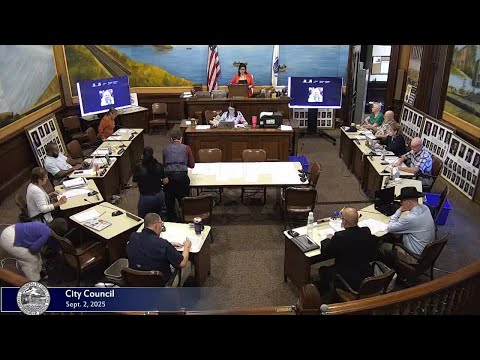
Several residents at the Sept. 2 Holyoke City Council meeting urged elected officials to use a public, community-driven process before committing opioid-settlement funds and to avoid using those funds to pay for a proposed homeless and housing liaison position.
The most pointed comments came from Nadia Schussler, who identified herself as a social worker, addiction researcher and harm-reduction advocate. “This man didn’t die because of an overdose. He died because he was alone, and there was no one there to revive him,” Schussler said, describing a recent local fatality. She urged the council to ensure decisions “truly reflect the needs and demands of the people most affected by this crisis,” and urged broad public notice for community feedback forums on use of the settlement funds.
Resident Claire (Linwood Avenue) told the council she had repeatedly asked about proper disbursement of opioid-abatement settlement money and objected to using those funds for a homeless and housing liaison. Claire said the settlement money must be used specifically for opioid-related programs and that the funding “requires a public process.”
Mimi Panich, a resident who spoke about an unrelated conservation land issue, also cautioned against assuming organizations or buyers had acted improperly without a fuller look at state policy; her remarks referenced the state’s Chapter 61/61A/61B conservation tax rules in the context of a recent local land transaction.
Council President Tessa Murphy-Romboletti announced two city-run community feedback forums on the opioid-settlement funds for Monday, Sept. 8: a drop-in session noon–2 p.m. at the library and an evening session 6–7:30 p.m. at the Council on Aging Senior Center with Spanish interpretation. She asked the public to spread the word and attend.
The council did not take a formal vote on the opioid-settlement spending at the Sept. 2 meeting. Multiple public speakers asked the council to ensure any allocation follows both the settlement’s allowable uses and a transparent public engagement process.
The comments reflected recurring community concerns at recent meetings about homelessness, public safety and whether certain municipal or mayoral proposals should be funded from opioid-abatement proceeds rather than other sources. Councilors in public remarks acknowledged the need for outreach and said the Sept. 8 forums were intended to gather that input.
The council received the public comments; no ordinance, appropriation, or staff directive to reallocate opioid-settlement funds was adopted at this meeting. The council president and staff said they would publicize the Sept. 8 forums on city channels.
The city’s next substantive step on the topic will be the publicly announced forums, where residents and service providers can offer input on priorities and eligible uses of the settlement money.