Get Full Government Meeting Transcripts, Videos, & Alerts Forever!
Get email alerts on the Audits topic
No spam. Unsubscribe anytime.
GRPS finance staff brief board on annual audit process; district retains unmodified opinions
Summary
Grand Rapids Public Schools finance staff reviewed the district's annual audit process, reporting a five-year run of unmodified audit opinions, one prior finding in food service with corrective action, upcoming implementation of GASB 101 and a new arrangement for external auditors to prepare the district's financial statements.
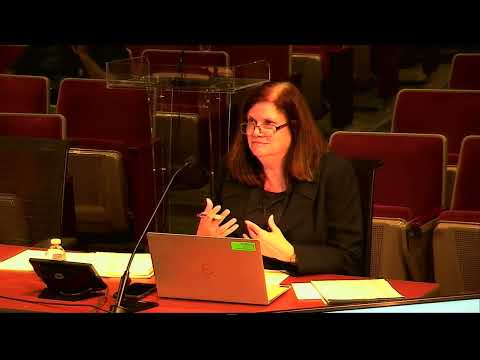
Miss Cribbs, a Grand Rapids Public Schools finance staff member, gave a high-level briefing on the district's annual audit process at a board work session, noting the state requires annual audits and that final reports are due to the state and publicly posted by Nov. 1.
The presentation explained why the district is audited, the audit timeline and scope, and recent results. "Why do we do audits? It's a state requirement that we must be audited at least annually," Cribbs said, adding that the audit must be performed by a certified public accountant and the results are filed in the state's financial information database (FID) with CEPI.
Cribbs said auditors typically begin systems testing in July, return after Labor Day for balance testing, and aim for about two weeks of field work. Auditors issue three principal deliverables: the report to the board, the financial statements and the federal awards schedule. She said the district has received an unmodified opinion for multiple years and that an unmodified opinion means "in all material respects, our financial statements are fairly presented."
The briefing covered federal-single-audit rules. Cribbs noted that districts expending more than $750,000 in federal awards require a single audit and that auditors rotate major program testing to meet dollar thresholds; this year testing will include the child nutrition and special education clusters and Title programs. She summarized past findings: a prior finding in food service stemmed from manual free-and-reduced-price lunch applications (about 53 manual applications on file) where one application was processed for a reduced price in error. Food service implemented a secondary review as a corrective action.
Cribbs also said the district will implement Governmental Accounting Standards Board Statement No. 101 (GASB 101) this year for compensated absences, which will change what and how some items are recorded in the district's financial statements. She said the district has agreed to have the external auditors, Plante Moran, prepare the district's financial statements this year rather than the district preparing its own statements as it has historically done; Plante Moran will then provide the independent opinion.
Cribbs said the auditors' report-to-board letter includes required communications such as unresolved disagreements with management or significant issues in estimates; she described the report as usually positive for GRPS. She told trustees the district posts the audit on its transparency page and that Plant(e) Moran also provides a supplemental informational section about trends and developments in school finance.
The audit presentation will be scheduled at an upcoming board work session in October, and the audit and related FID reporting are due by Nov. 1, Cribbs said.
Board members asked clarifying questions about the audit-risk designation and how auditors select major programs for testing; Cribbs said auditors rotate programs to meet testing thresholds and that the district qualifies as a low-risk auditee given its past results.
The session closed with trustees thanking staff for the update and noting they would review the formal audit presentation when Plante Moran presents the final report.