
Families, workers report payroll chaos after New York moves CDPAP to one fiscal intermediary
Get AI-powered insights, summaries, and transcripts
Subscribe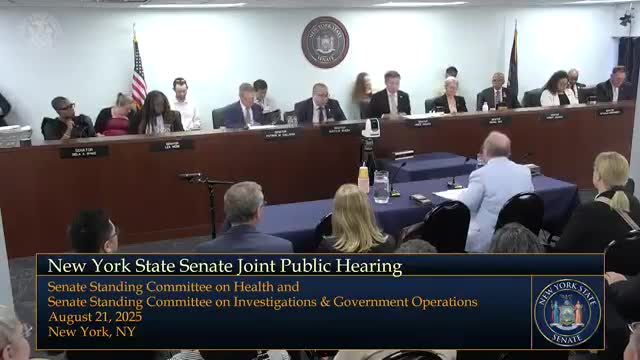
Summary
New York’s move to make Public Partnerships LLC (PPL) the statewide fiscal intermediary for the Consumer Directed Personal Assistance Program (CDPAP) has left thousands of personal assistants unpaid or underpaid and strained the consumers who depend on them, witnesses told state senators at a July 29 hearing.
New York’s move to make Public Partnerships LLC (PPL) the statewide fiscal intermediary for the Consumer Directed Personal Assistance Program (CDPAP) has left thousands of personal assistants unpaid or underpaid and strained the consumers who depend on them, witnesses told state senators at a July 29 hearing.
Consumers and workers described a pattern of technical failures, long call‑center waits, and recurring payroll errors after PPL began registering consumers in January and took over payments on April 1. "I received 24‑hour, seven‑day care. Overnight shifts are still experiencing frequent glitches that result in lost hours or missed overnight payments," said Jose Hernandez, a long‑time CDPAP consumer who testified about missing or miscredited hours. Marcus Johnson, an injured consumer, described receiving automated alerts while he sat in the hearing saying his staff could not work until the system resets on Sunday.
Supporters of the state’s consolidation say the change was intended to rein in uncontrollable administrative cost growth and improve oversight. James McDonald, the New York State health commissioner, told the committees the state expected to cut administrative costs significantly and cited enrollment numbers and estimated Medicaid savings. PPL’s vice president for government relations, Patty Burns, defended the company’s enrollment work and said PPL has paid more than $2.3 billion in wages since taking over and has staffed call centers and in‑person enrollment sites.
But dozens of consumers and personal assistants, many of them present at the hearing, described a different reality: repeated calls that went unanswered or were misrouted, time‑entry entries that billed impossible shift lengths, and paychecks that were delayed or sent as mailed paper checks rather than direct deposit. “We would be on hold for long stretches and when we finally reached someone we would get inconsistent answers from different representatives,” said Maggie Ornstein, a PA who cares for a family member. Several attendants testified they still had not received full pay for April shifts, and multiple workers’ groups have filed or signaled litigation over payroll failures.
Independent living centers and community facilitators — organizations that previously helped consumers enroll and train PAs — said the transition sidelined community‑based support. “We were poised to act as trusted facilitators and to help stabilize the transition, but our role has been underused,” said Brian O’Malley of Consumer Directed Action of New York. Advocates pressed the Department of Health to publish clearer, more granular weekly data on payments and registration status; the department says it has published regular updates but admitted data presentation could be clearer.
What’s next: Senators repeatedly pressed PPL and the department on concrete remediation steps, including faster dispute resolution for missing pay, clearer phone escalation paths, and immediate fixes for known time‑entry and overnight‑shift rounding problems. PPL said it has added staff and is working on technical fixes. The department was asked to provide a full accounting of payroll complaints, timelines for resolution, and the vendor’s contractual remedies for missed obligations. Workers’ groups and some consumer advocates said those steps are necessary but not sufficient, and urged continued oversight, stronger contract enforcement, and greater use of the state’s independent living centers as on‑the‑ground support.
Ending note: Lawmakers and advocates pressed for immediate relief for workers and consumers who went without pay or care. Several senators said they will pursue follow‑up subpoenas and written answers from PPL and the department if data and remedial actions are not forthcoming in short order.