Get Full Government Meeting Transcripts, Videos, & Alerts Forever!
Get email alerts on the Telecommunications topic
No spam. Unsubscribe anytime.
Planning commission approves T‑Mobile rooftop wireless facility at 127 W. Pomona with conditions
Summary
The commission approved a conditional use permit and exception to allow a rooftop-stealthed T‑Mobile wireless facility on a seven‑story mixed‑use building at 127 West Pomona, subject to conditions on noise, RF compliance, signage and fire‑safe penetrations.
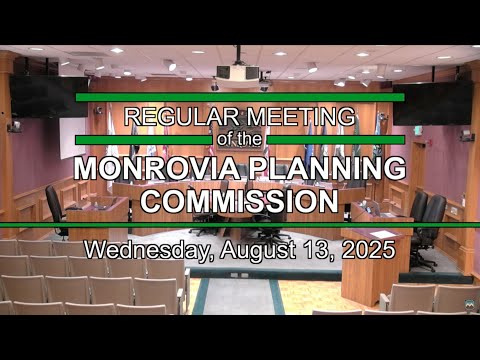
The Monrovia Planning Commission on Aug. 13 approved a conditional use permit and a wireless facility exception to allow a rooftop-mounted, stealth telecommunications facility for T‑Mobile on a new seven‑story mixed‑use building at 127 West Pomona Avenue.
City planning staff described the proposal as a rooftop installation above elevator penthouses that would be screened by fiberglass‑reinforced panels matching the elevator facades. The installation would include 12 antennas, 12 remote radio units (RRUs), four equipment cabinets and a GPS antenna. The rooftop enclosures would replace a roughly 30‑inch portion of parapet and extend the structure an additional 4.5 feet; the total building height with enclosures would be 93 feet. Staff said that the specific plan allows up to an 18‑foot rooftop exception (106 feet), so the proposal stays below that maximum.
Staff advised the commission the temporary cell tower currently in the public plaza will be removed once the permanent rooftop facility is in place and that the temporary tower had conditions requiring removal within 30 months of its permit or prior to issuance of a certificate of occupancy. The development is nearing a temporary certificate of occupancy, staff said.
The applicant, Damien Pichardo of Coastal Business Group representing T‑Mobile, said the antennas are oriented outward from the building and that authorized access to the locked equipment areas would be restricted. Pichardo said the submitted radio frequency (RF) and electromagnetic energy report demonstrates compliance with Federal Communications Commission (FCC) public exposure limits and that the design passed the city‑required noise study (MD Acoustics LLC). He told commissioners signage and striping/barriers would be provided where needed and that T‑Mobile routinely collocates carriers but the current application covers T‑Mobile only.
Commissioners questioned visibility, rooftop access, RF exposure for maintenance personnel and the top‑floor balconies. Staff and the applicant said the RF report shows occupational‑level exposures and that the highest predicted exterior level on the nearest residential balconies (seventh floor) would be about 45 decibels (under the city's 50‑dB threshold) and interior contributions would be low (about 21 dB in a representative interior location after mitigation). The city also recommended and the applicant accepted a DRC request that all penetrations into the building for cabling and conduit be fire‑stopped and accessible for inspection.
The DRC and staff recommended approval with conditions including: concealment of antennas within the rooftop enclosure; exterior finish materials matching the building; compliance with FCC and California Public Utilities Commission signage; compliance with Monrovia noise limits; compliance with RF exposure limits per the RF report; posting required notices and signs; and a process for the city to retain a consultant at the permittee's expense to investigate and verify any verified noise complaints.
A motion to approve the CUP and wireless facility exception with the staff‑recommended conditions passed on a roll‑call vote with all commissioners present voting yes. Staff noted the permit is conditioned to the equipment installed as proposed (12 antennas, 12 RRUs, four cabinets and one GPS antenna) and that future collocation or equipment changes could require a modification or separate review.
Next steps: The temporary pole in the plaza will be removed when the rooftop facility is operational and permits are finalized. The permit contains ongoing operational conditions (noise and RF compliance, posted signage, and fire‑stopped penetrations) and enforcement provisions that allow the city to require corrective measures and to charge the permittee for verification studies if verified complaints arise.