Get Full Government Meeting Transcripts, Videos, & Alerts Forever!
Get email alerts on the Young Leaders Ohio topic
No spam. Unsubscribe anytime.
Young Ohio elected officials stress relationships, local fixes amid frustration with bureaucracy
Summary
A panel of Ohio legislators and local officials at a Columbus Metro Club forum said younger leaders are pushing to change government culture, focusing on housing, property taxes and education while describing frequent bureaucratic roadblocks and strategies to engage young voters.
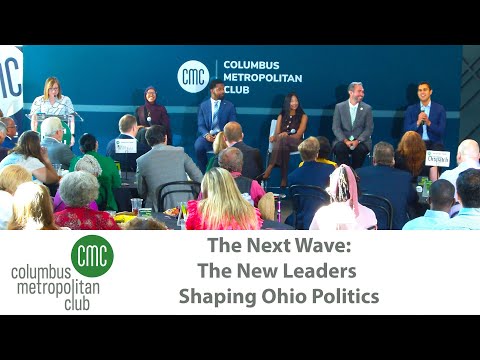
COLUMBUS, Ohio — A panel of early-career elected officials and local leaders told a Columbus Metro Club forum audience that changing the culture of state and local government requires persistent relationship-building, attention to local problems and patience when confronting entrenched bureaucracy.
Panelists — including State Representative Munira Abdulahi, Shaquille Alexander, treasurer of the city of Whitehall; Leader Donny Isaacson, a House Democrat and state representative; State Senator Michelle Reynolds; and State Representative Dave Thomas — framed their experience entering public office around a shared theme: government can work but is slowed by bureaucratic processes and long-standing habits.
The discussion centered on why younger leaders run for office and how they try to produce results once inside government. Many panelists described stepping into elected roles after seeing problems they said were being ignored — from property tax concerns to housing shortages — and said their approach has been to focus on one or two priority issues and build relationships across party lines to advance them.
Why it matters: panelists argued that the next generation of leaders must both demonstrate results locally and create new channels to bring ordinary residents into policymaking. They said doing so is necessary to reverse falling civic participation among younger Ohioans and to address policy shortfalls in education and housing that they described as generational failures.
Most of the panelists stressed local problem-solving. Alexander pointed to his experience in Whitehall — a municipality he described as roughly 20,000 people and about five square miles — as an example of how small local offices can “move at the speed of business” compared with larger bodies. Several panelists said the state legislature has space for both bipartisan cooperation and vigorous policymaking, but singled out bureaucracy as a recurring obstacle to fast action.
Panelists gave examples of bureaucratic “gridlock” that leave constituents stuck with state agencies. One legislator described constituent cases that stall inside agencies such as job and family services or workers’ compensation, requiring a lawmaker’s intervention to break a “clog” and move decisions forward. The panelists said those delays can have real consequences for families who are one paycheck from homelessness.
Policy priorities discussed in detail included property taxes and housing. One panelist said property-tax relief had been the central promise of a first campaign and remained a focal area in early legislative work. Senator Reynolds, who chairs a housing committee, said Ohio is short by “over 200,000” affordable housing units and urged more coordinated state action to connect workers with housing near jobs.
Education also drew substantial attention. Several panelists described Ohio’s public-education performance as a major policy failure of prior generations and said they are spending time engaging classrooms and communities to ask students and families what they need. The panelists suggested that local engagement and clear, local policy impacts are the clearest path to increasing youth participation in elections.
On engagement and trust-building, the panelists offered practical advice: meet young people where they are, listen more than you speak, show up consistently, and be transparent about trade-offs. One representative emphasized the importance of including “everyday experts” in policy conversations — public input groups akin to private-sector focus groups — to generate practical, nonpartisan ideas.
A few national and procedural topics surfaced in audience questions. Panelists said elected officials should “show up” rather than flee votes and that publicly available reports (in one question, an “Epstein report” was cited by an audience member) should be released if they are public documents. On federal tariff-related executive actions, Republican panelists avoided firm predictions and urged waiting to see measurable results.
The forum closed with reminders from Columbus Metro Club leadership about continuing civic conversation and upcoming events. The session was framed by the host and organizers as part of an ongoing series intended to surface practical ideas for state and local governance.
The session was discussion-focused; no formal motions or votes were taken.