
Council adopts alternative-fuels policy, creates interdepartmental task force for city fleet
Get AI-powered insights, summaries, and transcripts
Sign Up Free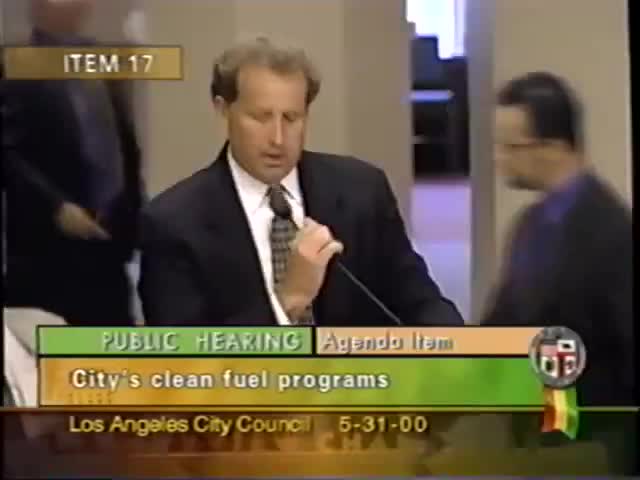
Summary
After public testimony from air‑quality agencies, industry and environmental groups, the Los Angeles City Council approved a clean‑fuels policy and directed formation of an interdepartmental alternative‑fuel task force with a tight schedule and consideration of retrofit technologies.
The Los Angeles City Council approved a policy supporting alternative fuels for city vehicles, directed establishment of an interdepartmental alternative‑fuel task force, and accepted two amendments to place retrofit testing and evaluation of ultra‑low sulfur diesel and particulate traps on the task force’s agenda.
Councilmember Mark Ridley‑Thomas introduced the policy recommendation and the implementation plan, saying the motion resulted from two public hearings and that the council should balance environmental benefit with safety, efficiency and cost. Ridley‑Thomas asked the new working group to report to the Environmental Quality Committee with specific instructions and set a hearing in Environmental Quality for June 7.
Public testimony included representatives from the South Coast Air Quality Management District (AQMD), industry (Cummins Engine Company), environmental groups (Natural Resources Defense Council, Sierra Club, Coalition for Clean Air), fuel companies and a regional coalition. Jack Broadbent of AQMD urged the council to proceed because diesel particulate is a major contributor to cancer risk in the South Coast, while industry speakers such as Peter Whittingham (representing Cummins) urged a fuel‑neutral, voluntary, incentive‑driven approach, warning of high infrastructure costs for mandated conversions.
Councilmember Brunson offered two amendments — one calling for an ultra‑low sulfur diesel test program and another directing consideration of retrofit particulate filters (CRTs or similar) for existing vehicles — and characterized them as friendly. Ridley‑Thomas accepted both; he also recommended adding CARB (California Air Resources Board) to MTA and AQMD for certification/participation in testing. The council recorded a 14‑vote affirmative tally on the amended motion and approved implementation steps forthwith.
The motion creates a timeline for the task force to meet and report within two weeks to the Environmental Quality and Waste Management Committee and schedules a committee hearing on June 7 to consider recommendations, testing and potential retrofit strategies.