Get Full Government Meeting Transcripts, Videos, & Alerts Forever!
Get email alerts on the Ethics Behested Payments topic
No spam. Unsubscribe anytime.
Supervisor Mandelmann moves to let supervisors seek behested-payment waivers
Summary
President Mandelmann introduced an ordinance to let members of the Board of Supervisors request behested-payment waivers similar to other elected officials, requiring a two-thirds board vote and Ethics Commission concurrence.
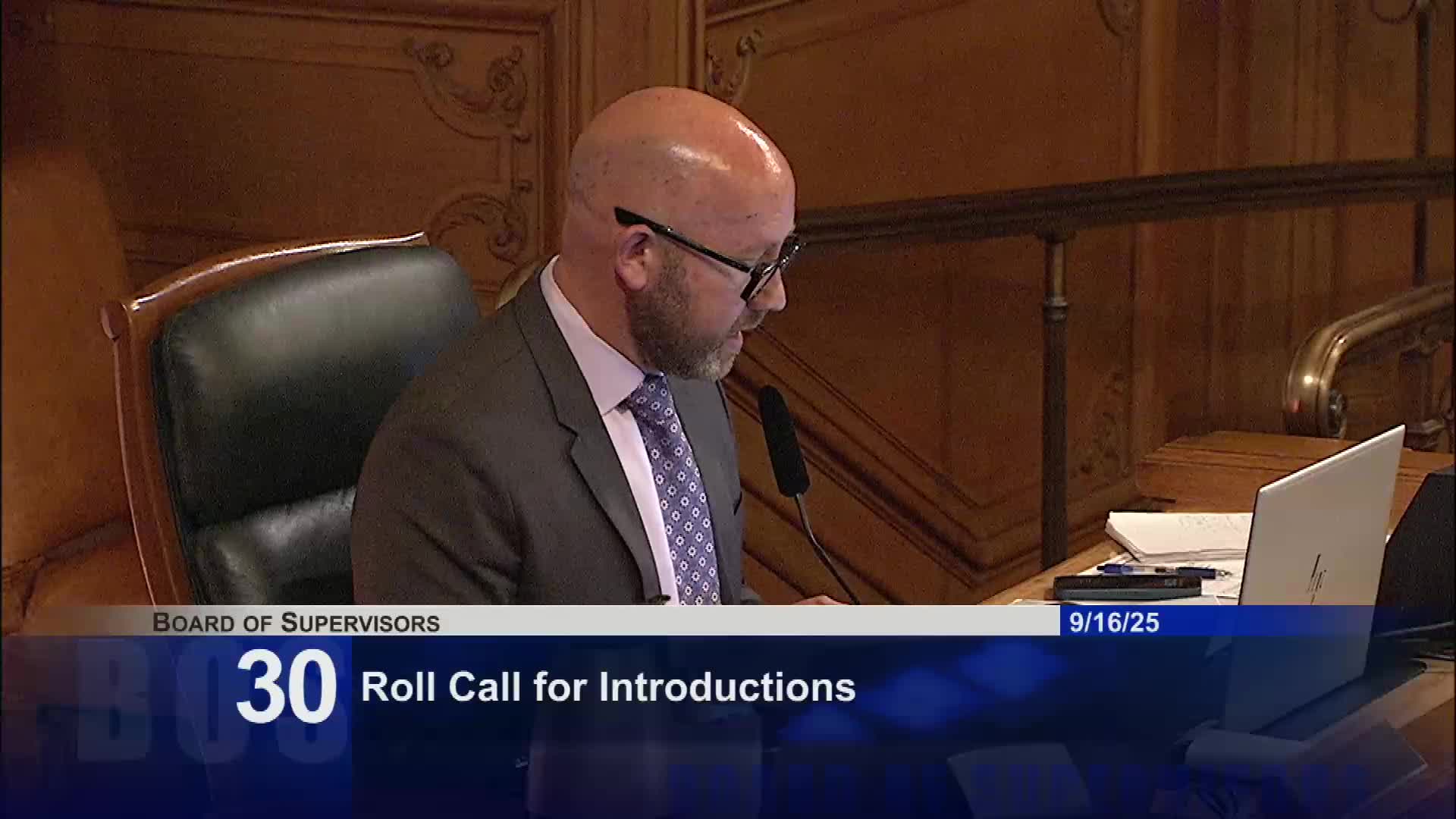
President Rafael Mandelmann introduced an ordinance on Sept. 16 to allow members of the San Francisco Board of Supervisors to request behested-payment waivers — the authority to solicit donations on the city's behalf — under the same standards that currently apply to department heads and other elected officials.
Mandelmann said Proposition E, approved by voters in 2022, requires a behested-payment waiver for soliciting donations by certain officials and departments but currently excludes supervisors. He said supervisors are "often the closest to our communities" and should have the same ability to direct philanthropic dollars to urgent local needs, subject to the same findings, disclosure, and Ethics Commission review now required for other officials.
Mandelmann described uses of existing behested-payment waivers, saying the board has previously authorized waivers for procuring fire trucks, expanding shelter beds, delivering immigrant legal services, and addressing the fentanyl crisis. He said changing the exclusion for supervisors would require a two-thirds vote of the board and concurrence from the Ethics Commission.
Mandelmann thanked staff and Ethics Commission staff who worked on the legislation, including Melanie Mathewson, Director Patrick Ford, Michael Canning, and deputy city attorneys listed in the record. The ordinance was introduced and will proceed through the board’s legislative process; no vote on final passage was recorded at introduction.