Get Full Government Meeting Transcripts, Videos, & Alerts Forever!
Get email alerts on the Public Health Community Programs topic
No spam. Unsubscribe anytime.
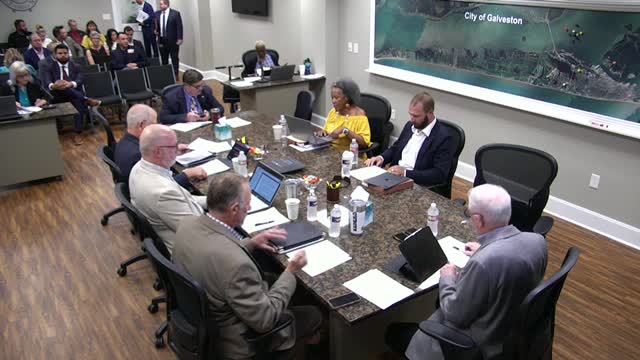
Blue Zones presenters tell Galveston council city is ready to pursue full community health program
Summary
Blue Zones Ignite and UTMB presented a readiness assessment at the Sept. 18 Galveston City Council workshop and recommended a nine‑month foundation period leading to a multi‑year community transformation if private funding is confirmed.
Blue Zones Ignite and the University of Texas Medical Branch told the Galveston City Council workshop on Sept. 18 that Galveston is prepared to move from assessment into a nine‑month “foundation” phase toward becoming a certified Blue Zones community, pending confirmation of private‑sector funding.
The presentation, led by Dan Butner Jr. of Blue Zones and supported by UTMB representatives, summarized a qualitative and quantitative assessment that engaged more than 300 local residents and stakeholders and produced a 250‑page readiness report. Blue Zones staff said the assessment shows high overall community interest and leadership alignment, moderate feasibility for built‑environment changes and policy work, and low readiness among grocery stores for program participation.
Why it matters: Blue Zones is a national community health initiative that aims to change local environments, institutions and policies so “the healthy choice is the easier choice.” Proponents say the approach targets chronic disease drivers and could affect health outcomes, workforce readiness and tourism; opponents and council members pressed Blue Zones staff for details about funding, who benefits and how the program would be sustained.
Blue Zones findings and recommendations Blue Zones staff described the current phase as a readiness and feasibility review. Dan Butner, chief development officer, said the group used windshield tours, one‑on‑ones and focus groups to assess “people, places and policy” across the island, and that the project is currently in a “dating period” to confirm local support. “This is Train the Trainer,” Butner said, describing the model as locally led and locally staffed.
Lyle Westcott, senior vice president of operations for Blue Zones Ignite, summarized the scorecard used in the assessment and said the aggregated readiness score is roughly 65 percent, with the weighted breakdown she presented at the workshop as about 15% policy, 10% places and 10% people. Westcott told council members, “We believe Galveston is ready for a full Blue Zones project.” She said food systems, schools, worksites, restaurants, faith organizations and civic leadership showed high readiness while grocery stores scored low and the built environment showed medium readiness for changes such as improved walkability and bikeability.
Program timeline, staffing and measurement Blue Zones recommended a nine‑month foundation period to co‑design a local blueprint followed by several years of door‑to‑door and sector work. Butner said the transformation phase typically runs three to four years and that certification is based on third‑party measured outcomes. The program would use validated instruments including a well‑being index Blue Zones cited Gallup as providing.
Blue Zones recommended hiring a small local team of FTEs to run the program, proposing five positions: a field captain/executive director, a marketing and engagement lead, two organization/well‑being leads and a public policy lead. Butner said funding is expected to be private‑sector driven and that the team would work with a local steering committee and volunteer sector committees.
Council questions and next steps Council members asked several operational questions about who would pay, how the program would be sustained and how schools and low‑income families would be included. Butner said Blue Zones is seeking confirmation of private‑sector commitments and community buy‑in within roughly 30 days and, if that occurs, would seek signed agreements in October or November and begin preparations for a public demonstration in January. He said the foundational work would be co‑designed with local partners and that “we don’t pretend to know as much about Galveston as you all” and therefore would tailor the plan locally.
The presenters also offered additional resources: a 250‑page digital report, one‑on‑one follow‑ups with subject experts and examples from other U.S. communities (Butner said Fort Worth had been an earlier Texas partner). Presenters said the initiative aims to produce measurable results in adult well‑being and chronic disease risk factors, and to coordinate schools, employers, restaurants, faith groups and civic institutions.
What the council did and what it will consider No formal action was taken at the workshop. Councilmembers told Blue Zones and UTMB they wanted to see the full report and to be kept updated on progress. City staff and presenters agreed to circulate the report and follow up with next steps; council has not set a formal vote or funding commitment at this time.
Meeting context: The presentation took the bulk of the morning workshop and generated detailed questions about funding, equity, schools and the built environment. Presenters emphasized a community‑led model, private‑sector resourcing for initial funding and third‑party measurement of outcomes.