Get Full Government Meeting Transcripts, Videos, & Alerts Forever!
Get email alerts on the Public Health Preparedness topic
No spam. Unsubscribe anytime.
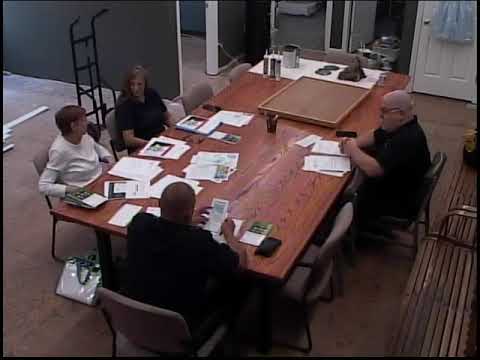
Hubbardston planning committee accelerates public‑health tabletop after DPH deadline
Summary
The Town of Hubbardston planning committee on Tuesday discussed writing and testing a public‑health tabletop exercise after the Department of Public Health (DPH) told towns to run a tabletop drill and deliver an after‑action report by Dec. 31.
The Town of Hubbardston planning committee on Tuesday discussed writing and testing a public‑health tabletop exercise after the Department of Public Health (DPH) told towns to run a tabletop drill and deliver an after‑action report by Dec. 31.
Committee members said DPH expects the board of health to lead the exercise and that the event should include police, fire, selectmen and EMS. One member described the DPH direction as a hard deadline and said an after‑action report must be “on my desk” when the work is complete.
The requirement prompted debate over scope and feasibility. Speaker 1, a planning committee member, said DPH “has said that they want to have a tabletop, and they want they said that they want DPH to be I mean, they want board of health to be the lead on it,” and noted small towns may lack existing written plans to test. Speaker 4, another committee member, added, “If the plan isn't in place, you can't test it. That's the first step.”
Members identified several potential tabletop scenarios, including a new airborne infectious disease (“pandemic X”), foodborne or well‑water contamination from a vendor or farmer’s market, suspicious packages, and hypothermia risks. They emphasized an “all hazards” approach so a single functional plan could cover multiple public‑health threats rather than writing separate plans for many diseases.
The committee discussed costs and outside support. One member said hiring a vendor for a three‑hour tabletop with an after‑action could cost at least $5,000 if plans are not already in place. Members volunteered to draft a simple written plan before seeking a facilitator and suggested limiting the exercise to levels of quarantine or functional responses the town can realistically test.
Timing and next steps were set on the record. Committee members proposed meeting in early November to draft a plan and tentatively agreed to “shoot for” Wednesday, Nov. 12, at 3 p.m. for a working session; committee members also said DPH offered a possible exercise date of Dec. 28 at 4 p.m. Speaker 1 said the committee will “come up with what we can come up with and … work on a meeting date to go over the plan and then work on a date where we can do” the tabletop.
Members agreed the priority is producing a written plan the town can test. Several offered to help draft the scope and the tabletop injects; Speaker 1 said she will circulate templates and an outline for members to review ahead of the drafting meeting.
Less urgent items discussed alongside the tabletop included volunteer vetting and security for shelters, communications checks (alerts and dispatch calls), and basic functional testing such as calling a representative to send an alert during an exercise to identify breakdowns.
The committee did not take a formal vote at the session. The group left the schedule and drafting assignments as next steps and will reconvene to prepare a plan suitable for the tabletop exercise.