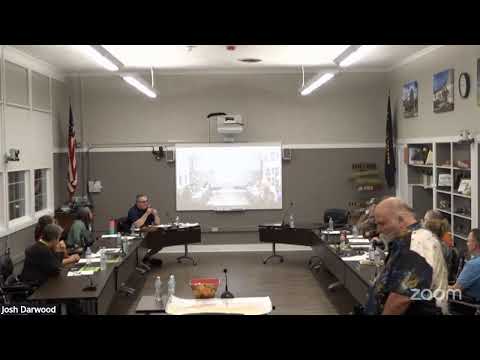
Board debate over ethics complaints, OGEC response and investigation leaves members divided; board weighs legal advice
Loading...
Summary
Five grievances filed against the Sweet Home School District board and the board’s response to them prompted extended debate, calls for apologies and a choice among further options: OGEC review, a district-funded investigation, or attorney-client review in executive session.
A series of ethics grievances and allegations of improper "serial" communications dominated the Sweet Home School District board meeting, prompting extended discussion, public comment and legal follow-up.
Board chair and staff reported the board had responded to five grievances within the statutory 21-day period and forwarded the documents to the Oregon Government Ethics Commission (OGEC). OGEC staff later told district staff that, based on the materials submitted, four of the complaints were being treated as alleged public meeting violations rather than ethics violations; OGEC told the district it would not act further unless complainants asked OGEC to investigate. In at least one instance OGEC later advised the district it lacked jurisdiction over the matter asserted and would take no further action.
Several board members and residents said the way the most recent meeting handled the complaints — including motions and officer removals that occurred before a separate fact-finding process — left them feeling tried in public without having had an opportunity to respond. Multiple speakers described the episode as painful and divisive; one newly elected member said she left a previous meeting in tears and called for professionalism.
Legal references cited in the meeting included ORS 192.705 (public meeting response timing), ORS chapter 244 (government ethics), and the district's board policy KL/KL-AR1 regarding complaint processes. District counsel and OSBA (Oregon School Boards Association) guidance were referenced repeatedly. At least one attorney engaged by the district conducted interviews and produced a personnel-focused inquiry; district staff reported that the outside attorney narrowed an initial board-focused inquiry to a personnel matter.
Board members discussed options: (1) rely on OGEC and the external attorney’s guidance, (2) commission an independent investigation at district expense, or (3) seek attorney-client privileged guidance in an executive session. Several members expressed concern about the cost of a full independent investigation and potential diversion of dollars from classrooms. Others said their names and reputations had been harmed and asked for formal steps to clear names.
By the meeting’s end members expressed a preference for obtaining legal counsel advice in an attorney-client setting (possible executive session) rather than immediately commissioning a costly outside probe; multiple participants asked for a path that would provide greater clarity and preserve district resources. No formal board vote to hire a separate investigator was recorded. Several members asked that any future investigation or attorney memo be handled in a way that respects privacy and legal processes, and that the district avoid further public escalation while the matter is resolved.
Public commenters, including current and former district employees and community members, urged calm and better role modeling; an attendee who identified as a retired school office manager called the board’s conduct “appalling” and urged better behavior. Several speakers called for apologies and a return to focus on students and classrooms.