Get Full Government Meeting Transcripts, Videos, & Alerts Forever!
Get email alerts on the Social Services Technology topic
No spam. Unsubscribe anytime.
Kandiyoi County approves Caseworks portal to let residents access social‑services records online
Summary
Kandiyoi County commissioners approved a contract to add a client-facing portal to the county's Caseworks social‑services system. Officials said the portal should speed document sharing, reduce staff workload and improve client access outside business hours; they discussed adoption challenges and the partial budget shortfall.
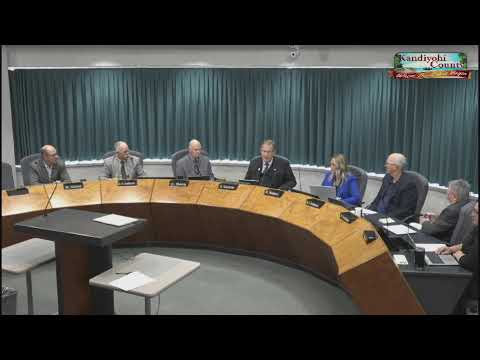
Kandiyoi County commissioners on Tuesday approved a contract to add a client portal to the county's Caseworks social‑services software, a move county health staff say will let clients exchange documents securely, receive appointment reminders and check case status outside office hours.
Caroline Khan, Kandiyoi County health and human services director, told the board the portal would function like a ‘‘MyChart’’ for social services: a secure place where clients could upload identification and other documents, see case plans and receive appointment reminders. She said the county already hosts Caseworks for other counties and uses the system for document storage and workflow automation.
The county's pitch to commissioners centered on reducing administrative burden and speeding service delivery. Khan said the portal would cut the staff time spent scanning and mailing documents and would let clients engage with caseworkers after 4:30 p.m., when many applications now arrive. "It allows them to engage with our department during hours that are convenient for them," Khan said. "It will be an enhancement to not only our community's experience but as well as our staff experience, allowing for some automation."
Commissioners pressed Khan on likely adoption rates and access. Commissioner Emdecker asked whether the portal is available as a phone app; Khan said she had seen only a web interface and would follow up on mobile options. Commissioner Berg asked how many clients have internet access; Khan estimated roughly half but said adoption will depend on staff outreach and partner help. "We can take 40% or 50% of the 90 calls we're receiving every day—that's half of their day now," Khan said, describing staff time that could be reallocated.
Khan told the board the county's originally budgeted amount is now short of the vendor's current price. She said the vendor's published total is "30" (reported by Khan during the meeting), which she framed as the gross contract figure; after federal and state reimbursements she estimated a net county cost of about "16.7" and said the county had already invested $8,000 toward 2025 costs. Khan asked the board to use reserves or a small net adjustment in the current budget to cover the difference.
Commissioners spoke in favor of modernization and convenience for working residents. Commissioner Dale Anderson moved to approve the portal contract; the motion carried on a voice vote. "I cannot imagine what a convenience that would be," a commissioner said during discussion, citing single parents who cannot come to the office during business hours.
Why it matters: county leaders said the portal could lower processing times for SNAP and other benefits, reduce paper and postage, and provide clients with a secure record of what documents remain outstanding. Staff stressed that the portal will not serve everyone and that outreach and partner cooperation will be necessary to increase takeup.
Implementation and next steps: Khan said implementation would take about a year, with a possible launch around Oct. 1, 2026, and a marketing and enrollment push in the months before launch. She proposed internal training, vendor-run weekly sessions for staff and partnerships with local organizations (for example UCAP) to help clients create accounts.
Votes at a glance: commissioners also acted on several other items during the meeting. The board approved routine agenda and consent items at the start of the meeting; approved two resolutions to enroll in and administer low‑interest septic loans under the Minnesota Clean Water Partnership program; approved memoranda of understanding related to emergency‑service sick‑time (ESST) and the state paid family leave premium split for bargaining units representing telecommunicators and deputies; approved a memorandum of understanding with Prairie Woods Environmental Learning Center for use and planning on county property; and appointed Karen Kramer to the Kandiyoi County HRA board. Each of those actions passed by voice vote or consensus during the session.
The contract vote: The motion to proceed with the Caseworks portal contract was moved by Commissioner Dale Anderson and carried by the board. Commissioners asked staff to return with implementation metrics and suggested the county track logins and completion rates during the first rollout period.
Chatty but factual: Commissioners and staff repeatedly noted the project's dependence on outreach and technology access, and cautioned that lower‑income residents or households without broadband may need extra support. Khan said other counties that adopted portals have seen account creation/completion rates near the 40–68% range and that even partial takeup would save staff time.
What will be measured: staff proposed internal dashboarding to track the number of account invitations, account creations, documents completed and time saved; the board asked staff to report back on early adoption and suggested target goals for the first year.